
Madero Mayhem FCs promotion to Spark was supposed to bring optimism and clarity. Instead the first of the season felt like chaos.
Formations changed, key signings struggled, recruitment priorities shifted and the club’s entire tactical identity was questioned. Yet somehow, through all the uncertainty, they emerged from the first half of the campaign firmly in the promotion race.
(Note: clicking on player’s names will take you to their profile).
The temptation of the shortcut
Promotion from Flint had brought a new challenge: Temptation.
Spark Division is full of ageing players who can still dominate matches. Thirty-year-olds rated 70 and above can often be acquired for surprisingly modest fees, instantly improving teams looking to accelerate their progress.
Madero Mayhem could have gone down that road.
Many clubs do.
Instead, they chose something more difficult: Patience.
The plan following promotion had always been to discover what the club already possesses before rushing into wholesale changes. Rather than filling the squad with short-term upgrades, Mayhem committed to developing a core group whose attributes fit the club’s long-term vision.
The plan was simple: assess the squad at Spark level. If they proved capable of challenging for promotion, recruitment would accelerate. If not, the group would remain together and develop naturally.
It seemed like a sound plan, yet as the season unfolded, that philosophy became intertwined with the club’s search for an identity.
The Struggle
The whiteboard inside Madero Mayhem FC’s tactical room tells the story.
Arrows, scribbles, crossed-out ideas and statistical observations gathered from league matches, cup ties and countless friendlies.
Four formations were tested across the opening seven games, but none provided a convincing long-term solution.
A quarter of the season had passed – and the fans (and Manager) were still asking the same question:
What exactly are Madero Mayhem FC?
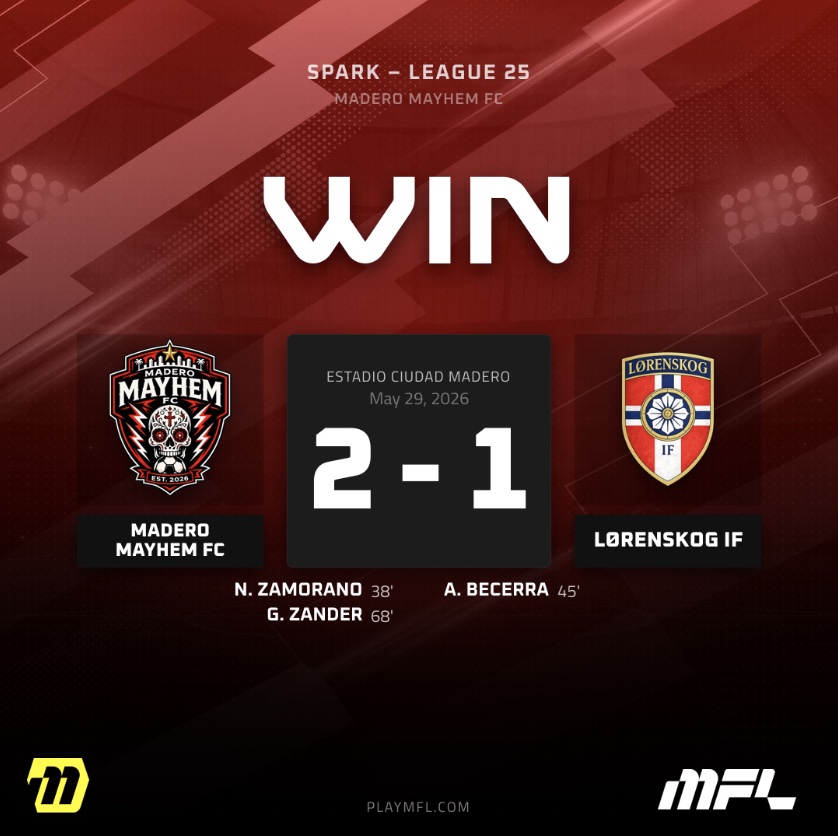
After 5 league games, The Mayhem had won 3 and lost 2.
The two defeats came against the two title favourites, Karanovac MFC and Atletico Cusco. But the manner of those defeats bothered everyone in the club. The attack looked blunt and the midfield was completely mis-matched. Against Karanovac FC, for example, both teams had only 3 shots on target, but the Mayhem left with a 0-3 defeat.
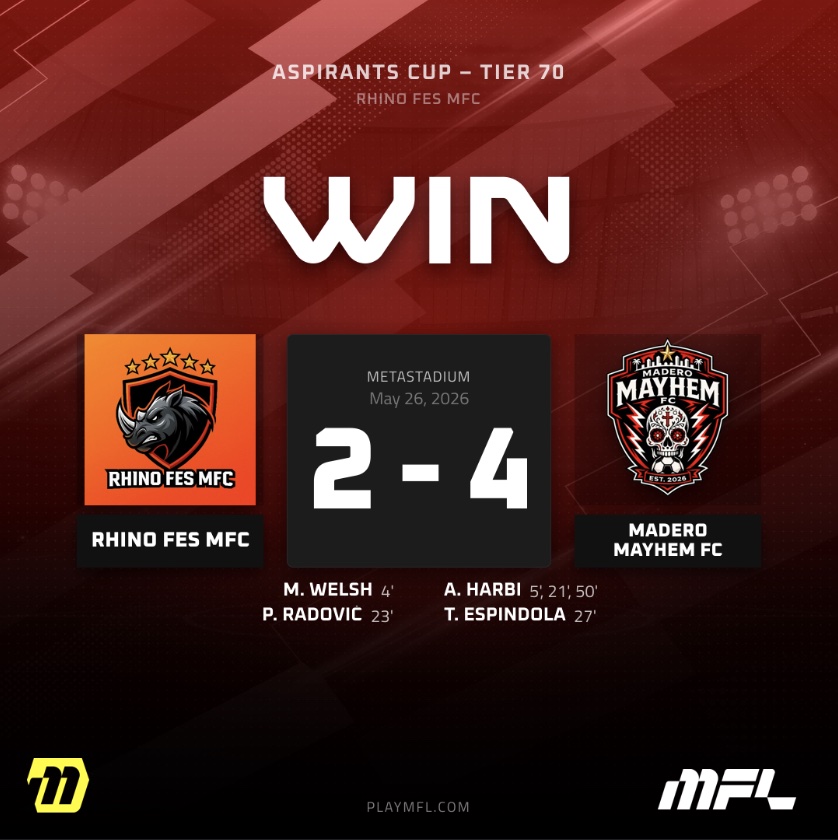
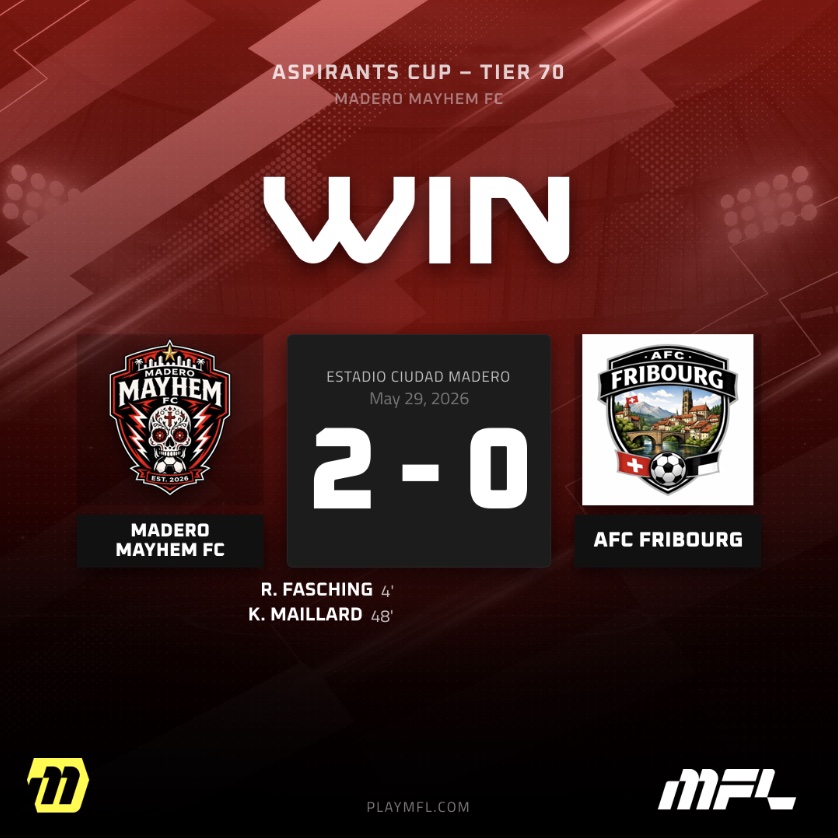
Then came the first Aspirants Cup game, when despite having 50% possession, The Mayhem were only able to generate 0.60 xG in a 0-2 defeat against AFC Fribourg. Fortunately, the following cup game saw a 4-2 win over a heavily rotated opponent to keep them in the race.
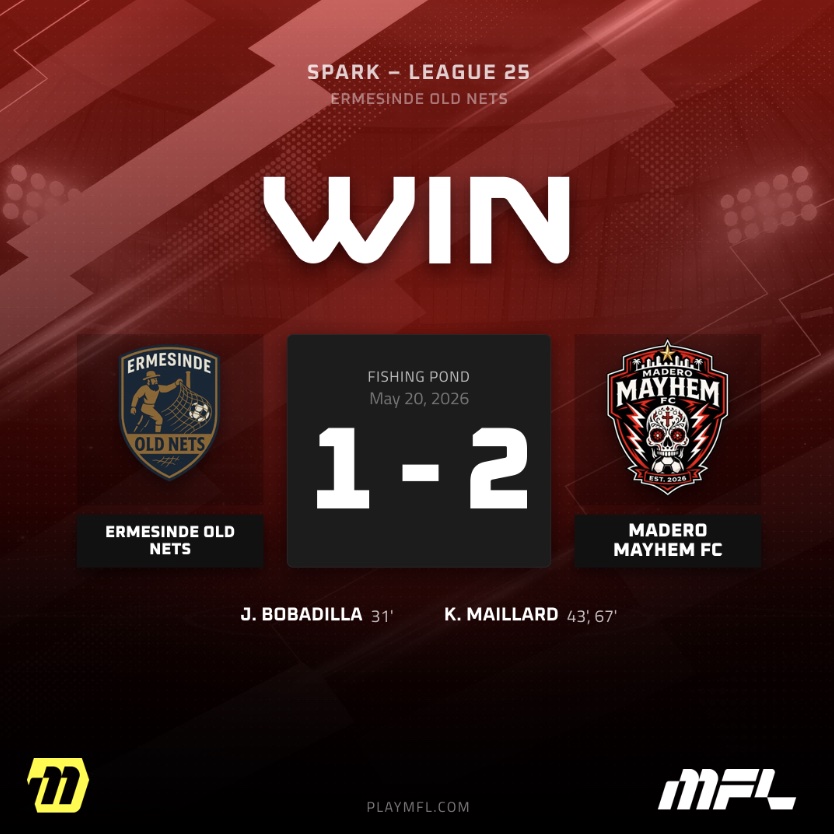
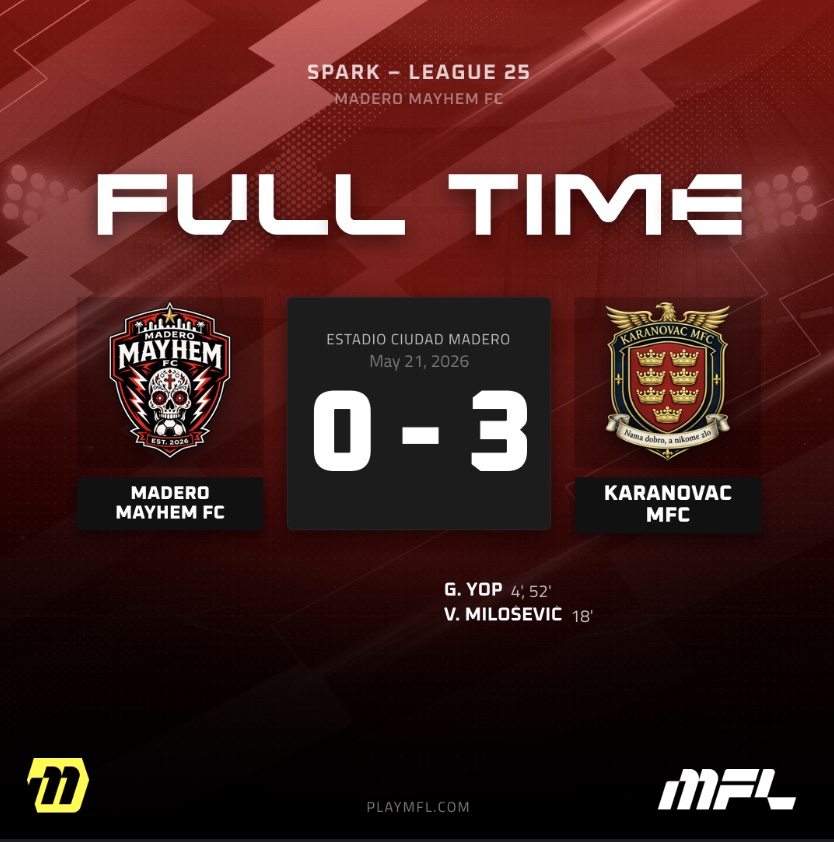
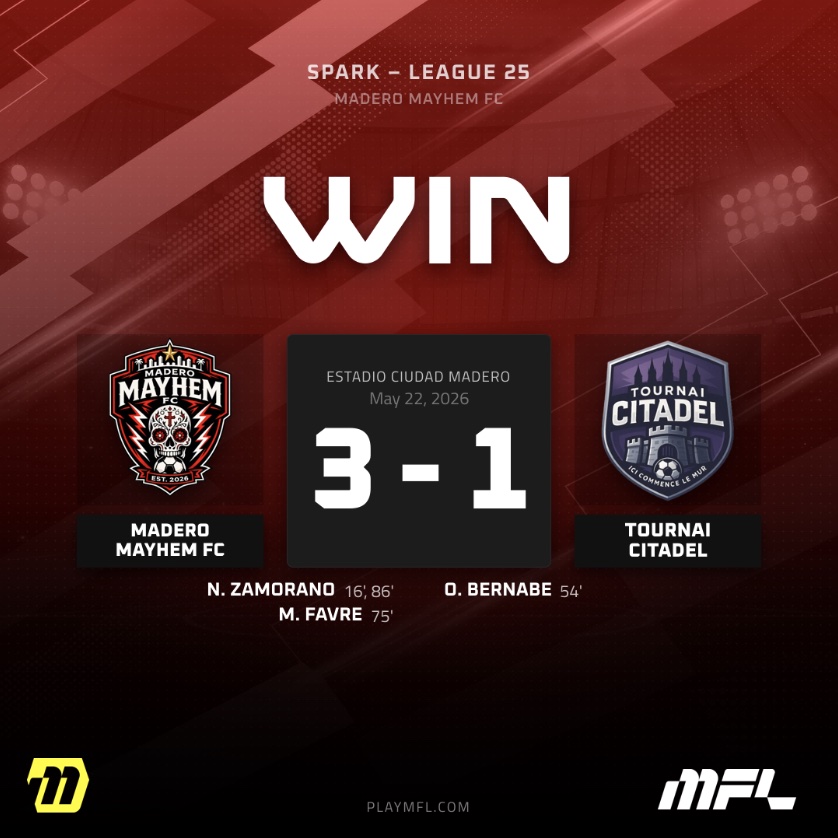
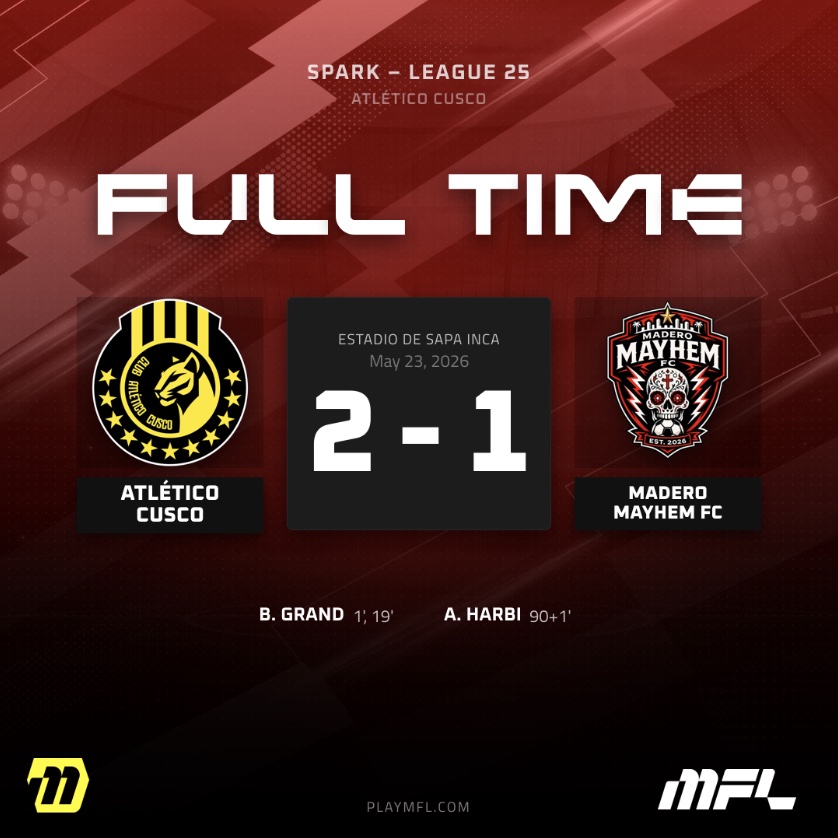
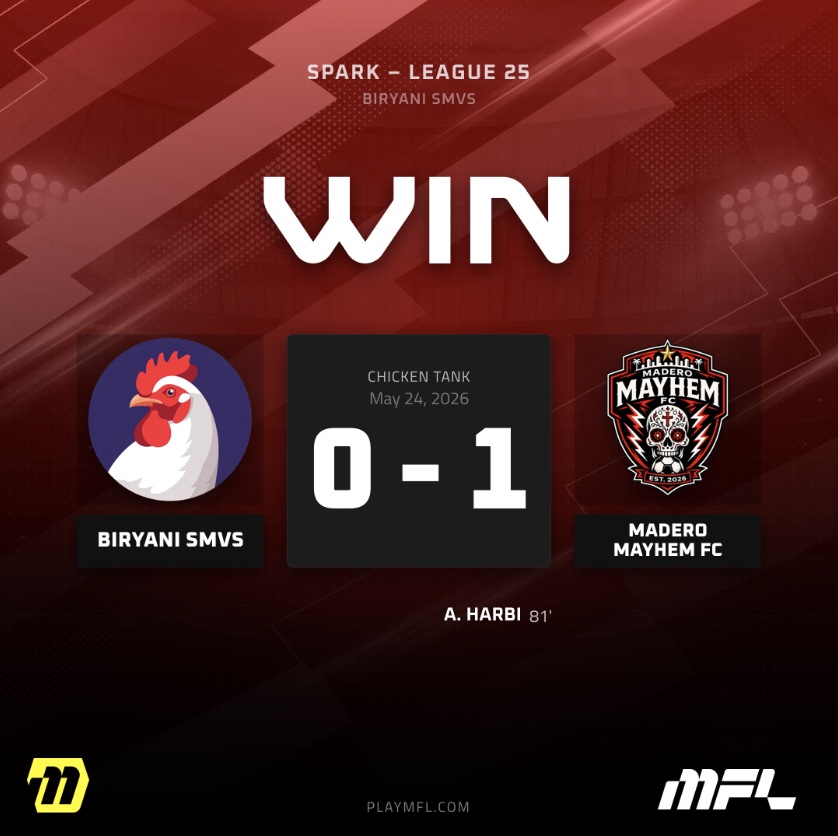
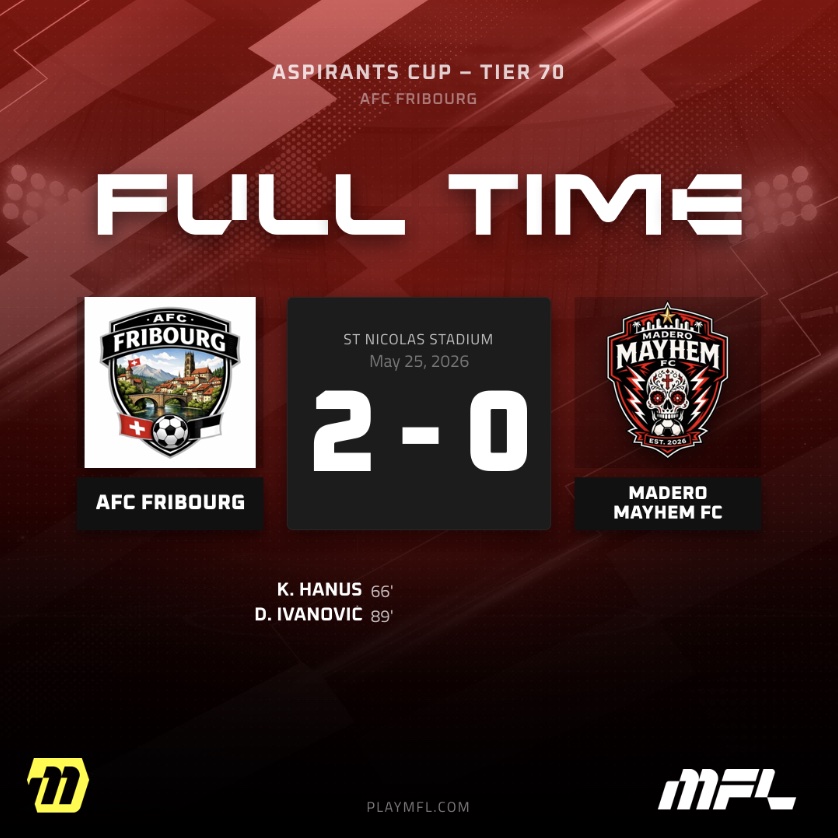
All in all, the team did what they needed to against lower-rated opponents, but faltered when facing tougher, and equally matched competition.
Madero Mayhem FC, predicted to finish 3rd, were sitting in 5th place.
The Kasmi Conundrum
Football has a habit of turning complex problems into simple narratives.
When results disappoint, supporters often search for someone to blame.
For a period during the first half of the season, Essaid Kasmi risked becoming that player.
His high-profile arrival (71 OVR, $13) made complete sense. He arrived from a higher level there was an expectation he would become one of the team’s key attacking players. Someone with the ability to drag the team onwards and be a mentor for the younger players.
Instead, the first half of the season became a struggle.
Five games, one assist, and an average rating of 6.4.
For long stretches of games he struggled to influence proceedings.
Some players aren’t cut out to be the main man.

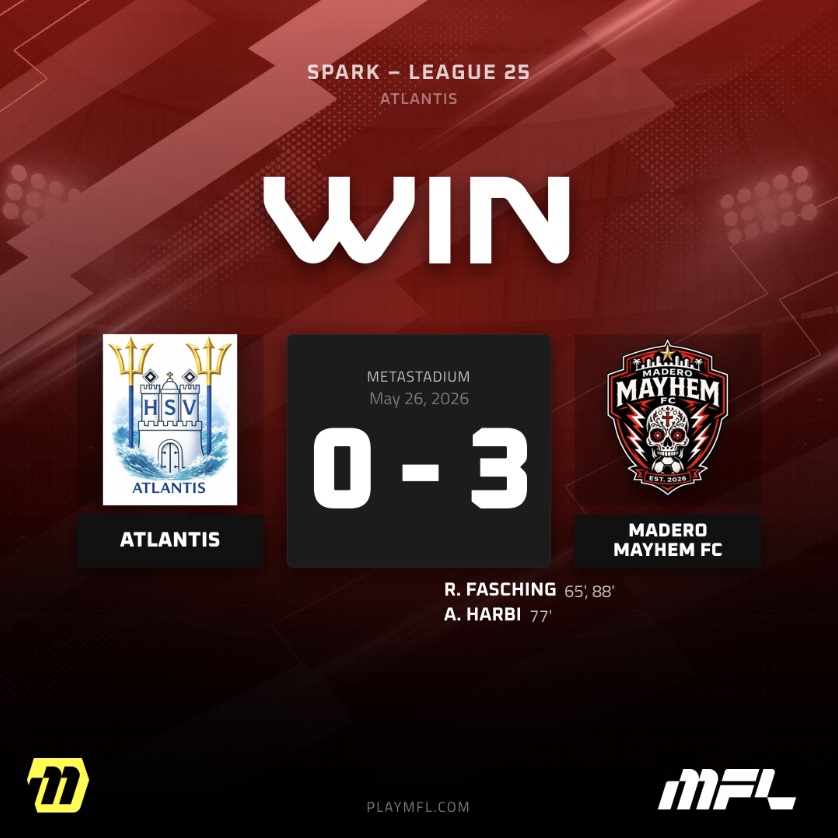
Things went from bad to worse for Kasmi when he watched helplessly from the bench as his team experimented with a 4-3-3 formation against rivals Atlantis. The Mayhem were relentless in a resounding 3-0 victory in which Atlantis didn’t register a shot on target.
His new club were adapting and their top-rated player didn’t fit anymore.
“Sometimes a player and a system don’t align as quickly as you’d hoped. We still believe Essaid has plenty to offer, and a loan gives him the chance to play regularly, rediscover his form and come back stronger.”
Discovering the 4-3-3
Whilst the 4-3-3 had not featured in the club’s pre-season planning, its emergence increasingly felt inevitable.
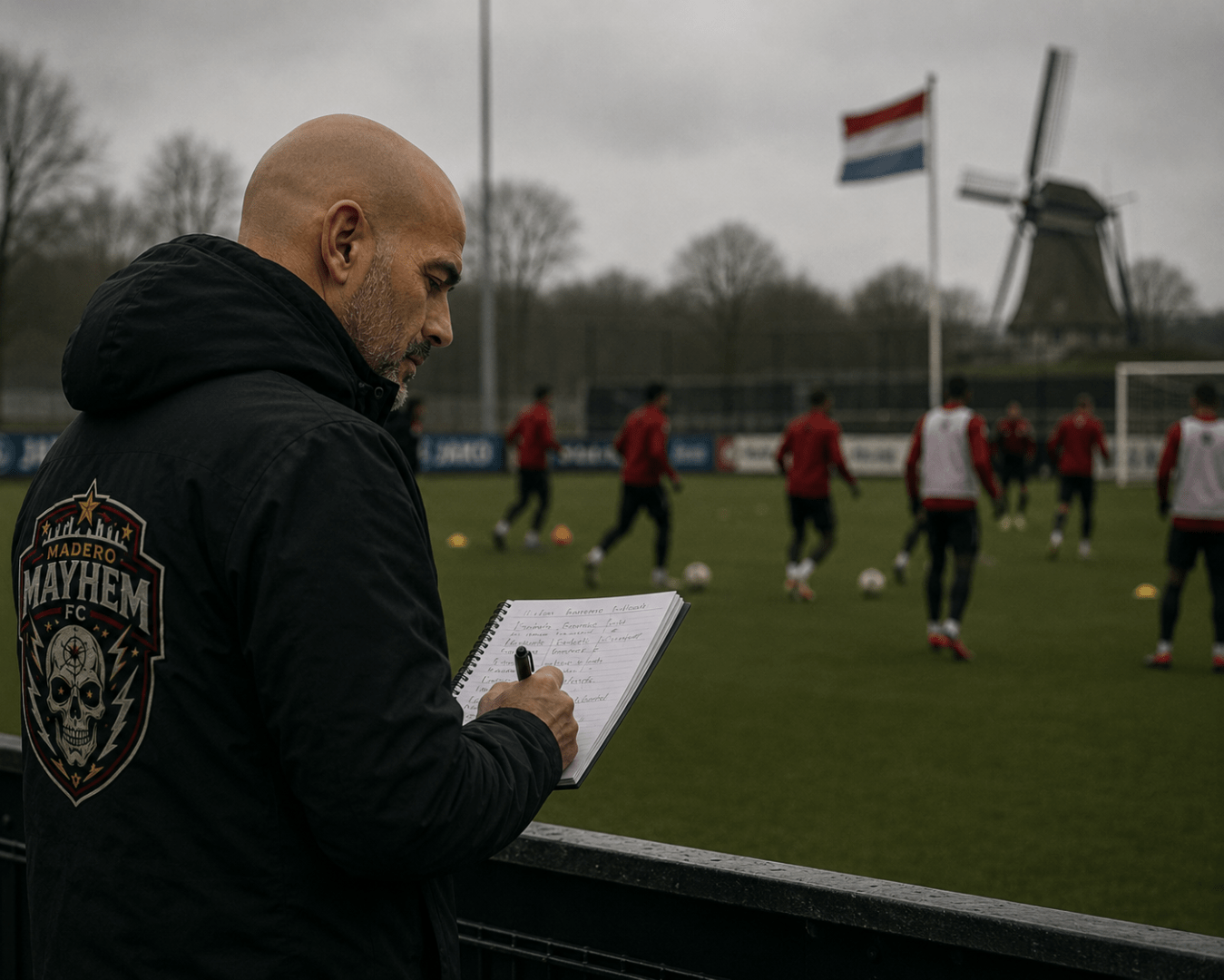
The breakthrough did not come from a single match, but observation, analysis and experimentation. Management even travelled to the Netherlands during the season to study one of the MFL’s leading Diamond Division clubs, spending time analysing how elite sides used the 4-3-3 to control matches, create overloads and build sustainable success.
What emerged from that research aligned almost perfectly with the trends already appearing inside Madero Mayhem’s own data.
Despite conceding 11 goals in their opening seven league games, the underlying numbers consistently suggested the defence was not the problem. Opponents were rarely creating large volumes of chances and, more often than not, the team’s structure remained intact. The obvious conclusion was that The Mayhem needed more players influencing the game further forward.
A midfield three would offer greater control of central areas, while an additional attacker increased the team’s ability to stretch opponents and create chances from wider positions. More importantly, it gave the club something it had been searching for since promotion: clarity.
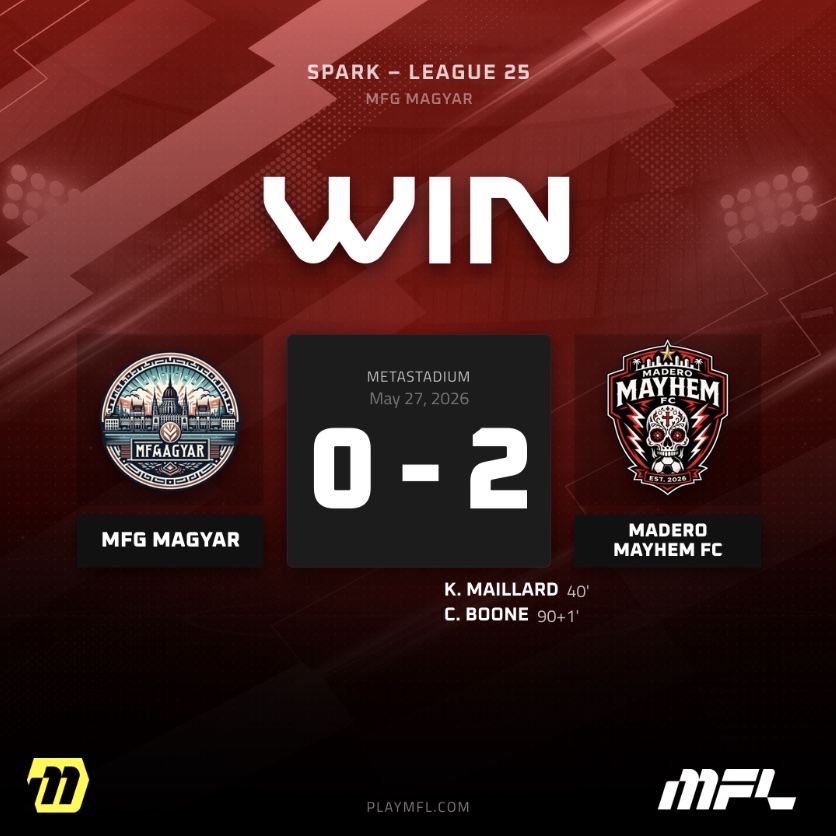
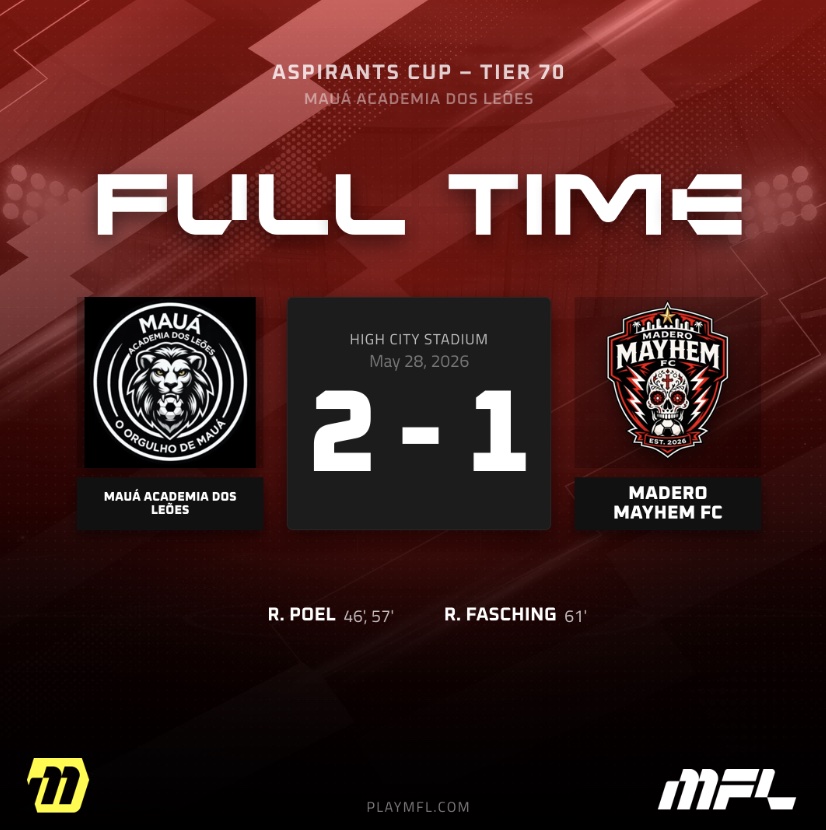
The early results were encouraging. A statement 3-0 victory over old rivals Atlantis was followed by a controlled 2-0 win against MFC Magyar. Even the subsequent 2-1 cup defeat against stronger opposition felt more encouraging than the scoreline suggested.
For the first time all season, there was a growing sense that Mayhem had found a direction.
The problem was that the squad had been assembled with different ideas in mind.
The emergence of the 4-3-3 exposed weaknesses that had previously been hidden. Depth in the wide areas suddenly became a concern. The midfield trio often lacked the quality required to consistently dominate Spark Division opponents. Players recruited for one tactical vision found themselves trying to adapt to another.
Others, however, flourished.
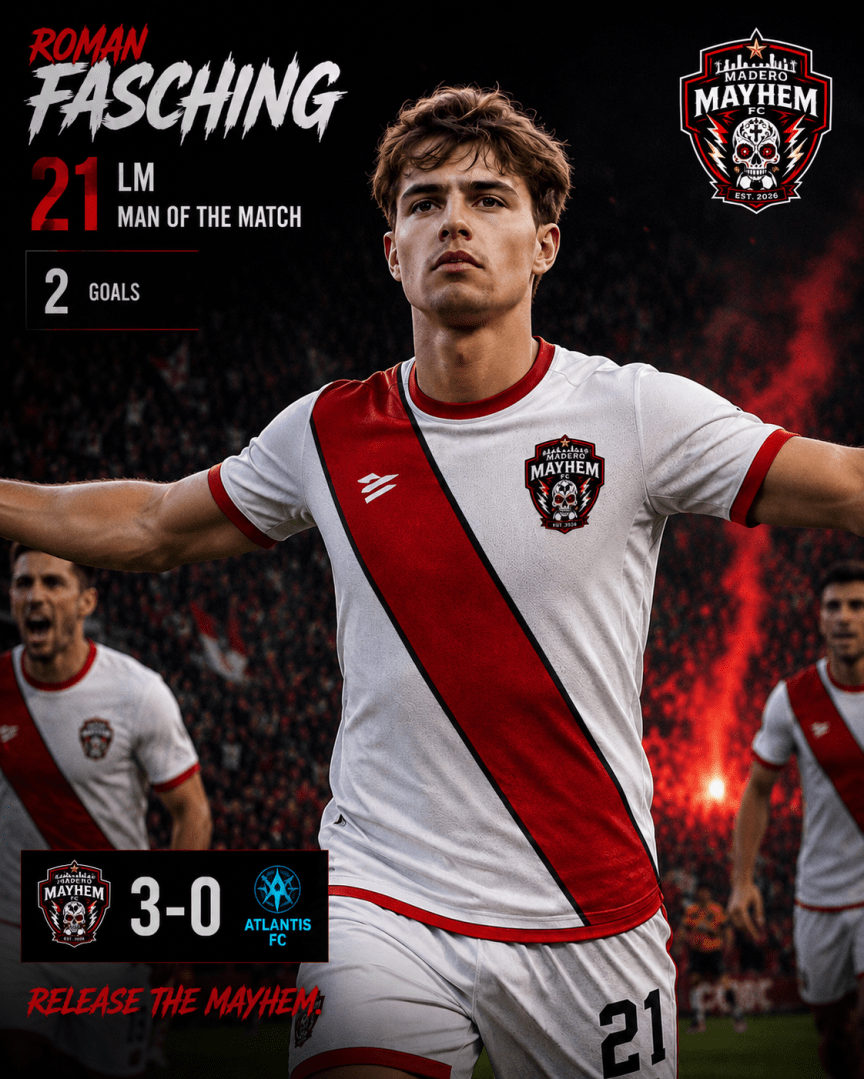
Roman Fasching emerged as one of the biggest beneficiaries of the new shape, announcing himself with a brace against Atlantis before later helping himself to a cup hat-trick. Didier Cambier continued to demonstrate why he remains one of the first names on the teamsheet, while Daniel Karsai’s intelligence and defensive discipline provided much of the platform upon which the system was built.
But for the first time, Madero Mayhem were no longer searching aimlessly for answers.
They were building towards one.
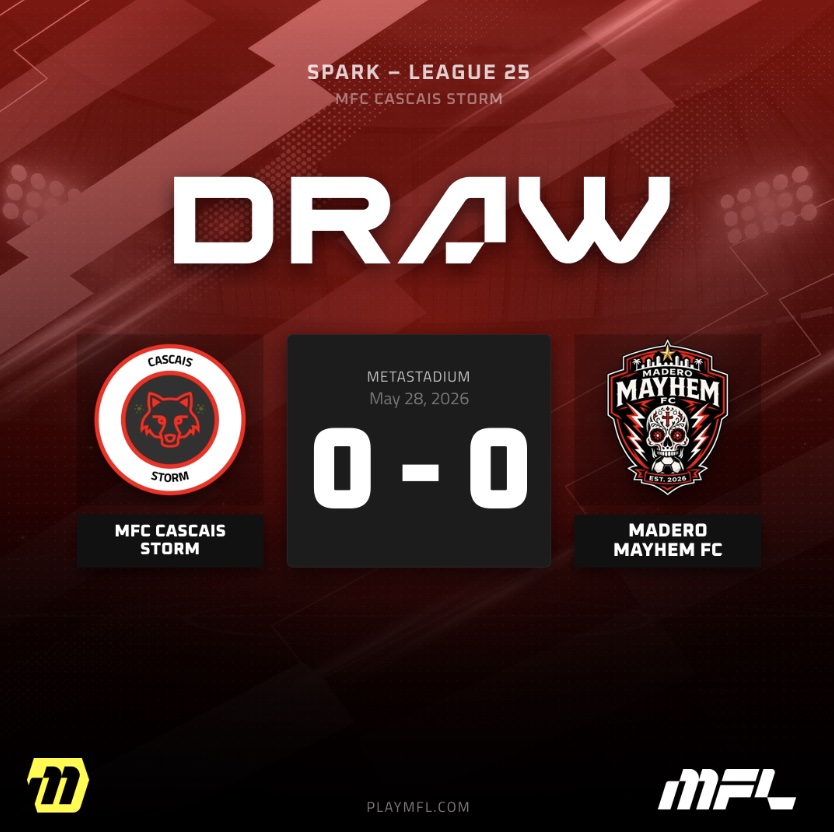
A rotated team could only scrape a 0-0 draw against lowly MFC Cascias, but with the starting 11 rested, they bounced back to win two in a row.
The Game which Changed the Strategy
It was soon realised that the midfield weren’t strong enough to match teams of a similar quality, let alone dominate.
The forward line, containing players who were never meant to be starters, struggled against strong defences.
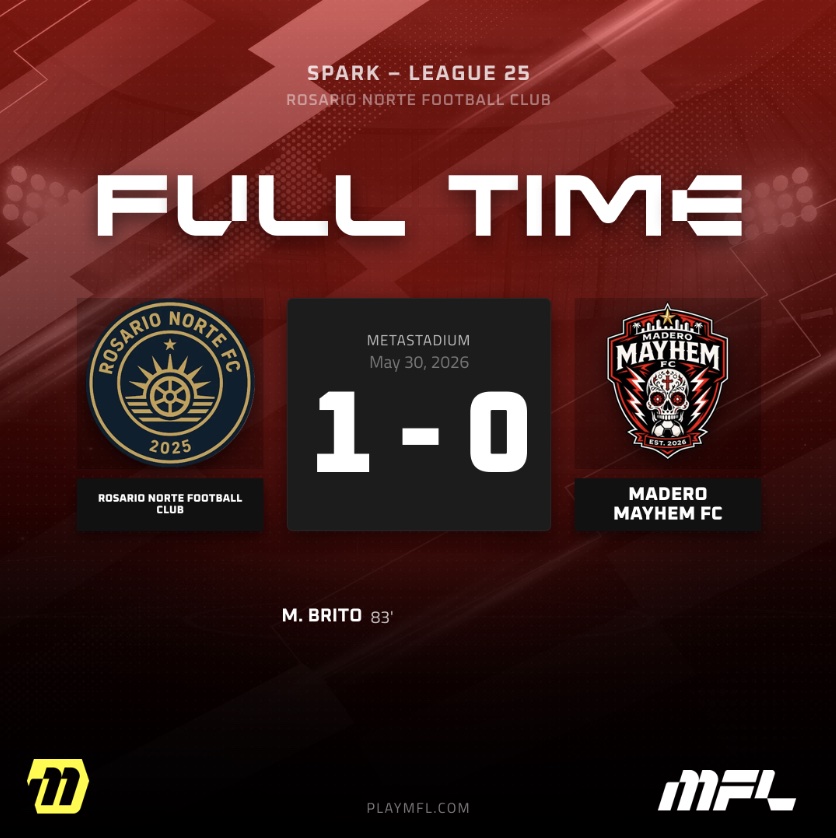
And no game made that more apparent than the 0-1 defeat to promotion contenders Rosario Notre Football Club.
Once again, the defence did its job, limiting Rosario to just 0.45 xG, despite them having 57% possession.
The midfield, however, struggled. The trio of Karsai, Zander and Alexe averaging a combined 6.3 match rating, compared to 7.4 of the Rosario midfield three.
The front 3 also struggled, getting just 2 shots on target from 10 attempts, for a combined 5.6 versus the opponent’s 6.9. Which in a 1 goal game is quite a worrying discrepancy.
Therefore, the Madero Mayhem ownership made the decision that if they were to commit to the 4-3-3 for the rest of the season, they would have to be active in the upcoming Transfer Window.
And with that, recruitment began.
Whilst the Recruitment team were busy sifting through the transfer market, there were more games to play.
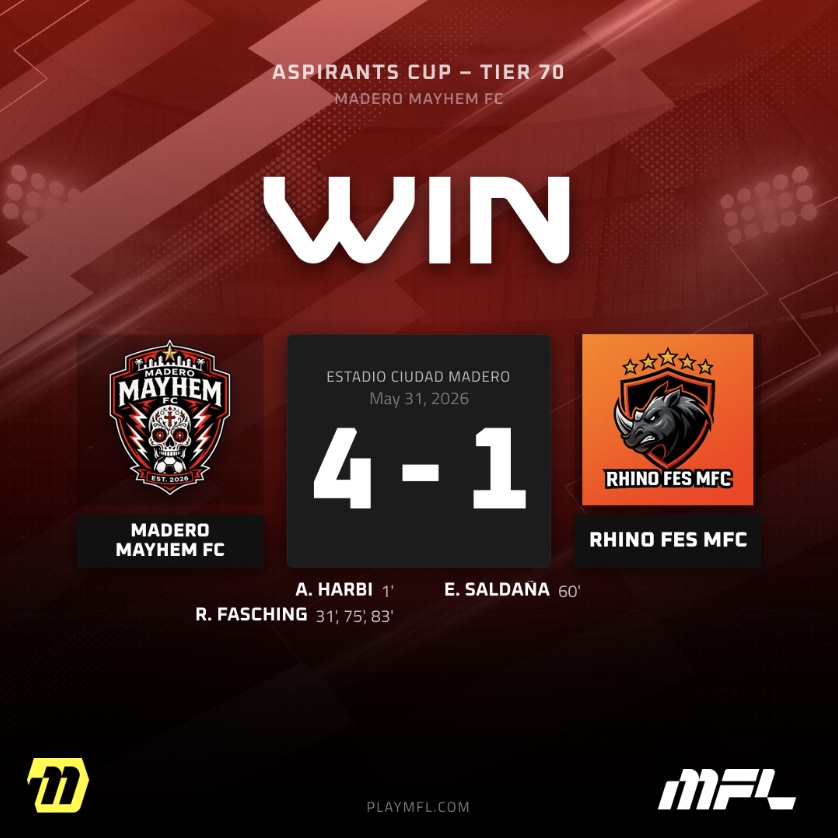
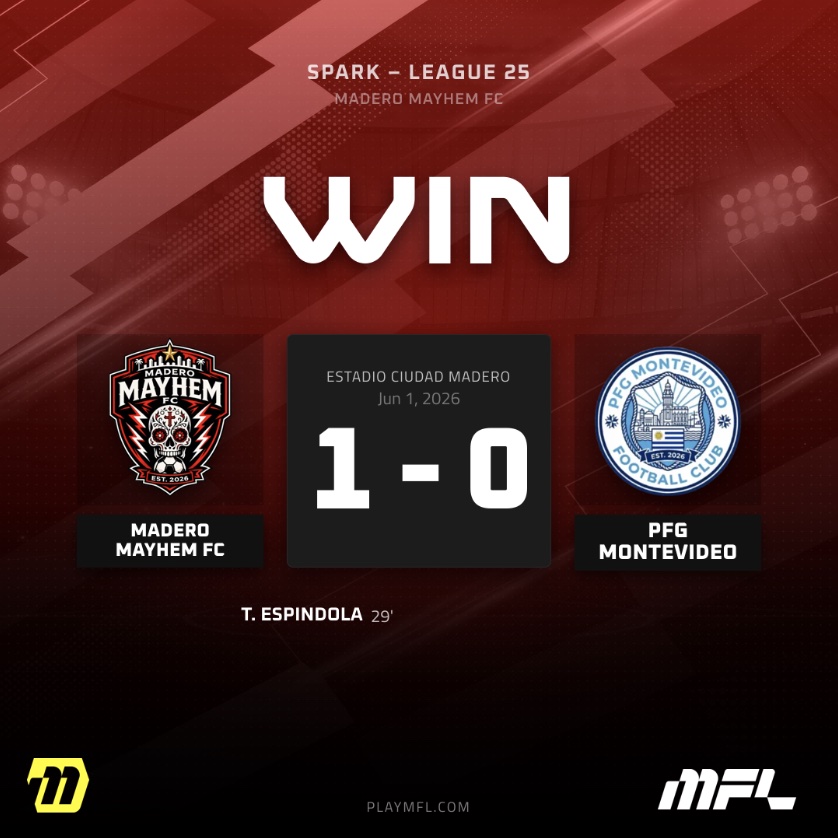
A rotated Rhino Fes MFC were beaten 4-1 in the cup, before a switch back to the 4-1-3-2 to rest the wingers for a 1-0 league win against 11th placed PFG Montevideo, where once again it flattered to deceive.
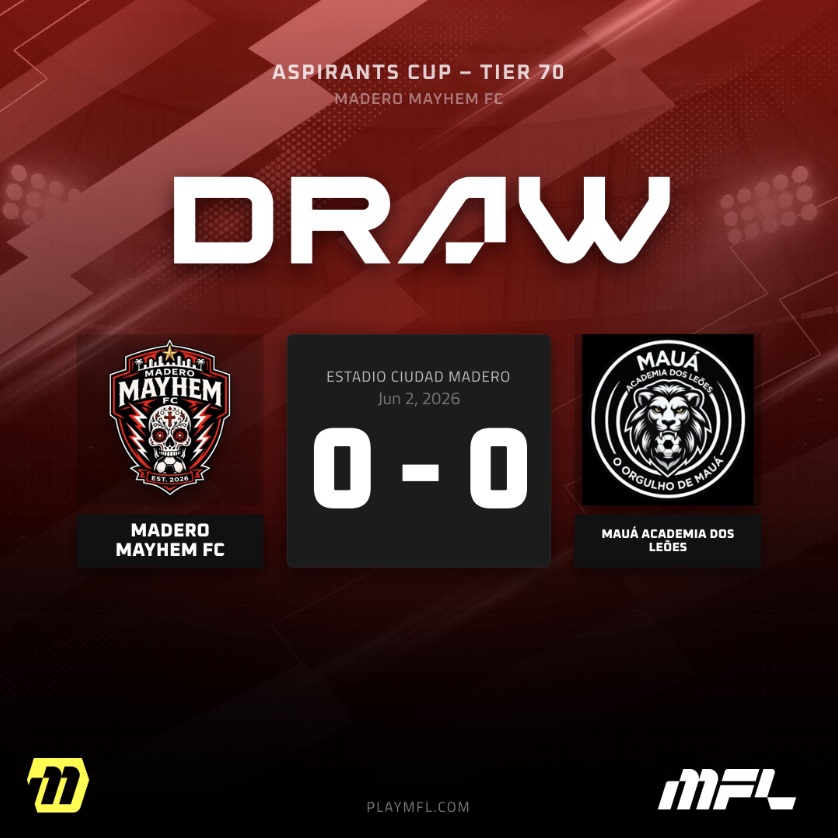
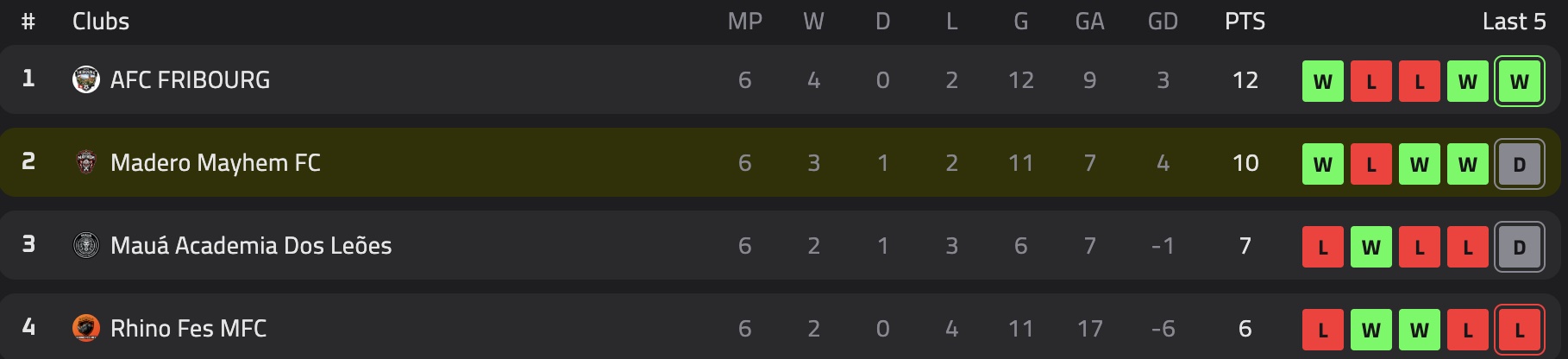
Knowing that avoiding defeat would secure qualification, Madero Mayhem produced one of their most controlled defensive displays of the season, earning a 0-0 draw that safely carried them through to the knockout stages. The frustration was that the game should have been over long before the final whistle.
The statistics suggested Mayhem should have won comfortably, but the breakthrough never arrived. Top spot in the group was surrendered and a more difficult knockout tie now awaits.
Recruitment Realignment
When this squad was originally assembled, the assumptions were different. Winger-based football was expected to be occasional – not foundational.
The emergence of the 4-3-3 immediately altered recruitment priorities. Wide attackers became essential, midfield quality moved to the top of the shopping list and, for the first time all season, the club had a clear blueprint for squad building.
For the first time all season, Madero Mayhem looked less like a collection of tactical experiments and more like a football club moving towards a coherent long-term vision.
But first, we need to look at how the current squad is performing.
Heroes and Villains
If the first half of the season has revealed one thing, it is that Madero Mayhem FC’s defensive foundations appear considerably stronger than their attacking output. Across 17 matches in all competitions, opponents have been restricted to just 0.85 xG per game, a figure that places the club among the division’s more difficult sides to break down. As a result, when the transfer window opens, attention is expected to focus further up the pitch.
The midfield, however, tells a different story.
Daniel Karsai (68 OVR) has emerged as the standout performer, averaging 7.3 across his seven appearances. Shielding the defence and providing much-needed stability. Stefan Alexe (65 OVR) has adapted admirably, averaging 7.1 while contributing four assists across several midfield roles.
Beyond that, however, the picture becomes less convincing.
Gerhardt Zander (66 OVR), whose relentless energy often drives the team forward, has contributed a goal and an assist while averaging 6.9 across nine appearances. Teofilo Espindola (65 OVR) has struggled to reproduce the influence he enjoyed last season from a more central role, though he still leads the midfield group with two goals.
Walter Falcone’s (66 OVR) truggles perhaps best illustrate the tactical consequences of the shift to a 4-3-3. Intelligent and technically sound, he has yet to find a natural role within the new system, reflected in a 6.6 average rating across six appearances.
As with Kasmi (71 OVR), Falcone may find struggle to find himself a place for the rest of the season.
The attack has at least offered reasons for optimism.
Abdalla Al Harbi (68 OVR) and Roman Fasching (66 OVR) have each scored seven times, emerging as the club’s most reliable goal threats. Karim Maillard (66 OVR) has added four goals of his own, while last season’s leading scorer, Nestor Zamorano (68 OVR), has managed three goals from five appearances.
Yet even here, questions remain. Zamorano’s profile appears less naturally suited to the demands of the emerging 4-3-3, while reports suggest both he and Maillard could spend the second half of the season away from the club on loan.

Strengthening the Midfield
To take the team forward, they needed to first bolster the midfield. A player was needed who would not only help win possession, but also use it well. Someone who could drive the team forward.
The pursuit of Graeme Moss had been ongoing for some time. At 25 years old, Moss possesses the blend of physicality, mobility and technical ability that has become increasingly difficult to find on the market. While his $25 fee initially felt steep by Mayhem standards, a closer look at the transfer market revealed just how undervalued he was. Comparable midfielders with similar age profiles and attributes were routinely listed for $80, $100 or more, placing them well beyond the club’s budget. Moss arrives not as a luxury signing, but as a player capable of raising the level of the entire team.

Graeme Moss in action for Adriatico Brindisi
The deal was complex, with Moss’s Adriatico Brindisi teammate, Rinaldo Tonelli also signing for The Mayhem, but not joining until next season, and Essaid Kasmi going the other way on loan.
Sharpening the Attack
Mauro Alderete arrives as one of the most intriguing value signings of the season. Signed for just $6, the 28-year-old Argentine winger was available at a fraction of the price usually associated with players capable of making an immediate impact in the final third. Despite being naturally a right midfielder, Alderete is actually rated higher when deployed on the right wing, where his combination of pace, dribbling and finishing should provide a more direct attacking threat than loanee Martin Favre, who’s managed just one goal and one assist in nine appearances. With 73 pace, 76 shooting and 76 dribbling, Alderete brings the ability to attack defenders one-on-one and contribute goals from wide areas. Out of favour at Johnnie Walked FC, Alderete arrives with a point to prove and the attributes to make an immediate impact.

Argentine Alderete bring South American flair and passion… and Mayhem
The signing of Elias Aristizabal represents the biggest statement of intent Madero Mayhem FC have made.
At $55, the Colombian striker becomes the most expensive player in club history, comfortably surpassing previous transfer records and forcing the club to dig deeper into its reserves than ever before. For a side that has built its rise through clever scouting, undervalued assets and patient development, it is not a decision that was taken lightly.
But context matters.
The transfer market has become increasingly inflated and a clear growing demand for young, high-potential players. When comparing Aristizabal to the next available strikers of a similar calibre, the deal begins to look far more reasonable. Other forwards with comparable pace, finishing and physical profiles were listed at $120+, while others were simply unavailable altogether. In that environment, securing a newly minted 73 OVR striker for less than half that began to look less like a luxury and more like an opportunity.
What truly convinced the recruitment team, however, was the profile.
At just 24 years old, Aristizabal arrives with 82 Pace, 78 Shooting and 79 Physical – a combination rarely seen at this level and almost impossible to acquire without paying a significant premium. He possesses the athleticism to stretch defences, the strength to compete physically with centre-backs and the finishing ability to turn half chances into goals. More importantly, he fits perfectly into the club’s evolving 4-3-3 system.
For Madero Mayhem, this is not simply a signing for the second half of the season.
It is an investment in the future of the football club.
The fee was higher than we’d intended to spend, but so was the quality. Players with Aristizabal’s age, athleticism and potential don’t become available often, and we felt this was an opportunity we couldn’t afford to miss.

Elias Aristizbal, 5 goals in Ice this season
Other moves were made. Roman Fasching’s 7 goals led to his loan deal being made permanent for a fee of just $5.25. With wingers matching Fasching’s pace, dribbling and finishing abilities costing a minimum of $20 and being 73 rated, he’s another undervalued talent.
Looking Ahead
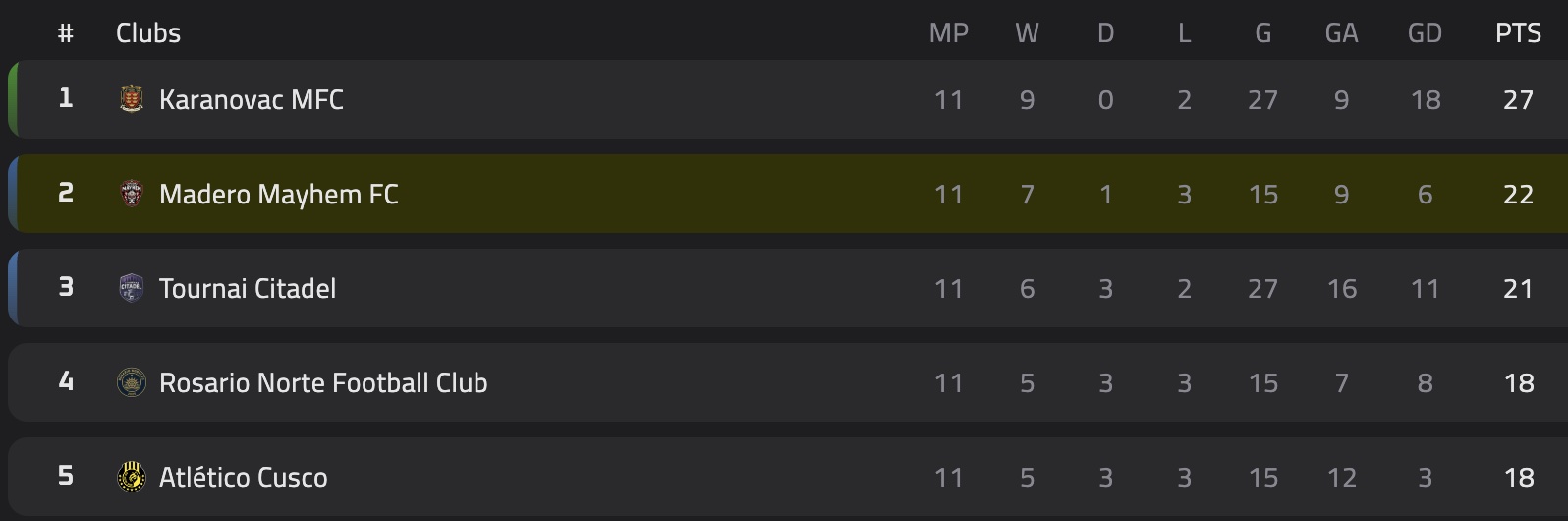
Despite all the uncertainty, despite the tactical experimentation, recruitment recalibration and ongoing identity crisis, Mayhem reached the halfway stage of the season sitting second in the Spark Division table, only four points behind leaders Karanovac MFC and still alive in the cup.
The first half of the campaign was not a story about perfection.
It was a story about discovery.
Not only do they have the second best defence in the division, they now have more steel in midfield and pace and prowess in attack.
And perhaps the most intriguing aspect of all is that the numbers suggest Madero Mayhem FC may already possess the hardest part of a title-winning side:
The vision.
The obvious question now hangs over the Spark Division:
What happens when Madero Mayhem FC finally become the team they’re trying to be?




 The Gaffers Lounge
Leave a comment