


PASS – Issue One
ALTITUDE
July / August 2042

By 7:14am on a warm July morning, the first players have already begun arriving at the training ground above the eastern edge of Chur, where sprinklers move slowly across the pitches and the lower ridges of the mountains sit beneath a thin haze that will burn away completely before noon. From the balcony outside the analysis room, Iñaki Arriola watches the opening phase of the session with a coffee beside him that gradually cools untouched, while members of staff move quietly between equipment sheds and meeting rooms carrying tablets, cones and stacks of tactical printouts that will eventually be left scattered across the canteen tables later in the day.
Nothing about the atmosphere suggests a club attempting to recover from failure, although FC Chur enter the 2042/43 season carrying the unfamiliar sensation of having plateaued slightly after the acceleration of previous years. Fourth place would once have represented historic achievement for an institution that spent much of its modern existence moving through the lower reaches of Swiss football, yet the standards inside the club have altered profoundly under Arriola. Qualification for Europe remains enough internally, but the mood around the squad carries the sense of a side aware that last season drifted away from them gradually rather than collapsing outright.
The discussions throughout pre-season have centred less around intensity than efficiency. Chur controlled matches last year without always finishing them, dominating territory and possession while becoming increasingly wasteful in decisive moments, particularly against opponents who had begun understanding the patterns of movement and spatial manipulation that had once made Arriola’s side feel slightly unpredictable within Swiss football. Sessions throughout July repeatedly pause over small details: body orientation during build-up, distances between midfielders when pressing, the timing of underlapping runs around the edge of the penalty area. Players still speak quietly about the standards Daniel R. Mercer documented throughout The View From the Top, where Arriola’s obsession with precision occasionally bordered on exhausting for younger members of the squad. Very little about that side of him has softened with time.
Yet the club itself is changing around those principles. The departures this summer suggest a squad moving carefully into another generational phase. Oscar’s €8 million transfer to Villarreal continues the pattern of Chur developing players who eventually move outward into Europe’s larger systems, while Joseph Ballo’s departure to Brest and Martí Puigvert’s exit for Reims have subtly lowered the average age of the dressing room. In their place arrive Noah Claude, a 21-year-old central defender signed for €5 million, and Roman Abiodoun, an 18-year-old striker whose arrival for €6 million feels less significant because of the fee itself than because it reflects Chur’s increasing confidence in investing early rather than reactively.
This remains a club committed to progression through development rather than accumulation. Youth players continue leaving temporarily on loan before returning older in temperament and sharper tactically, shaped by lower-league football rather than protected from it. Glauber’s return from Ems has altered him physically and emotionally, while Dylan Bibaud arrives back from Concordia carrying the sharper movement and tactical discipline that Chur increasingly demand from wide players.

Standing between the older era and the emerging one is Xabier Iriondo, now 33, who signed a new contract this summer fully aware that his role on the pitch would diminish gradually over the coming seasons. The acceptance itself matters enormously inside the building. Younger players still describe him as the emotional reference point of the dressing room, the first player onto the training pitches each morning and the voice most likely to interrupt shape work in order to reposition someone by half a metre. His influence increasingly resembles architectural support beneath the structure rather than visible leadership at the centre of it.
Meanwhile, Cyrill Feitknecht has become increasingly representative of modern FC Chur itself: creative without excess, technically expressive while remaining structurally disciplined, capable of improvisation without abandoning collective responsibility. Marcos Lima’s development may ultimately define the club’s ceiling this season after contributing twenty-four goals and assists during a breakout campaign last year that transformed him from promising squad player into one of the most discussed attackers in Switzerland. Whether he can sustain that level remains uncertain, although uncertainty has always been central to Chur’s development under Arriola. Every stage of growth has arrived carrying the possibility that the rise might slow.
The club enter the new season understanding clearly that another transition has already begun. What matters now is whether Chur can continue evolving without losing the restraint and patience that allowed them to arrive here in the first place.

By late afternoon, the Rhine slows beside the city in a way that alters the rhythm of everything around it. Children leap from the low concrete banks into water softened by glacial melt while cyclists pass cafés whose open façades spill conversation into the streets, and the heat rising between the older Alpine buildings settles heavily enough that shutters begin closing gradually across apartments overlooking the old town. Summer changes Chur completely. The city moves more slowly during these months, although the movement itself never truly stops.
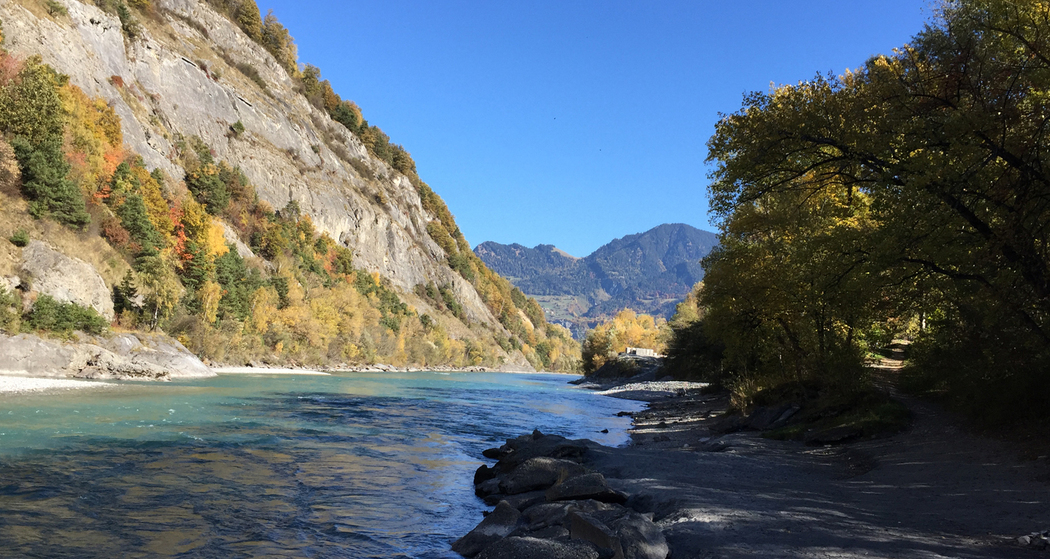
Training sessions begin earlier now because of the heat. Several of the Spanish players drift instinctively toward shaded cafés or darkened apartments during the early afternoon before returning later in the evening when the temperature begins easing again, while others spend long stretches of time walking through the city in relative anonymity because Chur still remains small enough for footballers to exist inside everyday life rather than apart from it. Roman Abiodoun appeared briefly outside a bakery near Bahnhofstrasse one morning during pre-season carrying coffee and pastries before disappearing back toward the station, and nobody around him reacted with the performative urgency football culture elsewhere often encourages.

Above the city, the mountain passes remain the defining presence around everything FC Chur have become. Roads carve through enormous landscapes while the peaks surrounding the city create the impression of protection rather than confinement, enclosing Chur beneath layers of rock and distance that separate it psychologically from the faster rhythms of Zürich or Basel. Watching from the western ridges above the city during the evening, the stadium appears almost temporary against the scale of the Alps themselves, as though football has simply been allowed to exist briefly within the landscape rather than dominate it.

Arriola often describes defensive structure in similar terms. Compactness. Shelter. Collective protection. The parallels between geography and football emerge naturally in Chur because the city itself teaches those instincts long before players arrive at the club.
Long grass moves across mountain meadows beyond the training ground while streams carry fresh meltwater downward through the valleys, and the sense of isolation surrounding Graubünden continues shaping FC Chur more than any tactical philosophy possibly could. In larger cities, football competes constantly with other forms of identity and entertainment. In Chur, the club increasingly functions as connective infrastructure linking villages, generations and languages across the canton itself.
The railways reinforce that feeling continuously. Trains arrive through the mountains carrying tourists, construction materials, workers, students and footballers through the same narrow routes cut across the Alps decades earlier. Chur’s squad increasingly mirrors those routes: Basque coaches, Spanish midfielders, French-speaking defenders, local academy graduates and multilingual supporters all moving through the same institutional structure without entirely surrendering their individual identities.
Despite the club’s modern infrastructure and growing national relevance, parts of Chur still feel suspended slightly outside contemporary football culture. Traditional Alpine buildings stand beside cutting-edge training facilities. Families gather in the same cafés they used twenty years earlier before fourth-tier matches. Summer festivals continue around the city regardless of league position or European qualification.
The mountains slow everything down just enough to preserve continuity, and perhaps that explains why FC Chur still feel connected so strongly to place even while moving steadily toward another level of footballing relevance.

Construction workers remained visible around the stadium throughout most of the summer, often long after the final training sessions had finished for the day, moving between sections of newly expanded seating while concrete dust settled across walkways that would eventually fill with supporters once the season began. Years ago, much of this labour would have been brought in externally. Increasingly, however, the people building FC Chur’s physical growth are local residents who grew up alongside the club itself.
One worker standing near the new upper tier gestures toward the opposite stand during a break in the afternoon heat and explains that he used to watch fifth-division matches there with his father when crowds were small enough for individual voices to carry across the entire ground. Now he spends his working days helping expand the same stadium for European football.
That closeness between club and population still defines FC Chur more than any tactical identity or recruitment strategy. Players arrive early on matchdays because supporters gather outside hours beforehand, with children leaning over barriers carrying shirts and notebooks while families wait patiently for autographs before moving into cafés or bars around the stadium. After matches, supporters often remain in the area long enough that footballers eventually reappear among them later in the evening, walking through the city or stopping briefly outside restaurants without requiring the layers of separation that surround larger clubs elsewhere.

The atmosphere inside the stadium itself remains unusually intimate despite the club’s rise. Supporters sit close to the pitch. Flags move continuously behind the goals. Alpine horns sound after goals with a depth that echoes around the surrounding slopes and gives celebrations a distinctly regional texture impossible to replicate elsewhere in Swiss football. Those moments feel rooted in the canton itself rather than choreographed for spectacle.
Language shifts naturally throughout the ground as well. German still dominates most conversations, although Romansh announcements remain part of matchdays and Spanish has become increasingly common around the club because of Arriola’s influence and recruitment profile. French drifts through sections of younger supporters and academy families. The mixture rarely feels forced because multilingualism already shaped daily life across Graubünden long before FC Chur reached the top division.
Older supporters occasionally mention rising ticket prices or the appearance of small corporate areas inside the stadium, although there remains remarkably little anxiety surrounding the club’s direction overall. Most people around FC Chur still remember periods when survival mattered more than expansion, and those memories continue grounding expectations. Success has altered the scale of the club without fundamentally changing the rituals surrounding it.
The clearest expression of that continuity usually appears after full-time. Children still wait beside barriers hoping for signatures. Players still crouch beside families for photographs. Groups of supporters continue lingering outside the stadium beneath the warm summer light, reluctant to let the evening finish too quickly.
For all the growth surrounding FC Chur, the club still understands instinctively that these moments matter more than any transfer fee or league position ever could.

Modern football increasingly speaks about identity in the language of branding and marketability, yet FC Chur continue approaching the concept more like regional stewardship. The club’s leadership speak less about expansion than responsibility, framing football not simply as entertainment but as a mechanism capable of improving life across the canton itself.
 That philosophy shapes practical decisions as much as symbolic ones. Sustainability at Chur extends beyond environmental messaging into employment practices, academy development, local recruitment and long-term infrastructural thinking. The club still spend significantly less than many of Switzerland’s larger institutions despite their recent success, preferring slower progression and internal growth over aggressive external investment. Critics occasionally interpret that caution as reluctance to become truly elite, although people inside the club appear increasingly comfortable with remaining distinct from the dominant models surrounding modern European football.
Arriola’s Basque influence runs through the entire structure. Regional pride matters. Community visibility matters. Development matters. The relationship between football and local identity matters enormously. Over time, the similarities between Basque football culture and life in Graubünden have become increasingly obvious: strong linguistic traditions, geographical separation, resilient regional identity and an instinctive suspicion toward outside centralisation.

Even the symbolism surrounding the Alpine ibex mirrors aspects of Chur’s development. Adapted to harsh environments, separated from larger populations, once driven close to extinction before gradually recovering, the animal increasingly feels like an accidental metaphor for a club that spent years near the bottom of Swiss football before climbing unexpectedly into national relevance.
Yet the tension beneath the project remains unavoidable. Continued success inevitably pulls clubs closer toward the financial and commercial systems they originally positioned themselves against. Chur’s rise has already altered parts of the city economically and culturally, while Swiss football increasingly views the club as a model institution capable of competing intelligently without abandoning regional identity.
The larger question, however, extends beyond football entirely: how much influence should a football club exert over the wider life of its canton?
In Graubünden, FC Chur increasingly functions as social infrastructure as much as sporting institution, connecting villages, languages and generations through a shared civic identity that extends well beyond matchdays themselves. The club’s success matters partly because it provides representation for a region that historically existed slightly outside the centre of Swiss football and politics alike.
Whether that balance can survive continued growth remains uncertain. Chur are edging steadily closer toward the financial and cultural gravity of elite football, while regional life around them still values restraint, continuity and proximity over spectacle or status.
For now, the club continue trying to move carefully enough that one world does not entirely consume the other.


The Rhine moves calmly through Chur during July, carrying glacial water past cafés, apartment blocks and walking paths without urgency, and the atmosphere surrounding FC Chur entering the 2042/43 season feels remarkably similar. Optimism exists everywhere around the club, although it arrives quietly rather than dramatically, shaped more by continuity than revolution.
The squad itself feels younger and lighter than last season’s version. Noah Claude and Roman Abiodoun represent the beginning of another transition under Arriola, while the returns of Glauber and Dylan Bibaud reinforce the club’s commitment to development pathways that remain unusually patient within modern football. Even the departures throughout the summer suggest evolution rather than dismantling. Chur continue losing players outward into larger leagues while regenerating internally at a pace that increasingly resembles institutional habit.
Last season’s fourth-place finish still hangs slightly over discussions surrounding the club, although perspective remains important. Chur are still outperforming expectations historically attached to a team from Graubünden, and their Europa League campaign reinforced the sense that they now belong permanently within the upper tier of Swiss football rather than existing temporarily inside it.
Across Switzerland, the perception of FC Chur has shifted subtly over recent years. The admiration surrounding their development model and tactical sophistication remains strong, yet there is growing curiosity about whether the club actually wish to accelerate fully toward elite status. Some observers argue Chur could spend more aggressively or commercialise more heavily. Others believe the restraint itself explains why the project has remained culturally coherent for so long.
Inside the club, there appears little appetite for dramatic transformation. Finances remain an underlying consideration behind every major decision, but Arriola has gradually become one of European football’s most convincing specialists in controlled renewal. His teams rebuild without rupture. Older players fade outward gradually while younger ones emerge beneath stable structures already waiting for them.
The summer itself reinforces that atmosphere. Construction workers complete stadium expansions while supporters gather beside the river in the evenings beneath long Alpine light. Players move quietly through cafés and town squares before returning for double training sessions the following morning. Everything around FC Chur currently feels suspended between what the club has already achieved and what it may yet become.
Another era appears to be beginning in Graubünden, although nobody inside the city seems especially interested in announcing it loudly.


Leave a Reply