
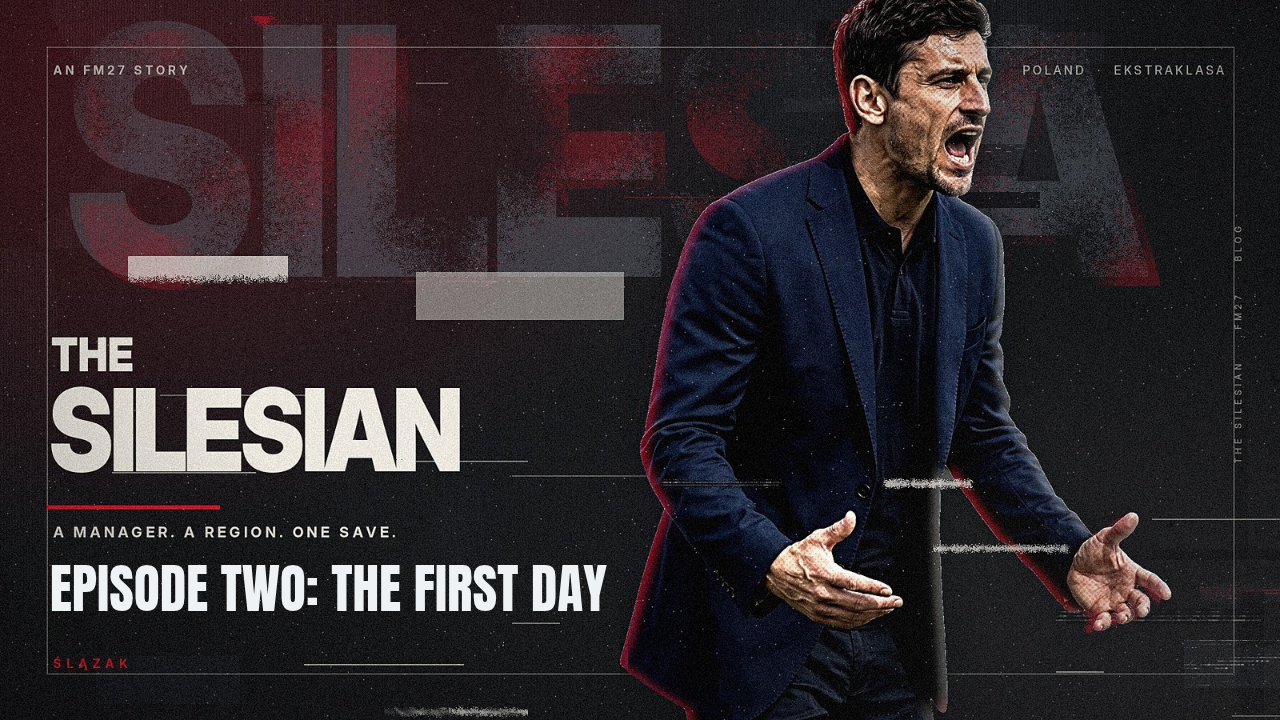
Mateusz Wrona begins the work of rebuilding Ruch Chorzów
The first day in a new job is rarely as straightforward as the appointment announcement might suggest, particularly when the position in question involves managing a football club whose history, expectations and relationship with its supporters stretch far beyond the results of the previous season. For Mateusz Wrona, the journey to the Ruch Chorzów training ground at the beginning of the 2026–27 campaign represented the culmination of a lifetime spent following the club, studying the game and gradually working his way towards the opportunity to lead a senior side of his own, yet the emotional significance of returning to the place he had grown up supporting was accompanied by the immediate realisation that sentiment would count for very little once the actual work began. The photographs, the unveiling and the words spoken in front of the assembled media had introduced him to the supporters as their new manager, but now the attention turned towards the less glamorous responsibilities that would ultimately determine whether his appointment could become the beginning of something successful, with a small squad to assess, a backroom staff to assemble, recruitment decisions to make and an entire footballing identity to establish.
Wrona had arrived in Chorzów with a clear vision of the football he wanted to play, but he was under no illusion that a preferred formation and a collection of tactical principles would automatically translate into success, because the first task facing any new manager is to understand the club he has inherited before deciding precisely what needs to change. The people already working at Ruch possessed knowledge that he could not acquire from watching previous matches or studying statistical reports, the players had their own strengths and weaknesses that would only become fully apparent through training, and the club’s financial and organisational limitations would inevitably influence the pace at which he could reshape the squad. Before he could begin implementing the Silesian Way, therefore, Wrona needed to establish relationships, listen to the people responsible for the club’s daily operation and build an accurate picture of the resources available to him, because the ambition to create something new would only become meaningful if it was supported by an honest understanding of the starting point.
There was also a personal significance to the occasion that Wrona found difficult to ignore, because the club he was now responsible for had been part of his life since childhood, when his father had taken him into the world of Ruch Chorzów and introduced him to the emotional highs and lows of supporting a team whose fortunes were woven into the identity of the surrounding community. He had grown up watching the club’s fortunes unfold, remembered the players who had represented Ruch during the 1990s and understood that the badge carried a weight that could not simply be measured by the division in which the team competed. Yet the boy who had once watched from the stands was now the manager who would be expected to make difficult decisions about players, staff and performances, and that transition required him to put aside the instincts of a supporter whenever they conflicted with the responsibilities of the job. He could appreciate the history, respect the traditions and understand the emotional importance of the club, but his first day would be judged by the quality of the decisions he made rather than the strength of his personal connection.
A meeting with the president
The morning began with a meeting with Seweryn Siemianowski, Ruch Chorzów’s club president, whose role in the organisation made him one of the most important figures Wrona would need to work alongside as the new season approached. Their first conversation was inevitably shaped by the significance of the appointment, although Wrona quickly discovered that the meeting was about much more than welcoming a new manager into the building, because the president needed to ensure that the man entrusted with the first team understood the club’s ambitions, the challenges facing the organisation and the expectations attached to his position. The two men discussed the importance of building a competitive side, the need to make sensible decisions in the transfer market and the responsibility of protecting Ruch’s identity while creating a footballing project capable of delivering progress over several seasons, with both recognising that the most sustainable route forward would require a clear relationship between the manager’s sporting vision and the wider direction of the club.

For Wrona, however, there was an additional dimension to the meeting that made it particularly memorable, because Siemianowski was not simply the president responsible for overseeing his new employer but also a former player whose name he remembered from his childhood as a Ruch supporter during the 1990s. The experience of sitting across the table from someone he had once watched as a young football fan created a striking connection between the different stages of his life, reminding him how far he had travelled from the boy who followed the club with his father to the manager now being asked to shape its future. There was something reassuring about that connection, because it reinforced the idea that Ruch was an institution built across generations, with former players, administrators, supporters and employees all contributing to the club’s continuing story, although Wrona was equally aware that personal memories would have to remain separate from the professional decisions required of him in the months ahead.
The conversation also provided an opportunity to establish the tone of their working relationship, with Wrona making it clear that he wanted an environment in which footballing decisions could be discussed honestly, expectations could be communicated clearly and the manager would be given the responsibility required to build a team around a coherent set of principles. He was not looking for unrestricted control or an excuse to disregard the club’s financial realities, but he wanted to understand the boundaries within which he would be expected to operate, particularly when it came to recruitment, staff appointments and the development of young players. The president, in turn, needed to know that the new manager understood the difference between ambitious planning and unrealistic promises, because the history and reputation of Ruch might create pressure for immediate progress, but no appointment could guarantee that the club would achieve every objective simply because the intentions behind it were genuine.
Wrona left the initial meeting with the impression that the foundations of a productive relationship could be established through regular communication and a shared understanding of the club’s priorities, although he knew that the real test would arrive when difficult decisions had to be made. It was relatively easy to agree that the squad needed improvement, that young players should be developed and that the club should play with a recognisable identity, but those principles would become more complicated if a recruitment target proved too expensive, an experienced player resisted a change in role or a sequence of poor results forced the club to reconsider its immediate ambitions. For now, however, the meeting had provided a useful starting point, and the president’s willingness to discuss the club’s broader needs gave Wrona the opportunity to begin examining the practical details that would shape his first season in charge.
A tour of the club and its facilities
Following their conversation, Siemianowski took Wrona on a tour of the club’s facilities, providing him with an opportunity to see the working environment in which his plans would have to be implemented and to begin understanding the daily routines that supported the first team. For a manager whose previous appointments had taken place in smaller and less demanding environments, the tour represented an important opportunity to assess the resources available at Ruch, not simply in terms of the buildings and equipment themselves but also through the organisation of the people responsible for preparing players, maintaining standards and ensuring that the squad could train effectively throughout a long campaign. Wrona paid particular attention to the areas used for first-team preparation, the spaces available for tactical meetings and video analysis, and the facilities that would influence the recovery and physical development of players whose performances would be central to the success of his preferred system.

His first impression was that the club possessed a foundation on which he could work, although he was conscious that facilities alone could not determine the quality of the football produced by a team. The effectiveness of a training ground depended on the standards established by the coaching staff, the quality of the communication between departments and the willingness of players to use the resources available to them, while the most sophisticated analytical equipment would be of limited value if its findings were not translated into useful information for the manager and his squad. Wrona therefore viewed the tour as the beginning of a wider assessment, with the objective of understanding what the club already did well, where its working practices could be improved and which additional appointments would be required to support the footballing project he intended to establish.
As they moved through the facilities, the conversation repeatedly returned to the relationship between ambition and organisation, because Wrona wanted to create a team that could press aggressively, maintain a compact defensive structure and move the ball forward with purpose without allowing the physical demands of his system to undermine the players over the course of the season. Such an approach would require careful attention to conditioning, recovery, injury prevention and the individual development of players, particularly if the squad was expected to maintain an intense level of performance across a demanding schedule. The manager was also conscious that a small squad could become vulnerable very quickly if injuries affected several players in the same position, meaning that the quality of the medical and performance departments would be particularly important as he considered how to balance the workload of the first team.
There was no expectation that every department would be transformed immediately, and Wrona understood that the most effective improvements would come from identifying the areas in which additional expertise could make a measurable difference rather than simply increasing the size of the organisation for its own sake. His intention was to build a staff in which every appointment had a clear purpose, with coaches who could communicate his tactical principles, analysts who could provide useful information, scouts who understood the recruitment profile and medical professionals capable of supporting the availability of the squad. The tour therefore became more than a formal introduction to the club’s facilities, because it encouraged Wrona to begin thinking about the infrastructure required to support the team he wanted to build, with each room and department representing another part of the wider operation that would need to function effectively if Ruch were to make meaningful progress.
Handing over to Tomas Fosmanczyk

Once the tour had concluded, Siemianowski introduced Wrona to Tomas Fosmanczyk, the club’s Director of Football and another former Ruch player whose connection to the club extended beyond his current administrative responsibilities. Fosmanczyk had also served as a captain, giving him an understanding of the pressures associated with representing the badge on the pitch as well as the broader demands of helping to shape the club away from matchdays. For Wrona, the meeting was particularly important because Fosmanczyk would become a central figure in translating the manager’s sporting ideas into a practical plan, coordinating recruitment, discussing the squad’s development and helping determine which changes could realistically be made within the club’s available resources.
Their initial discussion focused on establishing how the manager and Director of Football would work together, with Wrona explaining that he wanted recruitment to be driven by a clear understanding of the tactical roles required by his 4-3-3 system rather than a collection of unrelated opportunities in the transfer market. He was interested in players who possessed the physical qualities to compete in a demanding league, but he also wanted footballers who could make good decisions under pressure, understand their responsibilities within a positional structure and contribute to a collective style that would remain recognisable regardless of the individual names in the starting eleven. Fosmanczyk needed to understand those preferences in practical terms, because the recruitment process would involve balancing the manager’s ideal player profiles against the realities of availability, contract situations, transfer fees and the wages that Ruch could afford.
Wrona also made it clear that he did not expect the club to abandon its existing squad simply because a new manager had arrived with a different vision of the game, recognising that there would be players whose experience and familiarity with Ruch could prove valuable while the team adapted to a new approach. At the same time, he wanted an honest assessment of the squad’s age profile, positional depth and long-term potential, because a club could not build a sustainable project if every transfer decision was made in response to the immediate needs of the next fixture. Fosmanczyk’s knowledge of the players, their contracts and their circumstances would be essential in helping the manager distinguish between the positions that required urgent attention and those in which development or internal competition might offer a more sensible solution.
The discussion quickly developed into a wider examination of the club’s backroom structure, and it became apparent that Ruch had several vacancies that would need to be addressed if Wrona was to establish the working environment he wanted. One of the first issues he identified was the absence of an assistant manager, a role he considered fundamental to the daily operation of the first team, particularly given the amount of work required to implement a new tactical identity while also managing the demands of league competition. Wrona wanted someone who could challenge his thinking constructively, help translate his ideas into effective training sessions and provide an additional perspective when assessing performances, with the relationship built on trust and honest discussion rather than the expectation that an assistant should simply agree with every decision made by the head coach.
The absence of an assistant manager also presented an opportunity to make an appointment that would complement his own strengths, rather than inheriting a working relationship established under a previous manager whose methods might not fit the new direction. Wrona believed that the best assistant would combine strong tactical knowledge with the ability to communicate effectively with players, maintain high standards during training and provide support when the emotional pressure of the job threatened to distract from the practical decisions required. He was particularly interested in someone who could understand the demands of his system without being so committed to one interpretation of the game that they became unable to offer alternative solutions, because the purpose of a strong coaching partnership was to improve the quality of decision-making rather than create an echo chamber around the manager.
Fosmanczyk welcomed the opportunity to discuss the staff structure in detail, explaining that the club had several additional positions that remained vacant and that he would expect Wrona to play an important role in identifying the right people to fill them. The list extended well beyond the coaching staff, covering the specialist departments responsible for set-piece preparation, performance analysis, recruitment, technical development, medical support and sports science, with the Director of Football emphasising that the club needed people whose qualities and working methods matched the direction in which Ruch intended to move. There was no suggestion that every vacancy could be filled immediately, nor would the manager be expected to appoint people simply to make the organisational chart look complete, but the discussion established that building the staff would be one of the most important tasks of the early weeks of his tenure.
Building the backroom team
The first vacancy discussed in detail was that of a set-piece coach, a specialist role that Wrona believed could offer an important advantage to a club looking to maximise the effectiveness of a relatively small squad. He had always regarded set pieces as a significant part of the tactical picture, particularly for teams that wanted to combine a strong physical presence with well-rehearsed movement in the penalty area, and he recognised that corners, free kicks and defensive restarts could have an outsized influence on the outcome of matches that were otherwise closely contested. With several experienced and physically imposing players available in the defensive line, Ruch could potentially develop a meaningful threat from attacking deliveries, while the organisation of its defensive set pieces would need to be equally reliable if the team were to avoid conceding preventable goals. Wrona wanted a coach capable of developing repeatable routines, analysing opponents’ strengths and weaknesses, and ensuring that set-piece preparation became an integrated part of the team’s weekly work rather than an occasional exercise added to training when time permitted.
The vacancy for a Head Performance Analyst was equally important, because Wrona wanted his decisions to be supported by a clear and practical understanding of the team’s performances rather than relying entirely on memory and subjective impressions. He expected the analyst to examine how Ruch progressed the ball, where possession was being lost, how effectively the press disrupted opponents and whether the team was creating chances from the attacking patterns introduced during training. Opposition analysis would also be essential, as the manager wanted to understand the strengths and weaknesses of each opponent before deciding how aggressively to press, which areas to target in possession and where the defensive structure might be vulnerable. The objective was not to drown the coaching staff in statistics or to treat every numerical trend as an unquestionable truth, but to produce information that could improve decisions, clarify recurring problems and help the players understand how their performances related to the team’s wider objectives.
The Chief Scout vacancy was another priority, particularly because Wrona believed that recruitment would determine whether his footballing identity could be sustained over several seasons. The club needed someone capable of identifying players whose attributes matched the demands of the system, but the role would involve much more than searching for footballers who fitted a list of physical or technical characteristics. Wrona wanted a scout who understood the Polish market, could identify promising players in the lower divisions and possessed the judgement to recognise when a footballer might be ready to make the step up to Ruch, while also maintaining awareness of neighbouring recruitment markets where the club might discover value. He was particularly interested in players who had the potential to improve within the team’s structure, because signing an experienced footballer who could immediately strengthen the starting eleven was useful, but finding a younger player whose development could benefit both the team and the club’s long-term finances would be equally important.
The Technical Director role would help establish the longer-term framework within which those recruitment decisions were made, providing continuity between the first team, the academy and the club’s wider footballing strategy. Wrona wanted Ruch to develop a consistent understanding of the qualities required by players in each position, allowing the club to identify prospects who could eventually progress into the senior squad rather than treating youth development and first-team recruitment as separate activities. Such a role would also help ensure that future managerial decisions did not require the entire footballing operation to be rebuilt every time the head coach changed, because the club needed a sporting structure capable of maintaining its direction even when individual members of staff eventually moved on. The Technical Director would therefore be expected to combine strategic planning with practical football knowledge, helping Ruch build a sustainable model that connected recruitment, coaching and player development.
The Recruitment Analyst vacancy offered another opportunity to improve the quality of the club’s decisions, particularly in a transfer market where a small mistake could have consequences that lasted well beyond a single season. Wrona wanted recruitment to be based on a combination of scouting, tactical assessment, performance data and an understanding of each player’s circumstances, with the analyst helping to identify patterns that might otherwise be overlooked. A footballer who produced impressive statistics in one team might not necessarily suit the role required at Ruch, while another player whose numbers appeared less spectacular could offer precisely the qualities needed to make the wider system function more effectively. The analyst would need to help distinguish between those possibilities, examining how players performed in different tactical contexts and assessing whether their strengths were likely to translate into the demands of the Polish league and Wrona’s preferred style of play.
The medical and performance departments were equally important, especially given the age profile of the squad and the intensity Wrona wanted to bring to the team’s football. The club had vacancies for a Head Physio, a Head of Sports Science and a Sports Scientist, with each role contributing to the challenge of keeping the players available, prepared and physically capable of carrying out their responsibilities. The Head Physio would oversee the treatment and rehabilitation of injured players, coordinating with the coaching staff to ensure that returns to training were managed sensibly rather than driven by the pressure to restore a player to the first team before he was ready. The Head of Sports Science would help establish the broader approach to conditioning, workload management and physical preparation, while the Sports Scientist would contribute to the monitoring and interpretation of information that could help identify fatigue, support recovery and improve the individual development of players across the squad.
Wrona understood that these positions could not simply be treated as administrative vacancies to be filled as quickly as possible, because the people appointed would influence the quality of the environment in which the players worked every day. He wanted specialists who could communicate clearly with one another, share information constructively and recognise that the purpose of their work was to help the team perform more effectively rather than protect their own departments from outside influence. The best staff members would be confident enough to challenge assumptions when necessary, but equally willing to adapt their methods to the realities of the club and the needs of the players, with Wrona making it clear that he would rather wait for the right candidate than rush into an appointment that created more problems than it solved. The first day had already revealed that building the backroom team would require considerable work, but it had also shown him that the opportunity existed to shape an organisation around the footballing principles he wanted to establish.
Twenty players and a very different challenge
With the initial discussions about staff complete, Wrona and Fosmanczyk turned their attention to the first-team squad, and the manager was presented with an overview of a group containing just twenty senior players. The number immediately caught his attention, because a small squad could offer advantages in terms of communication, training intensity and the ability to create a close-knit dressing room, but it also left very little margin for error across a long season. Injuries, suspensions, loss of form and the inevitable demands of different competitions could quickly expose weaknesses in positional depth, particularly if the team attempted to play an aggressive style that required repeated high-intensity efforts from its players. Wrona would need to make sure that every member of the squad understood his role and felt capable of contributing, while also identifying the areas in which the club needed additional options if it was to maintain a consistent level of performance.
The squad’s overall profile presented another challenge, because although there were several players with extensive experience of Polish football, many had moved between clubs during their careers and a significant proportion were approaching the years in which physical decline and recovery time could become increasingly important considerations. Wrona did not regard experience or a history of playing for multiple clubs as a weakness in itself, because footballers who had survived several changes of manager and competition level often possessed valuable knowledge of the demands of senior football, but he wanted to understand what each player could contribute to the team over the next two or three seasons rather than focusing exclusively on the immediate campaign. Ruch needed players who could help establish standards in the dressing room, provide stability during difficult periods and guide younger teammates through the pressures of the league, yet the club also required a steady supply of developing players capable of improving the squad and eventually taking on more responsibility.
The manager was therefore reluctant to make sweeping judgements before seeing the players in training, because a squad assessment carried out entirely on reputation and previous statistics could overlook qualities that became apparent only through direct observation. He intended to evaluate the group against the demands of his preferred 4-3-3, paying particular attention to the balance between defensive security and attacking ambition, the ability of midfielders to cover ground and progress the ball, and the technical qualities required to execute the passing patterns he wanted to introduce. At the same time, he knew that a formation could not be imposed successfully if the available players were fundamentally unsuited to its demands, meaning that the tactical plan would have to evolve alongside the assessment rather than being treated as a fixed set of instructions that the squad was expected to follow regardless of its strengths.

The small squad size also reinforced the importance of recruitment planning, because Wrona would need to distinguish between positions where competition was healthy and those where the club was dangerously close to having no natural replacement at all. A team might survive with two capable options at goalkeeper or centre-back, but the absence of a specialist full-back or an alternative striker could become a serious problem if an injury occurred at the wrong moment. The manager wanted every player to understand that being part of the first-team group meant being ready to contribute when called upon, whether from the opening whistle or from the bench, and he intended to create a competitive environment in which places were earned through performance, preparation and tactical suitability rather than reputation alone. With only twenty senior players available, however, he would have to balance that competition against the need to preserve relationships and avoid leaving the squad too thin in the pursuit of short-term improvements.
The goalkeepers: experience and belonging

The first position discussed was goalkeeper, where Wrona had two Polish options whose careers offered different forms of value to the club. Jakub Wrąbel, aged thirty, had arrived during the summer on a free transfer from Miedź Legnica, a club competing in the same division, and his career had taken him through eight different clubs during the previous decade, with much of his experience accumulated in the Betclic 1 Liga and the wider Polish professional game. That background suggested a goalkeeper familiar with the practical demands of the competition, accustomed to the pressures of fighting for points in difficult circumstances and experienced enough to understand the importance of consistency over the course of a long season. Wrona was interested in assessing how Wrąbel communicated with his defenders, how confidently he dealt with crosses and whether he possessed the distribution required to help the team build attacks from the back, because a goalkeeper in his system would need to offer more than the ability to make saves.
The alternative was twenty five year old Jakub Bielecki, a product of Ruch’s youth system who had already made more than 126 appearances for the club, giving him a connection to the team that differed from Wrąbel’s experience of moving between several professional environments. Bielecki’s familiarity with Ruch, its supporters and the expectations attached to representing the club could be valuable, particularly in a squad containing several new arrivals who would need time to settle into their surroundings. Wrona wanted to establish whether the younger goalkeeper could challenge seriously for the starting position, because he had no intention of allowing experience or reputation to determine the depth chart automatically, and he believed that a player developed by the club should have a genuine opportunity to demonstrate his quality if he was capable of meeting the demands of the first team.
The goalkeeper decision would ultimately depend on performances during training and the extent to which each player suited the manager’s approach, with shot-stopping, command of the penalty area, communication and distribution all forming part of the assessment. Wrona wanted a goalkeeper who could provide reliability behind a pair of physically strong centre-backs while remaining comfortable enough in possession to participate in the first phase of build-up, although he did not expect his goalkeeper to take unnecessary risks simply to make the team appear more progressive. With only two senior options available, the position was adequately covered numerically for the moment, but the manager would need to ensure that the competition remained healthy and that both players understood the standards required if they wanted to become his first choice.
Right-back: two different routes into Ruch

The right-back position offered another example of the contrasting career paths that had brought players into the current squad, with thirty two year old Martin Konczkowski representing the connection between Ruch’s past and present, while twenty nine year old Filip Wójcik had arrived as a new signing after working his way through several levels of Polish football. Konczkowski was a product of the club’s youth system who had represented the first team in the Ekstraklasa between the 2012–13 and 2017–18 seasons, establishing himself during a period when Ruch were competing in the top division before relegation forced difficult decisions about the next stage of his career. Rather than remaining with the club as it moved away from the top flight, he joined Piast Gliwice on a free transfer in order to continue playing at the highest level, a decision that reflected the realities of professional football even if it meant leaving the team with which he had developed.
His eventual return in the 2024–25 season, by which point Ruch had returned to the Betclic 1 Liga after a turbulent period of relegations and promotions, gave Konczkowski a different role within the club, because he was no longer simply a young player trying to establish himself but an experienced professional who had witnessed several sides of the footballing environment surrounding Ruch. Wrona recognised that this familiarity could be valuable in a dressing room undergoing change, particularly if Konczkowski could help newer teammates understand the expectations of the supporters and the standards required to represent the club. However, the manager also knew that a player approaching his mid-thirties would need to be assessed carefully against the physical demands of an aggressive full-back role, especially if he was expected to advance repeatedly along the flank and recover quickly when possession was lost.
Wójcik, meanwhile, had arrived from Motor Lublin in the top flight, bringing a different kind of experience shaped by the gradual progression through the Polish divisions with several clubs. His journey from the Betclic 3 Liga towards the highest level of domestic football suggested a player who had adapted to different competitive environments and found ways to progress through performance rather than relying on a single breakthrough opportunity. Wrona wanted to understand how Wójcik compared with Konczkowski in terms of pace, stamina, defensive positioning and ability to contribute in possession, because his preferred system required the right-back to be capable of playing an aggressive role when the team’s structure allowed it. The two players offered different combinations of experience, familiarity and physical capacity, and the manager intended to use pre-season to establish whether either could become a reliable first choice or whether recruitment would eventually be required to strengthen the position.
Left-back: an immediate concern

The situation on the opposite side of the defence was more straightforward, although not necessarily more comfortable, because Ruch had only one recognised option at left-back in twenty-four-year-old Krystian Wachowiak, who had joined during the summer from Stal Rzeszów. Despite his relatively young age, Wachowiak had already accumulated 139 appearances at Betclic 1 Liga level, giving him a substantial amount of experience in the competition and suggesting that he would not require a lengthy introduction to the demands of senior football. For a manager trying to build a new tactical structure, having a player who understood the rhythms and physical challenges of the division could be useful, particularly if he was expected to take on a demanding role involving repeated forward runs, defensive recovery work and careful positioning during the team’s build-up.
The concern was the lack of natural cover, because even a dependable first-choice full-back could not be expected to play every minute of a full season without interruption. An injury, suspension or loss of form could leave Wrona facing the choice of moving another defender into an unfamiliar role, changing the structure of the team or asking a young player to take on responsibilities for which he might not yet be prepared. The issue became more important when viewed through the manager’s tactical plans, because the left-back would not necessarily be required to perform the same function as the player on the right. Depending on the balance of the team, Wrona wanted one full-back to provide aggressive width while the other could move inside to support midfield, and he would need to establish whether Wachowiak possessed the technical awareness and decision-making required to perform the role he eventually assigned to him.
Wrona did not intend to recruit a replacement simply because the position lacked numerical depth, but he marked left-back as an area that required attention during the squad-building process. The ideal addition would be a player capable of competing immediately for the starting role while providing tactical flexibility, allowing the manager to adjust the balance of the team without making a substitution or changing the entire formation. Given the limited size of the squad, that sort of versatility could prove particularly valuable, because a player who could cover more than one defensive position would provide additional security without requiring the club to maintain an unnecessarily large group of specialists. For now, however, Wachowiak would be the only natural left-back available, and Wrona would need to assess both his suitability for the system and the urgency of finding another option.
Centre-backs: leadership, experience and a new arrival

At centre-back, the manager found a group with considerable experience and a variety of footballing backgrounds, beginning with thirty one year old Aleksander Komor, another former Ruch youth player who had left the club in 2014 before eventually returning the previous season. During the intervening years, Komor had represented seven other clubs in Poland, accumulating knowledge of different teams and environments before coming back to a place that had been part of his early footballing development. His career had taken him through the practical realities of professional football, where players often have to adapt to changing managers, different tactical systems and varying expectations, and Wrona believed that such experience could be useful when trying to establish a new defensive structure. Komor would need to demonstrate that he still possessed the physical and technical qualities required for the role, but his familiarity with the club and his understanding of the domestic game made him an interesting part of the defensive picture.
Club captain Szymon Szymański, aged thirty, represented another important figure within the squad, having joined Ruch in 2023 and approaching his hundredth appearance for the club, with ninety-five games already to his name. His progression through the lower divisions of Polish football had provided him with extensive experience of the domestic game, and his status as captain suggested that he had already established a degree of authority within the dressing room. For Wrona, the challenge would be to understand how Szymański’s leadership style fitted with the standards he wanted to introduce, because a new manager could not simply assume that the existing captain would automatically become the ideal spokesperson for a different footballing project. The captain needed to support the team’s collective objectives, communicate the manager’s expectations effectively and demonstrate through his own performances that the standards demanded of the squad applied equally to its most established figures.
The Croatian centre-back Andrej Lukić, thirty two, had been at the club since 2024 and brought a particularly varied international background, having played in Croatia, Portugal, Greece, the Netherlands, Moldova, Hungary and now Poland. That experience of different leagues and footballing cultures could provide valuable knowledge, particularly when adapting to opponents whose approaches varied between direct physical football and more technically structured styles. Wrona wanted to assess Lukić’s positioning, aerial ability and composure in possession, because his centre-backs would need to defend the penalty area effectively while also supporting the team’s attempts to build attacks from deep. The manager’s preference for two tall, strong defenders did not mean that he wanted players whose only contribution was to win headers and clear the ball, because he expected the centre-backs to recognise when they could step forward, find a pass into midfield or switch play to create opportunities for the full-backs and wide attackers.
The fourth option was twenty four year old Spanish defender Abraham del Moral, a new arrival from Teruel who represented a younger profile within a group otherwise dominated by players in their thirties. His arrival offered the possibility of combining experience with a player who had more years ahead in which to develop, although Wrona would need to assess how quickly del Moral could adapt to Polish football and whether his attributes suited the physical demands of the division. The manager was particularly interested in the balance between the centre-backs, because selecting the two strongest individuals would not necessarily produce the best defensive partnership if their strengths and weaknesses were too similar. He wanted defenders who could communicate effectively, complement one another in their positioning and remain comfortable when the opposition attempted to press aggressively, while ensuring that the midfield structure protected them against situations in which they were forced to defend large spaces.
The overall picture was encouraging in terms of experience and positional variety, but Wrona also recognised that the age profile of the group raised longer-term questions. Komor and Lukić were both thirty-two or approaching it, while Szymański was thirty, meaning that the club would eventually need to identify younger defenders capable of taking on greater responsibility as the current options moved towards the later stages of their careers. That did not make immediate replacement necessary, because experience at centre-back could be especially valuable during a season in which the team was learning a new system, but it reinforced the importance of recruitment planning and youth development. Wrona wanted Ruch to avoid a situation in which several key defensive positions required replacement simultaneously, and he would therefore begin considering how to introduce younger players into the wider squad while maintaining the reliability required to compete in the present.
Central midfield: the engine room of the Silesian Way

If the defensive line provided the platform for Wrona’s football, central midfield would determine whether the team could translate that stability into control and attacking momentum. The first player discussed was thirty year old Slovakian midfielder Denis Ventura, who had been at Ruch since 2024 and brought experience from Slovakia, Romania, Hungary and the Czech Republic. A defensively minded midfielder, Ventura offered the possibility of providing protection in front of the centre-backs, helping the team recover possession and ensuring that the more advanced players could take risks without leaving the entire defensive structure exposed. Wrona’s preferred system required a defensive midfielder who understood when to remain in front of the defence and when to drop between the centre-backs during build-up, and he wanted to determine whether Ventura possessed the positional awareness and passing ability needed to perform those responsibilities consistently.
Patryk Sikora, twenty six, represented another connection to the club’s development pathway, having come through Ruch’s youth system and made more than a hundred appearances for the senior team. His familiarity with the club and his accumulated experience could make him an important part of the squad, particularly during a period in which the manager wanted to establish new standards without losing the knowledge already present within the dressing room. Wrona was interested in Sikora’s ability to contribute to the team’s midfield rotations, because his system required central players to recognise when space had opened up and move into it at the appropriate moment, whether that meant supporting the defensive midfielder during build-up, covering for an advancing full-back or arriving late in the attacking third. The manager would need to assess how naturally Sikora understood those relationships, but his age and experience suggested that he could still contribute significantly while also offering a degree of continuity.
The arrival of twenty three year old Czech midfielder Jakub Krištan from Karviná offered another potential building block, particularly because his age gave him more room for development than several of the squad’s older players. Wrona wanted to understand how Krištan adapted to the demands of the Polish game, what qualities he brought to the midfield and whether he could develop into a player capable of fulfilling a more specialised role within the system. The manager’s preference for positional play placed considerable emphasis on awareness and decision-making, because a midfielder needed to understand not only where to move but also how that movement affected the players around him. If Krištan could combine technical reliability with the physical capacity to compete across the middle of the pitch, he might provide an important link between the club’s immediate needs and its longer-term development.
The most experienced option in the group was thirty four year old Michał Chrapek, another summer signing who had arrived on a free transfer from Ekstraklasa side Piast. His experience at the highest level of Polish football offered a different kind of value, because he had operated in an environment where the demands of possession, tactical discipline and the management of high-pressure matches could be considerably different from those encountered by players who had spent most of their careers in the lower divisions. Wrona wanted to understand what Chrapek could contribute in terms of passing quality, composure and decision-making, while also considering how best to manage his workload across the season. A player of his experience could be especially useful when the team needed to control the tempo of a match, but the manager would need to ensure that his role fitted the wider balance of the midfield and did not create unnecessary physical demands.
Taken together, the central midfield group offered experience, familiarity with Polish football and several different tactical possibilities, although Wrona still needed to establish whether it contained the right combination of defensive security, technical quality and forward movement. He wanted at least one midfielder capable of protecting the defence, another able to progress the ball and a player willing to make aggressive runs into the penalty area, but he also needed the group to remain flexible enough to adapt when the opposition changed its pressing structure or forced Ruch to defend deeper than intended. The midfield would be the engine room of the Silesian Way, responsible for connecting the defensive line with the attacking players and ensuring that the team’s structure remained balanced when possession changed hands. If the players could learn to understand one another’s movements, Wrona believed the group had enough experience to provide a useful foundation, although the longer-term question of age and physical capacity would remain part of his recruitment planning.
Wide attackers: movement, pace and opportunity

The wide attacking positions presented Wrona with a mixture of experience, international backgrounds and players whose careers had taken them through several clubs in search of the right opportunity. Thirty year old Japanese winger Shuma Nagamatsu had joined Ruch in 2025 after leaving Ekstraklasa side Korona, having been in Poland since 2019 and played across the domestic divisions from the Betclic 3 Liga upwards. His familiarity with Polish football was therefore a significant advantage, because he would not need to adapt to an entirely unfamiliar league while also learning a new tactical system. Wrona wanted to assess how Nagamatsu could contribute to the team’s attacking structure, particularly whether he was most effective holding the width, attacking space behind the defensive line or moving inside to combine with the central midfielders. The manager’s system required the wide players to offer different threats rather than simply occupying the same positions on opposite sides, and he would need to establish which side best suited Nagamatsu’s attributes.
English winger Teddy Sutherland, twenty six, had arrived during the summer from Teruel in Spain, where his career had involved a series of moves through the Spanish lower divisions, with eight clubs across nine years. That journey suggested a player who had experienced several different footballing environments and would need to establish himself within yet another team, although Wrona was not inclined to judge him negatively because of the number of clubs on his record. The more important questions concerned the qualities he could bring to Ruch, his ability to adapt to the demands of the Polish league and whether he possessed the pace, movement and technical capacity to contribute to the attacking patterns the manager wanted to introduce. Wrona expected his wide forwards to work hard without the ball, because the team’s pressing structure would depend on their willingness to close passing lanes and recover into position when the opposition escaped the first wave of pressure.
Kacper Laskowski, twenty four, represented another summer arrival, having joined from Chrobry in the Betclic 1 Liga and made the move part of a career that had already involved seven teams in nine seasons. His experience of the division could be useful, particularly because he would understand the physical and tactical demands of the competition, but Wrona wanted to evaluate him in training before deciding where he fitted within the squad’s hierarchy. The manager’s preferred system required wide attackers to make intelligent decisions about when to stay wide, when to attack the space behind the defence and when to move inside to create room for an overlapping full-back. That role demanded more than pace or dribbling ability, because the winger needed to recognise how his positioning influenced the movements of the full-back, central midfielder and centre-forward, and Wrona intended to make those relationships a central part of the team’s attacking work.
The wide positions could become particularly important if Ruch were to implement the asymmetric full-back system that the manager favoured, because the movement of one player would often determine the space available to another. When the full-back advanced aggressively along the flank, the winger might need to move inside to occupy a defender and create room for the overlap, while an inverted full-back on the opposite side could allow the wide attacker to remain high and stretch the opposition’s defensive line. Wrona wanted the players to develop an understanding of those rotations through repeated training, with the objective of creating attacking movements that were purposeful rather than improvised. He would need to identify which combinations offered the greatest threat, however, and the current squad’s relatively small size meant that competition for places would have to be managed carefully if the team were to remain effective throughout the season.
The three wingers provided a reasonable starting point, but the manager would have to consider whether the squad possessed enough pace and depth to sustain the demands of his style, especially if injuries or suspensions affected more than one wide player at a time. The wide attackers would be expected to contribute to pressing, transition defence and forward movement, meaning that their physical preparation would be important alongside their technical development. Wrona also wanted to avoid a situation in which every attacking decision depended on the same player, because a team that relied too heavily on one winger could become predictable once opponents identified how to restrict his influence. The challenge would be to create a group in which each player offered a slightly different threat while remaining capable of performing the collective responsibilities required by the system.
The strikers: different profiles, one objective

The centre-forward position contained four players with distinct career paths, beginning with twenty nine year old Argentine Agustín Coscia, a new signing from Sabadell in Spain whose move to Europe had begun in 2020 and whose career had since taken him through five clubs in six seasons. His arrival added another international dimension to the squad, although Wrona would need to assess how quickly he could adapt to the physical demands and tactical expectations of Polish football. The manager wanted a centre-forward who could contribute to the team’s build-up, receive the ball with defenders close to him and create space for the wide attackers to move beyond the defensive line, rather than remaining isolated between the opposition’s centre-backs. If Coscia possessed the technical ability to link play and the awareness to recognise when to release the ball quickly, he could provide an important option within the system, although his suitability would ultimately depend on how effectively he translated those qualities into performances.
Daniel Szczepan, thirty one, had been at Ruch since 2021 and represented one of the more established figures within the attacking group. A Polish journeyman striker who had scored at every level of Polish football, Szczepan brought knowledge of the domestic game and familiarity with the club, qualities that could be particularly valuable during a period of tactical change. Wrona wanted to understand how he could contribute to the team’s attacking structure, because a striker’s influence was not limited to the number of goals he scored, especially in a system that depended on the centre-forward dropping into deeper positions to connect play and create space for teammates. The manager would need to consider how Szczepan’s movement, physical presence and experience could be used most effectively, while ensuring that the role assigned to him did not remove the attacking threat that had made him valuable to the club.
Twenty four year old Patryk Szwedzik, who had joined Ruch in 2025, offered another Polish option with experience of scoring throughout the domestic pyramid. By the age of twenty-four, Ruch had already become his fifth club, giving him exposure to several different environments and the opportunity to demonstrate his ability across multiple levels of competition. Wrona saw value in having a striker who was still approaching the prime years of his career, particularly if he could develop further within a clearly defined tactical role. The manager wanted his centre-forward to understand when to drop into midfield, when to occupy the centre-backs and when to attack the penalty area, with those decisions coordinated with the movement of the wide attackers. Szwedzik would therefore be assessed not only on his finishing but also on his ability to link play, press effectively and contribute to the collective structure when Ruch did not have possession.
The fourth option was nineteen year old Max Pawłowski, the club’s only loanee, who had arrived from Raków Częstochowa and represented a younger profile within a group otherwise dominated by established senior professionals. Pawłowski’s presence offered an opportunity to assess a developing striker within the first-team environment, although Wrona would need to balance his development against the demands of the league and the immediate need to select the strongest possible side. A young forward could benefit enormously from training alongside experienced professionals and learning the tactical details of senior football, but that development would be less effective if he were given responsibility before he was ready or left without meaningful opportunities to contribute. The manager wanted every player to understand that age alone would not determine selection, although the development of younger footballers would remain an important part of the club’s longer-term plans.
The striker group gave Wrona several different possibilities, with Coscia offering a new international profile, Szczepan providing established experience, Szwedzik bringing a younger Polish option and Pawłowski representing the potential of a developing player. The challenge would be to decide which combination best suited the demands of each match, because the ideal centre-forward might differ depending on whether Ruch needed to break down a compact defence, exploit space behind an aggressive opponent or protect a lead during the closing stages. Wrona wanted his strikers to understand that their roles would be defined by the needs of the team rather than by a fixed hierarchy, and he expected each player to contribute to the collective pressing and defensive work even when he was not scoring. For a manager seeking to create a more connected attacking unit, the ability of the centre-forward to bring others into the game would be just as important as his individual finishing record.
The youth players who could shape the future

Once the senior squad had been discussed, Fosmanczyk turned Wrona’s attention towards three younger players whom he believed deserved close consideration during the early stages of the new manager’s tenure. The first was twenty-year-old Polish defensive midfielder Nikodem Leśniak-Paduch, who had joined Ruch the previous summer from Skra Częstochowa and represented a potentially important link between the club’s existing squad and its longer-term development plans. His position made him particularly relevant to Wrona’s tactical ideas, because the defensive midfielder would be responsible for protecting the centre-backs, helping the team progress the ball and recognising when to drop into the defensive line during build-up. At twenty, Leśniak-Paduch had reached an age at which regular involvement in the senior environment could become increasingly important, and Wrona wanted to assess whether he possessed the positional discipline, physical capacity and technical reliability required to compete for minutes in the first team.
The manager was particularly interested in the possibility of developing a young player into a role that formed the foundation of his preferred system, because a successful defensive midfielder could provide continuity across several seasons while helping the club reduce its reliance on the transfer market. However, he was not prepared to promote a player simply because the position suited his tactical preferences, and Leśniak-Paduch would need to demonstrate that he could cope with the demands of senior football before being trusted with a significant responsibility. Wrona intended to examine his performances in training, identify the areas in which he required improvement and determine whether a gradual introduction through substitute appearances or selected starts would offer the best route towards the first team. The objective was to provide a meaningful pathway rather than a symbolic opportunity, because young players needed consistent development and clear expectations if they were to become reliable senior professionals.
The second player highlighted by Fosmanczyk was eighteen year old Polish wide attacker Krystian Rostek, a new signing from Śląsk Wrocław who represented another opportunity to introduce younger talent into the squad. His age and position made him an interesting prospect for a manager who wanted his wide players to offer pace, movement and a willingness to attack space, although Wrona knew that the transition from youth football to senior competition could be demanding for an attacker expected to make decisions under pressure. He wanted to understand Rostek’s technical qualities, his confidence in one-against-one situations and his ability to follow the defensive responsibilities required by the team’s pressing structure, because a young winger could not be developed solely around his attacking potential if he was eventually expected to contribute to a complete first-team system.
Rostek’s arrival also reinforced the importance of recruitment and youth development working together, because the club had identified a young player from another Polish institution who might eventually contribute to the senior side if his progress was managed effectively. Wrona wanted the staff to establish clear development objectives for the winger, helping him improve the aspects of his game that would determine whether he could compete consistently at first-team level. Rather than expecting him to become a finished product immediately, the manager was prepared to accept that a young player might need time to adapt, provided that his training habits, attitude and development showed that he was moving in the right direction. If Rostek could establish himself as a useful squad option over the course of the season, he would offer both additional depth and evidence that Ruch could develop younger players into meaningful contributors.
The third name was seventeen year old Polish striker Kacper Dyduch, who had come through Ruch’s own youth system and represented the most direct connection between the club’s academy and the first team. For Wrona, Dyduch was particularly interesting because the striker’s development could become part of a wider effort to establish a pathway through which talented young players were given opportunities to progress without the club having to rely exclusively on external recruitment. A seventeen-year-old forward would inevitably require careful management, because the physical and tactical demands of senior football could be significantly different from those encountered in youth competition, but the manager wanted to ensure that the young striker understood what would be required if he hoped to become part of the first-team picture. Training alongside experienced forwards such as Szczepan and Coscia could offer valuable lessons in movement, positioning and the management of defenders, while carefully selected appearances might allow him to begin gaining experience in a competitive environment.
Wrona’s interest in the three players was not simply an acknowledgement that youth development was desirable, because their positions corresponded with several of the areas that would determine how successfully the club could implement its preferred style. Leśniak-Paduch could potentially develop into a defensive midfielder capable of providing the structure around which the team was built, Rostek might offer the pace and attacking movement required in wide areas, and Dyduch could eventually become a centre-forward capable of linking play and finishing chances within the system. None of those outcomes was guaranteed, and the manager was careful not to confuse potential with proven ability, but their presence gave him a starting point for considering how Ruch could improve the squad from within while remaining competitive in the present.
The rule that changes the recruitment strategy
The discussion of the younger players led naturally into one of the most important practical constraints facing Wrona, namely the league requirement that at least one Polish under-21 player must be included in the playing eleven. The rule meant that youth development could not simply be treated as a long-term ambition to be pursued whenever the first team had a comfortable lead or a season was approaching its conclusion, because the club would need to ensure that it had suitable young players capable of meeting the requirement while also contributing to the team’s overall performance. Wrona recognised that the regulation created an additional responsibility when assessing the squad, particularly because the most experienced players were often the ones most likely to be trusted during difficult matches, but he did not want the rule to become a reason for selecting a young footballer who was not adequately prepared for the demands of the role.
Instead, he viewed the requirement as an opportunity to encourage the club to develop a clearer pathway between the academy and senior football, with the objective of producing players who could meet the regulation while also becoming valuable members of the squad in their own right. Leśniak-Paduch, Rostek and Dyduch would therefore be assessed not only as prospects for the future but as potential contributors to the team’s immediate planning, although their different ages and positions meant that they would require different development programmes. The manager wanted to understand which players could realistically compete for a place in the starting eleven, which might be better suited to substitute appearances and which needed further work before they could be trusted with a meaningful role in senior competition.
The rule also influenced recruitment, because Wrona could not afford to assemble a squad in which every position was occupied by an experienced player approaching the end of his career while the younger options remained too inexperienced to contribute. The club needed to maintain a balance between reliable senior professionals and developing players who could eventually take on greater responsibility, ensuring that the requirement did not become a recurring tactical inconvenience. If the young players were developed properly, they could provide energy, improve competition for places and eventually reduce the need for external recruitment in key positions, but if their progression was neglected, the club could find itself making selection decisions based on eligibility rather than performance. Wrona wanted to avoid that outcome by making youth development part of the team’s everyday work, with the coaching staff responsible for identifying the specific improvements each player needed to make before he could compete consistently at first-team level.
For the manager, the most important distinction was that developing young players and competing for results did not have to be treated as opposing objectives, provided the club was willing to plan carefully and give prospects opportunities that matched their level of readiness. A young midfielder who understood his defensive responsibilities could provide useful cover in the senior squad, while a developing winger who could press effectively and attack space might become a valuable substitute even before he was ready to start regularly. The challenge was to create an environment in which those players were expected to improve, supported by experienced teammates and given a clear understanding of what they needed to do to earn more minutes. Wrona believed that the club could satisfy the league requirement while also building a stronger squad, but only if youth development was treated as a genuine sporting priority rather than an administrative obligation.
The first assessment: a squad between two eras
By the end of the squad meeting, Wrona had begun to form a clearer picture of the challenge ahead, because the group he had inherited contained several players whose experience could provide immediate stability but also revealed the need for a more deliberate long-term plan. Many of the senior professionals had spent their careers moving between clubs, divisions and footballing environments, accumulating knowledge that could help them adapt to the demands of a new manager, yet the number of players in their thirties raised questions about how much of the current squad could realistically form part of the club’s future beyond the next season or two. The presence of younger players such as Krištan, del Moral, Szwedzik and the three prospects identified by Fosmanczyk offered some encouragement, but the overall age profile meant that recruitment would have to be planned carefully if Ruch wanted to avoid reaching a point at which several key positions required rebuilding simultaneously.
Wrona did not regard the number of clubs represented in some players’ careers as evidence of a lack of commitment, because professional football was a demanding business in which players often had to move in order to secure opportunities, maintain their careers or adapt to changing circumstances. Nevertheless, the squad’s collection of journeymen meant that he would need to establish a shared sense of purpose quickly, ensuring that players who had arrived from different environments understood the expectations of representing Ruch and the responsibilities attached to the new tactical structure. Experience could help the team remain composed under pressure, but it would not automatically create cohesion, and the manager wanted the players to develop an understanding of one another’s movements and responsibilities through training rather than relying on familiarity with the league alone.
The most pressing issue was not that the squad lacked useful players, but that it was small and unevenly balanced, with only one natural left-back, a limited number of wide attackers and several positions in which the long-term future depended heavily on players already approaching the later stages of their careers. Wrona needed to identify which additions could make the greatest immediate difference, with left-back and the overall depth of the squad likely to require particular attention, while also considering whether the midfield contained the right blend of defensive security, technical ability and forward movement. The appointment of an assistant manager would be equally important, because the work required to establish a new tactical identity could not be managed effectively by the head coach alone, particularly if the club also expected him to play a significant role in recruitment, staff development and the introduction of younger players.
At the same time, the manager recognised that the squad’s experience offered an opportunity to establish standards without requiring a complete rebuild from the outset. Players such as Konczkowski, Komor, Szymański, Lukić, Ventura, Chrapek and Szczepan had accumulated substantial experience, while Bielecki and Sikora possessed a connection to the club that could help provide continuity during a period of change. If Wrona could identify the right roles for those players, encourage them to take responsibility within the dressing room and combine their knowledge with the energy of younger teammates, Ruch might be able to establish a competitive foundation while gradually reshaping the squad. The key would be to avoid making recruitment decisions simply because a player was available, instead ensuring that every new arrival offered a quality the existing group lacked or created meaningful competition in a position where the club needed greater depth.
The manager’s immediate ambition was therefore to create a team that could compete consistently while laying the foundations for a more sustainable future, with the recruitment of younger players, the development of the existing prospects and the improvement of the backroom staff all forming part of the same plan. He wanted to avoid a situation in which short-term results were pursued at the expense of long-term stability, but he also understood that the club could not afford to treat the present season as merely a preparation period for a future that might never arrive. Ruch needed to perform now, and the challenge was to ensure that the decisions made to improve the team in the immediate term would also help the club become stronger over the following seasons.
Leaving the first day with more questions than answers
As the first day drew towards its conclusion, Wrona had gained a clearer understanding of the people, players and organisational structure that would shape his first season at Ruch Chorzów, but he had also discovered how much work remained before the club could begin to resemble the team he had imagined. The meeting with Siemianowski had established an initial relationship with the president, while the tour of the facilities had helped him understand the resources available to support the first team, and the discussion with Fosmanczyk had revealed both the opportunities and the gaps within the club’s footballing operation. The squad assessment had provided a foundation for recruitment planning, but it had also raised important questions about depth, age, tactical suitability and the development of young players, with each answer likely to create further decisions that would need to be made carefully.
Wrona knew that his next steps would involve more than producing a list of players he wanted to sign, because the first team needed to be assessed through training, the coaching staff needed to be assembled and the club’s recruitment priorities needed to be agreed with Fosmanczyk. He would have to decide which players could become central to the system, which might be better suited to different roles and which positions required urgent attention, while resisting the temptation to make sweeping changes before he had seen the squad work together. The absence of an assistant manager remained a particularly important issue, because he wanted a trusted colleague who could help translate his ideas into daily practice and offer a second opinion when difficult decisions arose, while the vacancies in analysis, scouting, recruitment and performance would need to be filled by people capable of supporting the team’s development.
There was also the question of how quickly the players could adapt to the new demands, because the transition from one manager to another could create uncertainty even within a group containing experienced professionals. Wrona wanted the squad to understand that the changes he intended to introduce were designed to make the team more effective, not simply to impose a new system for the sake of demonstrating his authority, and he knew that communication would be essential if the players were to embrace the work required. The most experienced members of the squad would have an important role in setting standards, but the manager wanted those standards to be supported by the coaching staff and reflected in the way the team prepared for every match. His ambition was to create an environment in which players understood why they were being asked to perform certain tasks, how those tasks contributed to the wider plan and what they needed to do to earn their place in the side.
The day’s conversations had also reinforced the importance of balancing the club’s immediate needs with the future he wanted to build, because Ruch could not rely indefinitely on a squad whose strongest qualities were rooted in experience and familiarity with the domestic game. The club needed to develop younger players capable of contributing at senior level, identify recruitment targets who could improve the team over several seasons and create a backroom structure that supported consistent decision-making rather than reacting to every new problem as it appeared. The league’s under-21 requirement made that work even more urgent, because the development of Polish prospects would influence both the team’s selection options and the club’s long-term sporting identity. Wrona was determined to treat those responsibilities as part of the same project, ensuring that the first team, the recruitment department and the academy moved in a broadly consistent direction.
Perhaps the most important conclusion from the first day was that the task facing Wrona was larger than simply choosing a formation and deciding which players should start the opening fixture, because building a successful football club required the coordination of people, processes and decisions that extended far beyond the touchline. He would need to create a coaching partnership capable of challenging his thinking, recruit staff who could improve the quality of the organisation, assess a small squad with an uneven age profile and develop younger players who could contribute to the present while preparing to take on greater responsibility in the future. He would also need to establish a relationship with the supporters that was based on performances rather than promises, demonstrating that the Silesian Way could become a practical footballing identity rather than a slogan attached to the beginning of a new managerial era.
For a man who had grown up watching Ruch Chorzów, the opportunity to lead the club was undoubtedly special, but the first day had made clear that the emotional connection would be only one part of the challenge, because the work required to build a competitive team would be demanding, complicated and occasionally unforgiving. Wrona left with a list of vacancies to fill, a squad to understand, a recruitment plan to develop and a tactical identity to translate from theory into practice, knowing that the coming weeks would determine how quickly he could begin turning his ideas into performances. The club’s history provided inspiration, its supporters supplied the expectations and its existing players offered a starting point, but the future would depend on the quality of the decisions made from this moment onwards.
The Silesian Way begins with work, and on his first day at Ruch Chorzów, Mateusz Wrona had discovered just how much work lay ahead.



Leave a Reply