


—

By the time the snow began retreating from the valley floor, FC Chur had become something unusual within Swiss football. They were no longer merely a successful side enjoying a productive season. Nor were they simply another challenger taking advantage of a temporary decline from the traditional powers. Twenty-eight matches into the campaign, the league table had begun to take on the appearance of evidence rather than circumstance. Chur sat top with sixty points from eighteen victories, six draws and four defeats. They had scored sixty-five goals and conceded twenty-two. 
Young Boys remained their nearest challengers but trailed by nine points despite carrying one of the largest budgets in the country. Grasshoppers were eleven points behind. Lausanne sat fifteen back. Basel, a club that once represented the benchmark for modern Swiss football, were seventeen points adrift. Perhaps most startling of all, Servette, runners-up only a season ago, occupied the foot of the table while Ems gradually climbed away from danger. The league had not simply shifted. It had reordered itself.
The temptation when analysing a season like this is to search for a single explanation. Football prefers simple stories. A tactical innovation. A prolific striker. An exceptional manager. Yet Chur’s campaign resists that kind of reduction. The statistics suggest something more comprehensive. Across almost every significant measure, they have established themselves as the division’s most complete side. They lead the league for goals scored with sixty-five. They lead it for shots with 513. They lead it for dribbles completed with 545. 
At the opposite end of the pitch, they have conceded fewer goals than anybody else. They Opponents have managed only 201 shots against them across twenty-eight matches. Usually, the teams producing the league’s most adventurous attacking football sacrifice some measure of defensive control. Usually, the most secure defensive teams surrender creativity in return. Chur have spent most of the season ignoring that trade-off entirely.
What makes those numbers particularly interesting is that they do not point towards domination through possession. Arriola’s side do not seek control in the manner of the great possession teams. They are not interested in circulating the ball endlessly around an opponent’s defensive block. One of the most revealing metrics within the club’s internal analysis concerns final-third occupation. Chur rank remarkably low for final-third passes completed despite sitting near the top of the league in pitch tilt and territorial control. In simple terms, they spend large periods of matches forcing opponents backwards without accumulating possession for its own sake. When they arrive near goal, they tend to finish attacks quickly. The objective is not to own territory. The objective is to exploit it. Their football has become increasingly direct in the final moments of possession, not through long balls or hopeful deliveries, but through a refusal to waste promising situations. The ball arrives in dangerous areas and, more often than not, somebody shoots.

That willingness to attack explains much of the club’s offensive profile. Chur’s attacking players are among the most productive in the league, not because one individual has carried the burden but because several have reached elite levels simultaneously. Roman Abiodoun remains the standout figure. Relative to his position, no striker in Switzerland has produced more effectively this season. His movement remains exceptional. His finishing continues to improve. Yet the most striking statistic may be found elsewhere. Five different attacking players have averaged at least one goal contribution per ninety minutes. Abiodoun. Xabier Iriondo. Daniel Moreno. Alberto Arroyo. Dylan Bibaud. 
Few teams possess one player capable of sustaining those numbers across an entire campaign. Chur possess five. Opponents may succeed in limiting one threat. They rarely succeed in limiting all of them.
The depth of that attacking production also reveals something important about recruitment. Since moving into his new role, Mikel González has demonstrated a clear preference for identifying statistical outliers rather than established reputations. Adrian Lamiguero’s arrival from Almería in January attracted little attention outside specialist scouting circles. The fee, around €200,000, felt modest in a market increasingly obsessed with potential. Yet his profile made immediate sense. He ranked among the leading scorers in La Liga 2. His expected-goals numbers remained consistently strong. Despite lacking traditional physical stature, he won aerial duels. He pressed aggressively. He covered large distances. Most importantly, he generated shots. Chur’s recruitment department increasingly appears less interested in what players are than in what their numbers suggest they might become within this system. The pre-arranged arrival of Logan Diaby from Luzern follows the same logic. The league leader among full-backs for interceptions, possession won and clearances, he arrives carrying precisely the characteristics the model values.

Perhaps the most interesting individual story, however, belongs to Nicolás Muñoz. Breakthrough seasons often announce themselves through dramatic attacking numbers. Muñoz’s has emerged

through something quieter. The young full-back has become one of the most effective defenders in Swiss football while barely attracting attention beyond Graubünden. His tackle success rate sits at an extraordinary 84.5 percent. He averages more than four successful tackles per ninety minutes, the highest figure in the league. His passing accuracy remains above ninety-four percent. He contributes in possession. He contributes defensively. He rarely appears hurried. Watching him play often means forgetting he is there at all, which is perhaps the highest compliment available to a defender. Chur’s structure relies upon players making consistently intelligent decisions rather than spectacular ones. Muñoz embodies that principle perfectly.
Even so, Arriola would likely identify areas for improvement. He always does. For all their attacking productivity, Chur convert only 43.7 percent of their shots into efforts on target. It is not a poor figure, but it stands out against the efficiency visible elsewhere in their game. The coaching staff continue to emphasise incision around the penalty area. More cutbacks. More central combinations. More opportunities created from inside the box rather than outside it. The objective is not to reduce shooting volume. Chur’s willingness to attack remains one of their defining strengths. The objective is to improve the quality of those attacks further. It is a revealing ambition. Most teams would gladly accept sixty-five goals after twenty-eight matches. Chur see room for growth.

That mentality may explain why many within the club believe this side has surpassed the team that won the title. The previous champions often felt exhilarating. This version feels inevitable. Defensively they are stronger. Tactically they are more flexible. They control matches with greater authority. The transition-heavy football that once defined Arriola’s teams has gradually evolved into something more mature. Chur still attack quickly when opportunities emerge, but they increasingly dictate where matches are played. Territory matters. Structure matters. Opponents spend longer periods reacting rather than acting. The result is a team that appears less dramatic than its predecessors while proving considerably more difficult to beat.
For supporters of a certain age, the current table evokes memories of another period in Swiss football when a club appeared to possess answers that others had not yet discovered. During the late 1980s and early 1990s, Ottmar Hitzfeld’s Grasshoppers won consecutive league titles through a combination of organisation, tactical clarity and intelligent recruitment that often allowed them to outperform clubs possessing comparable or greater resources. Swiss football was changing rapidly during that period, yet Grasshoppers frequently seemed one step ahead of everybody else. Their advantage was rarely found in individual brilliance alone. It emerged from collective understanding.
 The comparison is not perfect. Hitzfeld’s Grasshoppers occupied a very different place within Swiss football than modern FC Chur. Zürich remains one of the country’s great urban centres. Chur remains a mountain city whose population would fit comfortably inside many Swiss suburbs. Yet there are similarities in how both teams established themselves. Neither relied exclusively upon financial superiority. Neither emerged from a concentration of star players. Both built success upon structure, coaching and a shared tactical language understood throughout the squad.
Hitzfeld won back-to-back league titles in 1990 and 1991 before departing for Borussia Dortmund and eventually becoming one of the most influential coaches of his generation. Whether Arriola follows a similar path remains impossible to know, particularly given the questions surrounding his health and his evolving role within the club’s new ownership structure. What is clear, however, is that he stands on the verge of something historically significant. Chur’s first title transformed perceptions of what was possible in Graubünden. A second would feel different. It would move the club beyond the category of surprise champion and into the territory occupied by genuine football institutions.
That distinction matters. One successful season can be explained away through form, fortune or timing. Two titles begin to suggest something deeper. They imply repeatability. They imply a model capable of surviving scrutiny. They imply that success has become structural rather than accidental. This is where the current Chur side perhaps differs most significantly from the title-winning team that preceded it. The earlier side often felt like a remarkable achievement. The current side increasingly resembles an established power.
The statistics support that conclusion. Chur attack more effectively than their championship-winning predecessors. They defend more securely. They exert greater territorial control. Their recruitment appears increasingly sophisticated. Their academy continues producing players capable of understanding complex tactical demands. Much as Hitzfeld’s Grasshoppers eventually became associated with a recognisable football culture rather than a specific collection of players, Chur are beginning to develop something similar. There is now a visible Chur way of playing. More importantly, there is a visible Chur way of thinking.
Perhaps that is the most meaningful statistic of all, even if no database can properly record it. Twenty-eight matches into the season, FC Chur sit nine points clear at the top of the Swiss Super League. The numbers explain how they arrived there. History may eventually explain why they stayed.

The first signs of spring rarely arrive dramatically in Graubünden.
They appear gradually, often unnoticed at first. Snow retreats from lower fields while remaining stubbornly attached to higher slopes. Streams swell with meltwater. Farmers begin opening gates that remained closed throughout winter. The days lengthen. The air softens. Across the canton, life emerges cautiously from months spent adapting to cold, darkness and isolation. Visitors often imagine the Alps as permanent and unchanging, yet spring reveals how much movement exists beneath that appearance. The landscape is constantly negotiating with the seasons.
The wildlife understands this better than anyone.
For centuries, the animals of Graubünden have adapted to one of Europe’s most demanding environments. They climb, migrate, shelter, endure and return. Each species occupies its own place within the rhythms of the mountains. Watching FC Chur throughout the spring months, it is difficult not to notice similar characteristics appearing among the players. Perhaps that is inevitable. Football clubs often absorb the qualities of the landscapes that surround them. Chur’s footballers spend their lives among mountains, valleys and forests. Whether consciously or otherwise, some begin to resemble the creatures that inhabit them.
 No animal is more closely associated with Graubünden than the Alpine ibex.
The animal’s survival story mirrors much of the region’s own history. By the nineteenth century, ibex had disappeared from large parts of the Alps through hunting and habitat loss. Their eventual return required patience, protection and a belief that some things possess value beyond immediate usefulness. Today, they stand as symbols of resilience throughout the canton. They survive where few other animals can. They climb terrain that appears impossible. They absorb punishment from weather and altitude without complaint. Looking across FC Chur’s squad, no figure embodies those qualities more completely than Xabier Iriondo.
At thirty-three, Iriondo remains one of the defining figures of the modern club despite spending much of the season recovering from a serious injury. Lesser players might have viewed such a setback as the beginning of decline. Instead, he returned. The physical sharpness remains. The intelligence remains. The influence remains. Much like the ibex itself, Iriondo occupies a place that extends beyond performance alone. He has become part of the cultural identity of the club. Younger players study him. Supporters trust him. His presence reassures people in ways statistics cannot fully explain. Some animals become symbols because they survive. Some footballers achieve the same status.
 If Iriondo resembles the ibex, Giuliano Graf belongs elsewhere in the skies above it.
The golden eagle remains one of the most revered birds in the Alps, capable of surveying vast areas from extraordinary heights before descending with remarkable precision. It is both predator and guardian, occupying a position that commands respect without needing to demand it. Graf’s role within FC Chur feels strikingly similar. Born and raised in Graubünden, he has become one of the most recognisable figures in the club’s history, a player whose influence stretches beyond the boundaries of the pitch itself. Leaders often emerge through volume or charisma. Graf leads differently. He sees the game developing before others do. He understands the wider picture. Like an eagle riding thermals high above a valley, he appears to possess a broader perspective than those around him.
Not every creature survives through strength alone. The chamois has thrived in the Alps through movement.
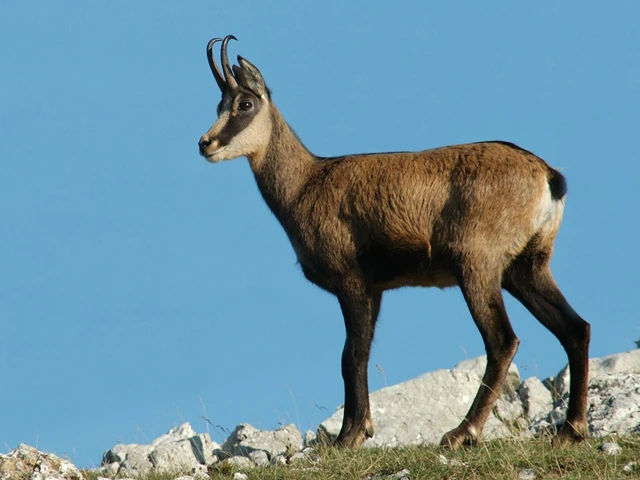
Fast, agile and remarkably sure-footed, it navigates difficult terrain through instinctive changes of direction that leave predators struggling to react. Watching Alberto Arroyo attack defenders often creates a similar impression. Opponents know where he begins. They rarely know where he will finish. His ability to alter angles, accelerate into space and create separation in confined areas makes him one of the most difficult players in Swiss football to contain. The comparison extends beyond style. Chamois survive because they remain adaptable. Arroyo’s greatest quality may be precisely that. He can occupy different positions, attack different spaces and solve different problems. Like the animal itself, he appears most comfortable when operating on terrain others find difficult.
Elsewhere within the squad, different characteristics emerge. Marmots rarely attract the same admiration as eagles or ibex, yet mountain communities have always understood their importance. They survive through preparation, awareness and collective responsibility. Their warning calls protect others. Their communities function through cooperation. Gaël Bruneteau occupies a remarkably similar role within FC Chur. As the coach responsible for much of the club’s defensive organisation, his influence often becomes visible only when things go wrong. Fortunately for Chur, that rarely happens. The structure remains intact. Distances remain controlled. Problems are identified before they become dangers. Like a marmot standing watch above its colony, Bruneteau’s work revolves around anticipation.
 The Eurasian lynx operates very differently. Solitary, patient and precise, it hunts through timing rather than force. It waits. It observes. Then it strikes. Marcos Lima’s football often follows the same pattern. For long periods he drifts along the touchline, seemingly detached from the action unfolding elsewhere. Then a gap appears. A defender shifts weight incorrectly. A passing lane opens. Lima moves inside. The attack accelerates. The chance emerges. The finish follows. What distinguishes him is not simply technical quality but patience. The best predators understand when not to move. The best footballers often share that gift.
 Spring also brings larger animals into view. Red deer descend from higher ground. Brown bears emerge from winter hibernation. Both have their counterparts within the squad. Imanol García possesses the quiet authority of a stag moving through woodland, physically imposing yet rarely needing to demonstrate it. Younger players naturally gravitate towards him. His performances mirror his personality: dependable, strong and composed. Josua Testoni offers something slightly different. At first glance, his physicality dominates perception. Yet like a bear navigating difficult terrain with surprising delicacy, his technical quality often surprises those encountering him for the first time. Strength and precision are not opposites. Testoni demonstrates that regularly.
Migration forms another essential part of Alpine wildlife, and perhaps no player reflects that reality more clearly than Xavier Jenkinson. Before arriving in Chur, he spent years moving around Switzerland through a succession of seven loans, searching for stability and opportunity. His journey resembles countless migrations occurring across the Alps every year, animals moving between habitats in search of conditions that suit them. What makes migration meaningful is not movement itself but arrival. Jenkinson eventually found a place where he belonged. The same might be said of Franklin Omgba, whose return from loan this winter felt rather like an animal em erging from hibernation, refreshed and ready to participate once more in the life of the group.
Yet perhaps the most appropriate symbol for FC Chur cannot be found among the wildlife of Graubünden at all.
The lion belongs elsewhere geographically, yet its qualities resonate deeply with the club’s culture. Lions survive through collective action. They hunt together. They defend together. Leadership exists within the group, but success depends upon cooperation rather than hierarchy. Iriondo embodies many of those characteristics. So too does the wider squad. Chur’s rise has never depended upon a single individual. It has emerged through shared understanding, mutual trust and collective responsibility. The players may resemble different animals. The principles remain remarkably similar.
As spring spreads across Graubünden and life returns once again to valleys that spent months beneath snow and ice, the wildlife resumes patterns established over centuries. Ibex climb. Eagles circle. Lynx hunt. Marmots watch. Chamois run. Their survival depends upon adaptation, patience and belonging within the landscape they inhabit. FC Chur’s players spend their lives surrounded by those same lessons. Whether consciously or otherwise, they seem to have learned them well.

In the summer of 2024, a football team representing Raetia travelled to Northern Cyprus to compete in the CONIFA European Football Cup. For most people outside Graubünden, the tournament passed largely unnoticed. There were no major television deals. No transfer speculation. No international stars. Yet for those who understood the history of the canton, the sight carried a  significance that stretched far beyond football. The players were representing a place that has always occupied an unusual position within Europe; a mountain region connected to larger states yet never entirely defined by them, shaped by multiple languages, multiple cultures and multiple histories while somehow remaining recognisably itself.
Raetia is an old name. Long before Switzerland existed, the Roman province of Raetia stretched across much of what is now eastern Switzerland, western Austria and parts of northern Italy. Chur stood at its centre. Roads crossed mountain passes. Traders carried goods through valleys. Soldiers marched north and south through the Alps. Geography made the region important. History made it distinctive. Even today, traces remain visible in the streets of the old town, where Roman foundations sit beneath medieval buildings and where the past often feels closer than it does elsewhere. Modern Graubünden belongs politically to Switzerland, yet culturally it has always possessed a strong sense of its own identity. The Three Leagues that governed the region before incorporation into the Swiss Confederation fostered traditions of local autonomy and regional loyalty that still resonate centuries later.

That loyalty explains why CONIFA resonates here in a way it might not elsewhere. The organisation exists to provide international football for nations, peoples and regions not represented within FIFA structures. Some members are diasporas. Some are minority cultures. Some are territories without recognised statehood. Raetia’s inclusion sits somewhere between history and identity. Nobody seriously argues that Graubünden should become an independent nation. Yet many recognise that the canton possesses a cultural identity distinct enough to justify representation. Football becomes a vehicle for expressing that idea. Not nationalism in its modern political form, but attachment to place. Pride in language. Pride in history. Pride in belonging somewhere specific.
The football itself matters less than the symbolism. If Raetia were selecting a team today, much of the squad would come directly from FC Chur’s academy. That fact alone says something remarkable about the club’s role within the canton. Over the last decade and a half, Chur have become the primary developer of football talent in Graubünden. The overwhelming majority of elite players emerging from the region now pass through the club at some stage of their development. The hypothetical Raetia national side would almost certainly be built around those graduates. Ilan Tomic, currently scoring goals in the Bundesliga, would lead the attack. Nenad Juric, now playing in Belgium, would feature prominently. Behind them would stand wave after wave of academy graduates carrying Graubünden football into leagues across Europe.
Juric perhaps tells the most revealing story. Despite building a successful professional career abroad, he continues giving interviews in Romansh whenever possible. Belgian journalists quickly discovered they needed translators capable of working between multiple languages to accommodate him. At one point, Genk reportedly brought additional linguistic support into the club simply to facilitate interviews. The detail sounds amusing at first, yet it captures something important. Many players leave Graubünden. Few seem willing to leave Graubünden entirely behind. Language acts as an anchor. It reminds them where they came from. The same applies to countless academy graduates who now play elsewhere. Professional careers require movement. Identity often remains remarkably stationary.
The stories behind those players reveal another side of modern Graubünden. Regional identity here has never been built upon exclusion. Joseph Ballo’s family arrived from Côte d’Ivoire and settled in the canton. Glauber is the son of Portuguese immigrants. Michael Janutt’s family continue running a coffee shop in Chur despite his football career taking him elsewhere. Similar stories appear throughout the academy. Families arrive from different countries. Children grow up speaking multiple languages. They attend local schools. They join local clubs. Eventually they become part of Graubünden itself. This process feels particularly important because it challenges simplistic ideas about regional identity. Belonging here has always involved participation more than ancestry. You become part of the canton by living within it, contributing to it and respecting its culture.
Perhaps nowhere captures that sense of belonging better than Obere Au. Generations of footballers passed through the complex long before Chur became one of Switzerland’s strongest clubs. Many academy graduates still speak about it with unusual affection. The facilities themselves are less important than what they represent. First training sessions. Long journeys from mountain villages. Friendships formed across language barriers. Coaches teaching young players not only how to play football but how to understand the canton around them. For many, Obere Au occupies the same place in memory that local schools or village squares occupy for others. It feels foundational. A place where identity begins taking shape.
That relationship between football and identity becomes particularly visible when discussing Ems. Outsiders often expect rivalry to create hostility. The reality is more complicated. Many supporters retain genuine affection for both clubs. Before Ems reached higher levels of Swiss football, talented young players often gravitated towards Chur simply because opportunities elsewhere were limited. The growth of football across the canton has changed that dynamic. Supporters increasingly recognise that success for one Graubünden club often benefits others. The rise of Ems has created more pathways, more visibility and more opportunities for local footballers. Rivalries remain. They always will. Yet beneath them sits a broader sense of regional solidarity.
That solidarity explains why FC Chur’s academy model resonates so deeply. Around seventy-five percent of academy players are born within Graubünden. The policy draws obvious comparisons with Athletic Club and the Basque Country, though Chur’s interpretation remains more flexible. The objective is not purity. It is continuity. The club wants local children to see realistic pathways into elite football. It wants villages scattered across valleys and mountains to feel connected to what happens inside the stadium. Every academy graduate who reaches the first team reinforces that connection. Every player who succeeds elsewhere extends it.
Ultimately, CONIFA tells us something that league tables cannot. Football’s significance in Graubünden extends beyond competition. It provides a language through which people express attachment to place. A Raetia national team matters because people care about the region it represents. FC Chur matters for the same reason. Success has elevated the club’s profile across Switzerland and beyond, yet its deepest strength remains local. The supporters filling trains from Davos and St. Moritz. The families switching between German, Romansh and Italian around dinner tables. The former academy players carrying their accents and traditions into foreign dressing rooms. Together they form a community that understands something modern football often forgets. The purpose of belonging is not to separate people from one another. It is to give them somewhere to return to.
For a canton shaped by mountain passes, migration and movement, that idea feels particularly powerful. People leave. They always have. Traders crossed the Alps. Workers sought opportunities elsewhere. Footballers built careers abroad. Yet many continue speaking the language, telling the stories and carrying the identity of Graubünden with them. In that sense, the Raetia national team is more than a football team. It is a reminder that some places remain present long after you have left them.

There is an old saying, often attributed to various cultures and places, that a society grows great when old men plant trees whose shade they know they will never sit beneath.
Whether anybody in Graubünden ever actually said those words is difficult to establish. The sentiment, however, feels familiar. Across the canton there are roads, railways, terraces, irrigation channels and mountain paths built by people who understood that the value of their work would only become fully visible long after they were gone. Alpine communities have always required a degree of patience. Winters are long. Distances are large. The environment rarely rewards short-term thinking. Survival has often depended upon building structures capable of enduring beyond the individuals who first imagined them.
For perhaps the first time since arriving in Chur, Iñaki Arriola appears to be confronting that reality directly.
The manager who transformed a modest football club into one of the most admired institutions in Swiss football no longer occupies quite the same position he once did. He remains the defining figure of the project. The tactical philosophy remains unmistakably his. The academy continues to teach football according to principles he introduced. The first team still plays with a positional understanding that bears his fingerprints in almost every phase of possession. Yet around him, slowly but undeniably, the structure is changing. The creation of the Confederation of Regions altered the club’s hierarchy. Mikel González now oversees recruitment. Technical decisions increasingly pass through a broader network. Xavi Tamarit has assumed a greater presence on the training ground as Arriola’s physical health limits the hours he can devote to daily work. For the first time, FC Chur appears to be learning how to function without relying entirely upon the man who built it.
That process creates an uncomfortable question.
If Chur continue succeeding after Arriola, what exactly was Arriola’s achievement?
Football often struggles with succession because it prefers stories centred on individuals. Managers arrive. Managers win. Managers leave. Histories become simplified into a sequence of personalities. Yet the strongest institutions operate differently. Athletic Club have spent more than a century proving this. Managers change. Sporting directors change. Generations of players come and go. The underlying philosophy survives. Lezama remains. The commitment to regional development remains. The belief that football can serve as a form of cultural preservation remains. Individuals matter enormously, yet none become larger than the institution itself.
It is difficult to imagine FC Chur reaching that stage without first passing through its current moment of uncertainty.
The parallels with Athletic have become increasingly visible since the creation of the Confederation of Regions. Recruitment now sits largely outside Arriola’s control. The club’s wider sporting strategy increasingly reflects ideas shared across the network rather than decisions made by one individual. In practical terms, that means a degree of separation between football and governance. Arriola continues shaping how the team plays. Others increasingly shape how the club operates. Such arrangements are common throughout modern football. What makes this one unusual is that FC Chur spent so many years functioning as an extension of one man’s vision. The club’s identity and Arriola’s identity became intertwined to such an extent that separating them now feels almost unnatural.
Yet there are signs that the transition may already be working.
The academy provides perhaps the clearest evidence. Young players entering the system today encounter structures that no longer depend upon direct contact with Arriola himself. They experience progression pathways. Language education. Cultural integration. Tactical development. Mentorship. Exposure to senior football. The processes remain remarkably consistent regardless of who delivers them. Romansch is still taught. First-team opportunities still exist. The expectation that players understand the canton they represent remains unchanged. In many ways, the academy now resembles Lezama more than a traditional football school. It functions as a cultural institution that happens to produce footballers.
This may ultimately become Arriola’s most significant achievement.
Managers are usually judged through results. League tables provide obvious evidence. Trophies provide convenient milestones. Yet those measures often overlook the work that endures longest. Athletic’s greatest contribution to Basque football was never a specific title or season. It was the creation of systems capable of reproducing values across generations. Chur increasingly appears to be attempting something similar. The objective is not merely to develop footballers. It is to develop Graubünden footballers. Players who understand the region. Players who can represent it. Players who carry elements of its culture wherever their careers eventually take them.
The question, of course, is whether that vision survives when its architect eventually steps away.
Supporters remain divided on the subject. Some view the current changes as essential preparation. They see a healthy institution reducing dependence upon a single individual. Others worry that something irreplaceable risks being lost. Tactics can be documented. Training sessions can be replicated. Organisational structures can be redesigned. Personality remains more difficult to preserve. Many players speak about Arriola’s influence in deeply personal terms. They trust him. They follow him. They believe in him. Football clubs often underestimate how much emotional energy resides within those relationships. Systems matter. People matter too.
The evidence from this season suggests the transition has not weakened the team.
If anything, the opposite may be true. Despite recurring concerns regarding Arriola’s health, Chur have continued performing at an extraordinary level. The tactical framework remains coherent. Recruitment has remained intelligent. The academy continues producing talent. Results remain strong. Such stability suggests that at least part of the club’s success now exists independently of its founder. Critics might argue that this proves Chur no longer need him. Supporters would likely reach a different conclusion. Perhaps the fact that the club continues functioning so effectively is itself evidence of his influence. Strong foundations rarely attract attention until they begin supporting weight.
That distinction lies at the heart of the debate surrounding legacy.
Critics often describe legacy as something people claim when they are no longer capable of maintaining direct control. They see it as a comforting narrative, a way of reframing decline as wisdom. Arriola himself appears to view it differently. For him, legacy seems less concerned with remembrance than continuation. The goal was never to create a football team dependent upon his presence. The goal was to create a football club capable of expressing certain values long after he had gone. Sustainability. Regional identity. Patience. Opportunity. Belonging. The league titles helped. The European campaigns helped. Yet those achievements were always intended to serve a larger purpose.
Whether that purpose succeeds remains impossible to know.
Football history is filled with institutions that drifted away from their founding principles once circumstances changed. It is equally full of clubs that survived because those principles had become embedded deeply enough to outlive the people who first articulated them. FC Chur now finds itself somewhere between those possibilities. The founder remains present. The future is already arriving. The tension between the two defines much of the club’s current moment.
Perhaps that is why the image of planting trees feels so appropriate.
The person placing the sapling into the ground rarely benefits most from the shade. Their contribution lies in accepting that reality and acting anyway. Across Graubünden, where communities have always understood the value of long-term thinking, such an idea feels entirely natural. The question facing FC Chur is whether enough roots now exist beneath the surface. The answer may determine not only what happens after Iñaki Arriola, but whether the club he built can truly become something larger than the man himself.

The announcement arrived without much drama.
There was no prolonged saga, no public disagreement, no attempt to manufacture tension where little existed. Marco Dreßler would leave FC Chur at the end of the season and join Norwich City for a fee reported to be worth €17 million. The figure immediately became the largest transfer sale in the club’s history, surpassing every previous departure by a considerable margin and representing yet another milestone in a period during which FC Chur have steadily moved into conversations that once seemed reserved for much larger institutions.
The reaction across Graubünden was strikingly calm.
Supporters discussed the fee. They discussed Norwich. They discussed what the move might mean for Dreßler’s career. Yet there was remarkably little anger. No sense of betrayal. No suggestion that the player owed the club additional years of service. Most seemed to understand the situation for what it was: the natural consequence of a development model functioning exactly as intended. If anything, the transfer felt less like a departure than a graduation.

That perspective perhaps says more about FC Chur than it does about Dreßler himself.
The striker arrived at the club as a sixteen-year-old from Eschen/Mauren, crossing the mountains and valleys that have carried young footballers towards Chur for generations. He broke into the first team during his second season and quickly established himself as one of the most dangerous forwards in Swiss football. By the time his final months at the club arrived, he had accumulated thirty-nine goals in one hundred and thirteen appearances, becoming one of the defining figures of this current era. The statistics tell part of the story. The more important detail is that his development followed a pathway that has become increasingly familiar within Graubünden. Young player arrives. Young player improves. Young player earns opportunities. Eventually, the wider football world takes notice.
What changes is the scale.
When Joseph Ballo departed for Brest, the fee represented progress. When earlier academy graduates left for larger leagues, supporters celebrated the achievement. The sale of Dresler feels different because it pushes FC Chur into territory previously occupied by clubs with far greater resources and far larger populations. Seventeen million euros remains a transformative amount of money for an institution built around sustainability and long-term planning. The figure matters not because it allows reckless spending, but because it creates possibilities. It provides evidence that the club’s methods can generate elite-level value. It demonstrates that a footballer developed in Graubünden can command a transfer fee comparable to players emerging from much larger academies across Europe.
The move itself also makes footballing sense.
Norwich City find themselves engaged in a battle for Premier League survival and require players capable of changing matches in difficult circumstances. Dresler arrives carrying qualities that travel well between leagues. He is powerful without relying solely on physicality. He stretches defensive lines. He attacks space aggressively. His movement creates opportunities not only for himself but for those around him. Like many forwards developed under Iñaki Arriola, he understands how to function within structured attacking systems while retaining the freedom to exploit moments of disorder. Whether he succeeds in England remains impossible to predict. The tools are certainly there.
For Chur, however, the more interesting question concerns what comes next.
Historically, football clubs often view record sales as invitations to spend. New money arrives. Expectations rise. Recruitment accelerates. Yet little about FC Chur suggests that approach will be followed here. The club’s leadership have spent years speaking about infrastructure rather than extravagance, and there is every indication that the majority of the income will be directed towards strengthening the foundations of the institution itself. New scouting packages. Expanded recruitment capabilities. Improved staffing structures. Continued investment in training facilities. Further improvements to youth development. None of these projects generate excitement in the way a marquee signing might. All of them align far more closely with the philosophy that brought the club to this point.
Recent recruitment offers a useful illustration.
Adrián Lamiguero arrived from Almería for approximately €200,000, a fee so modest that many supporters barely noticed it at the time. Yet his profile reflected the increasingly sophisticated data-led processes now operating behind the scenes. He scored consistently in La Liga 2. His underlying numbers remained strong. He generated shots, won duels and covered significant distances without possession. Chur were not buying reputation. They were buying evidence. The fact that a club capable of selling a striker for €17 million simultaneously recruits another for a fraction of that amount reveals a great deal about how the institution now views the transfer market. Players are assets, certainly. More importantly, they are opportunities.
That philosophy becomes easier to maintain when success is measured differently.
Many clubs would define achievement through trophies alone. Chur have always operated with a broader understanding of progress. Producing footballers matters. Creating opportunities matters. Demonstrating that talented young players from Graubünden can reach elite levels matters. The sale of Dreßler reinforces all three objectives simultaneously. Every teenager training at AlpenPARK can now point towards another example of the pathway working exactly as promised. Every parent considering whether to trust the academy can see tangible evidence of what the system can provide. Every scout arriving from abroad now arrives knowing that Chur belong within serious conversations about player development.
The timing of the transfer also feels significant.
For much of the club’s history, departures were framed as sacrifices necessary for survival. Players left because larger clubs possessed resources that Chur simply could not match. The balance of power has shifted. Dreßler’s sale does not feel forced. It feels chosen. The player wanted the move. The club accepted the opportunity. Both parties benefited. Such arrangements are often described as successful transfers. In reality, they are indicators of institutional health. Healthy clubs sell because they can. Unhealthy clubs sell because they must.
That distinction matters enormously as FC Chur continue growing.
The club remains ambitious, yet there are limits to what can be achieved through transfers alone. Seventeen million euros will not transform Chur into one of Europe’s financial powers. Nor should it. The population of Graubünden has not changed. The geography remains the same. The philosophy remains the same. This remains a football club built in a mountain canton, serving a mountain canton, developing players within a mountain canton. Growth continues, but it remains rooted in place.
Perhaps that is why the sale feels less like an ending than a continuation.
Somewhere within the academy there is another striker taking part in a training session. Another teenager travelling into Chur from a village further up the valley. Another player imagining possibilities that seemed distant only a few years ago. The fee attached to Marco Dreßler’s departure will dominate headlines for a while. Eventually another record will replace it. What will endure far longer is the message it sends.
The road from Graubünden to the wider football world is open.
Marco Dreßler simply happens to be the latest player to travel it.


Leave a Reply