
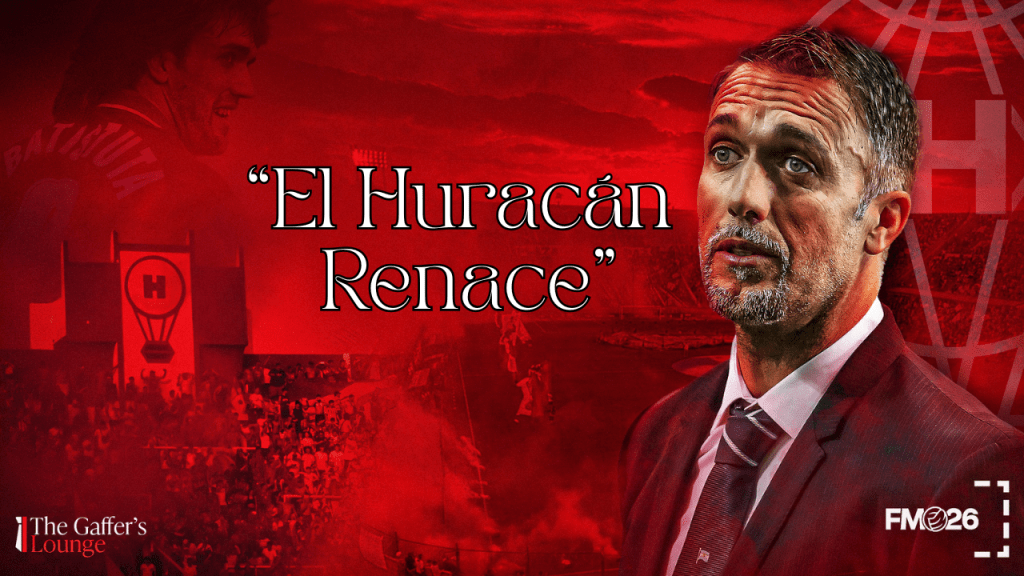
Prologue: The Fire That Never Died
There are moments in a footballer’s life when the noise of the crowd fades, but the heartbeat of the game never stops echoing.
I was 22 when the world started calling me Batigol. Florence, Rome, Qatar — wherever I played, goals were my language. My right foot was my sword. My pride was my shield.
But years after retirement, the silence felt heavier than I ever imagined. I had built a life away from the pitch, trading the roar of stadiums for the quiet of the Argentine countryside. Horses replaced footballs. Open sky replaced floodlights. Yet every sunset carried the same whisper:
“You still have something to give the game.”
Not as a striker. But as a teacher.
And then came the call — not from Europe, not from the AFA, but from Parque Patricios.
From the club that has lived and breathed Buenos Aires since before I was born.
From a place where the people still believe football belongs to the streets.
Club Atlético Huracán.
Why Huracán? Why Now?
Huracán isn’t a club of luxury. It’s a club of soul.
It doesn’t chase stardom; it chases belonging.
Its supporters don’t come to watch — they come to participate. They come to feel, to shout, to live through every tackle and pass as if it were their own. Huracán’s story isn’t written in gold — it’s written in grit, sweat, and poetry.
And it was here, half a century ago, that César Luis Menotti taught the world that football could be art.
His 1973 Huracán side didn’t just win; they inspired. They made the ball speak a language of elegance, courage, and collective purpose.
Menotti believed that football was a form of social expression — that playing beautifully wasn’t arrogance, but duty.
He once said:
“The goal is the reward of beauty, not its substitute.”
When I heard those words for the first time as a young player, they changed me. I was raised in Reconquista, a small town that taught me the value of hard work, of resilience. But Menotti showed me that beauty and bravery were not opposites — they were allies.
Now, decades later, I’ve returned to Buenos Aires with one mission:
To revive Menottismo for a new generation.
To rebuild Huracán from the ground up — with humility, intelligence, and heart.
The First Day: Smoke, Wind, and Memory
The morning I walked into Estadio Tomás Adolfo Ducó, the city was wrapped in that familiar Buenos Aires haze — a mix of exhaust, coffee, and nostalgia.
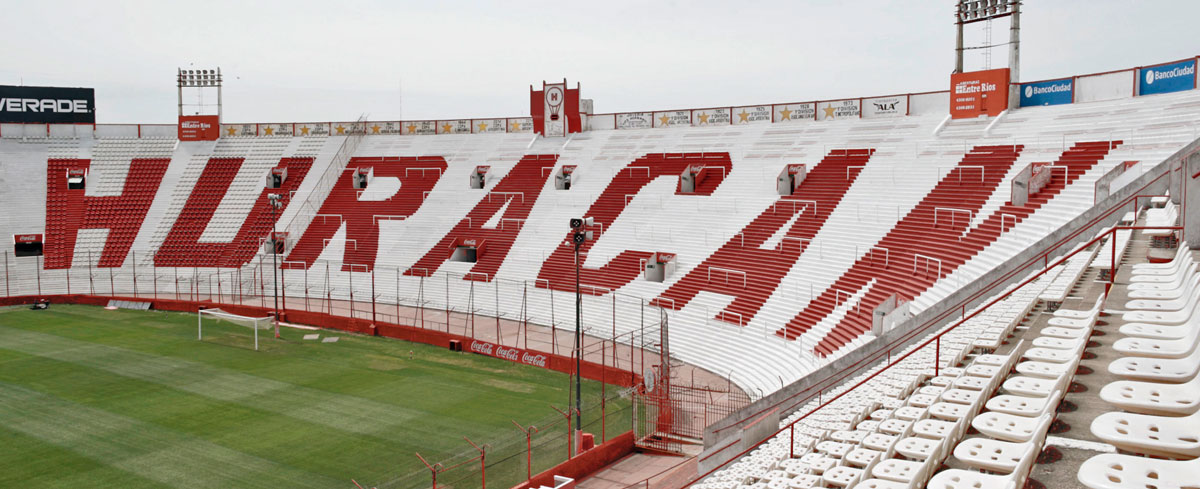
The stadium stood like an old warrior, its walls cracked but proud, its terraces whispering stories of triumph and heartbreak.
As I crossed the tunnel, my boots echoed against the concrete — the same sound I’d once heard before walking into the Bombonera or the Olimpico. But this was different.
This wasn’t about me anymore.
The pitch was still damp from the morning dew, the white lines freshly painted. I closed my eyes and imagined the ghosts — Brindisi, Houseman, Babington — players from Menotti’s masterpiece, still dancing in the wind.
When I opened them, I saw the present: a group of young players waiting nervously by the touchline. Boys from the barrios, eyes wide with hope.
That’s when it hit me.
This wasn’t a job. It was a calling.
The First Meeting: A Promise to the Squad
Inside the dressing room, the walls were lined with faded photos — Menotti lifting the trophy, the stands overflowing, smoke and flags painting the sky red and white.
I stood before them — the players, the staff, the youth coaches — and said what I truly believed:
“We will not fear mistakes. We will fear cowardice.
We will not play for results. We will play for meaning.
We will not imitate Europe. We will be unapologetically Argentine.”
I spoke about football that fights and creates in equal measure.
About courage — not just to press or to run, but to try, to fail, to risk the ball forward.
When I finished, there was silence. Then applause. Then a grin from our captain — one of those looks that says, “We’re ready to believe again.”
That’s when I knew — the fire had returned.
The Blueprint of Rebirth
That afternoon, I met with my new assistant — an old friend, a tactician with a scholar’s mind and a fighter’s heart. Together, we began sketching what I now call “El Viento Blanco” — The White Wind.
A tactical system that honours Menotti’s vision but breathes through the lungs of the modern game.
A football that is as structured as it is expressive, as collective as it is courageous.
The idea was simple:
- Build from the back, think through the middle, attack with conviction.
- Dominate midfield not with just muscle, but also with intelligence.
- Press high — not blindly, but with purpose.
- Let creativity flourish within a clear structure.
Our goal is not possession for its own sake — it’s possession that hurts the opponent.
Our pressing isn’t chaos — it’s choreography.
And most importantly — every player must understand the why.
Because in modern football, intelligence is the new strength.
El Viento Blanco – The Birth of a New Huracán
That night, after the press conference and the endless handshakes, I stayed alone in the manager’s office — the hum of the old fluorescent light flickering above me, a tactical board spread across my desk, and a copy of Menotti’s old writings by my side.
It felt surreal.
Menotti once drew his philosophies on napkins and chalkboards; I was doing it on an iPad.
But the spirit was the same: to build a team that could think and feel at the same time.
Outside the window, I could still hear the chants of a few lingering fans echoing through Parque Patricios:
“Vamos, Huracán. Volvé a ser lo que fuiste.”
(Come on, Huracán. Be who you once were.)
Those words became the mission statement pinned to my wall.
Building the Identity – “Menottismo Moderno”
We started from a single principle:
The ball must move faster than the opponent can think.
Everything else — shape, press, build-up — would flow from that.
The Tactical Mindset
Our approach had to merge poetry with pragmatism. Menotti believed in beautiful football, yes — but also in the discipline that beauty requires.
We decided on a tactical framework that could shift between two fundamental ideas:
- In Possession:2-3-5 structure – fluid, attacking, positional rotation constant.
- The wingers invert into attack.
- The wing backs stretch wide, pinning fullbacks.
- The interiors drift between lines, connecting midfield to attack.
- The “Cinco” — the deep-lying playmaker — is the conductor.
- The striker leads with movement, not just muscle.
- The centre backs would be warriors who would rather die than concede.
- Out of Possession:4-1-4-1 block – compact, controlled aggression.
- Pressing triggers come from central passes.
- We press to suffocate, not to chase.
- The wingers drop intelligently, forming a wall of pressure.
- The defenders protect their own box as if it was their castle.
I want a side that could dominate without suffocating itself.
We would not run for the sake of running. We would press with purpose, we would build with rhythm, and we would attack with bravery.
This wasn’t just about balance — it was about chemistry.
The mix of artisans and soldiers, thinkers and warriors.
The kind of team that could charm and terrify in equal measure.
The Dressing Room Philosophy
On the training ground, we built everything around five pillars — the DNA of our project:
- Dominate Midfield – Control space, dictate tempo, force others to dance to our rhythm.
- Press Intelligently – Every movement a decision, not a reaction.
- High Rotational Fluidity In Attack – Interchange roles seamlessly.
- Courage in Attack – Risk passes, dare to fail forward.
- Overwhelm Opponents – Through speed of thought, not chaos of movement.
It’s not a “meta tactic.” It’s a belief system.
Scouting the Barrios – The Soul of the Rebuild
Huracán’s history has always been tied to the streets of Buenos Aires — from Parque Patricios to La Boca to Barracas.
So, we decided our rebuild wouldn’t begin with foreign imports or quick fixes. It would begin at home.
I told my scouts:
“Forget agents. Forget statistics. Go to the barrios. Find me the boy who plays as if the ball is his best friend and his only way out.”
We will scout local schools, futsal leagues, amateur clubs — anywhere a spark could be hiding.
Because Huracán should represent the city, not just the club.
Youth Development Pathway – “The Huracán Model”
Our academy will be the foundation stone of everything we build.
Key Principles:
- Unified tactical style from U18s to senior level.
- Mentorship groups based on character and attitude, not age.
- Focus on mental attributes: Determination, Work Rate, Teamwork, Flair.
- Heavy emphasis on personality scouting — no egos, only effort.
- Monthly “Menottismo Sessions” — teaching young players the values of expressive football.
The message to every academy kid will be clear:
“We play with our minds. We fight with our hearts. We win with both.”
The Long-Term Vision
The project is not about instant success. It’s about building something real — something that outlasts me.
The 5-Year Plan
| Year | Objective | Focus |
|---|---|---|
| Year 1 | Stabilise mid-table, build team cohesion, introduce academy prospects. | Tactical identity, leadership core, scouting Buenos Aires. |
| Year 2 | Qualify for Copa Sudamericana. | Develop 1 youth starter, enhance facilities. |
| Year 3 | Break into Top 6, qualify for Copa Libertadores. | Refine pressing and rotations, start to attract Argentinian talents. |
| Year 4–5 | Compete for domestic titles and continental recognition. | Full cultural integration, export youth to Europe, legacy phase. |
Epilogue: Fire Meets Wind
When I finally left the training ground that night, the lights from the stadium cut through the Buenos Aires mist like searchlights.
The air smelled of grass and rain — that familiar scent that every footballer carries forever.
I turned back one last time, looked at the red-and-white crest on the wall, and smiled.
Menotti’s ghost was there, somewhere in the wind.
And I whispered to him, quietly but with conviction:
“I’ll make you proud, Maestro. El Huracán renace.”
The storm has returned.
And this time, it carries the name Batistuta.
Outro
So there we have it — my FM26 journey begins with me stepping into the boots of Gabriel Batistuta and taking charge of Huracán. This save isn’t just about results; it’s about identity. I’ll be digging deep into Menotti’s footballing philosophy and weaving his ideals into every layer of the club, from tactical structure to youth development. What follows won’t just be a career mode — it’ll be an attempt to rebuild a footballing culture, one decision, one idea, one match at a time.
The story starts now — and El Globo is ready to rise




 The Gaffers Lounge
Leave a reply to “El Huracán Renace” – Cesar Luis Menotti Ideologies – The Gaffers Lounge Cancel reply