
Finally tactic creation! To be honest I have never been this excited to start tinkering with tactics in a Football Manager game and there is good reason for it. For the first time we have access to both in-possession and out-possession formations. And this is absolutely HUGE! It is something that the fans have been requesting for over a decade. I remember playing FM14 (my very first FM game), and thinking that setting up out-possession tactic would have been neat. This change in FM26 also moves Football Manager tactic crafting closer to more realistic tactic creation that actual football managers engage in.
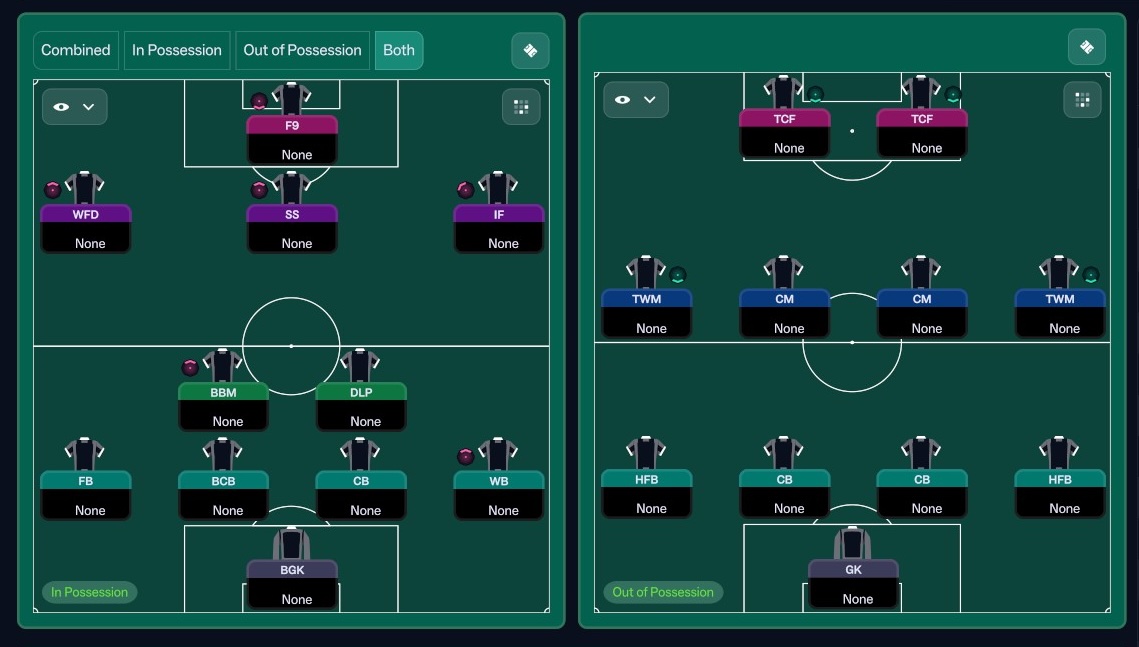
Sports Interactive has completely revamped tactic creator to keep pace with how the modern game is evolving. It makes no sense to use the same formation throughout the whole match anymore. Not when many contemporary managers alternate 3-4 formations per game, depending on the phase of the game and whether their team is in possession of the ball or not.
Naturally, the new tactical changes, have greatly affected the tactical concept that I have in mind for my Real Sociedad save. Lets look at my inspirations and how I will eventually try to convey them in the game.
Three Historical Inspirations
For my 4th time around (since FM22) with this talented Txuri-Urdin squad, I decided to draw upon some varied tactical influences. In the past saves I tried everything from 4-4-2, 4-3-3, and all the way to Cruyff’s “Liquid” Diamond 3-4-3. This time in FM26, my plan is to go both more simple and complex in my tactics creation. And this is due to the new addition of out-of-possession shape. It’s a real game-changer in FM26.
As previously mentioned, you are no longer limited to creating one tactical shape for your team to play when attacking and defending. In previous FMs player roles and team instructions would basically instruct the out-possession (or defending if you will) behaviour. Now in FM26, you will actually create two distinct formations to use when attacking and when defending. And I actually find that this makes tactic crafting more intuitive and inherently easier. It’s also makes it easier than ever before, to emulate the tactics of historic managers.
Ormaetxea – Defence-First
In the first place, my preliminary tactical concept has been influenced by the “Defence-First” tactical style of Alberto Ormaetxea. Perhaps not surprising to those who know me from my SI forum writing. I have a thing for a solid defence and like to focus more on setting it up just right.

Ormaetxea’s tactics were simple (given the era and the league, it was most often a traditional 4-4-2) but distinguished by a disciplined, compact defense, efficient attack, and strong emphasis on teamwork. As a former centreback himself, he stressed the importance of building a solid defensive foundation, which would naturally lead to a potent and clinical counter-attack. In his view, you could not win without defending well.
Not surprisingly, strong and disciplined defence was a cornerstone of Ormaetxea-led Real Sociedad’s success. The team’s very solid backline, led by the stalwart defender Inaxio Kortabarria and supported by a legendary goalkeeper Luis Arconada, greatly limited opponents’ chances. At the same time as frustrating their opponents, the defence allowed their own offense to capitalize more with clinical goalscorers like Jesús María Satrústegui, Roberto López Ufarte and Pedro Uralde.
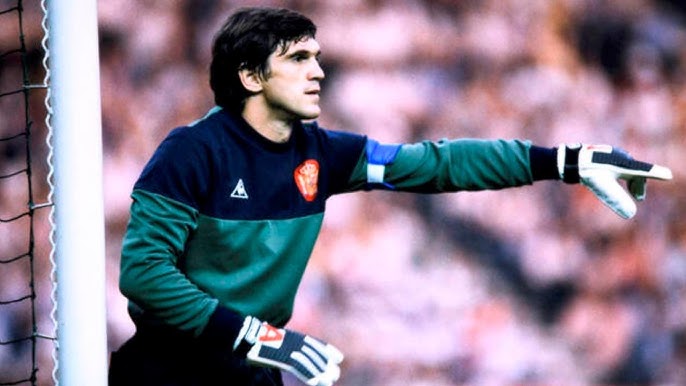
While it is undeniable that Ormaetxea’s team possessed impressive goals-scoring prowess, their attackers were not nearly as talented or prolific as those of the elite teams of the time – Barcelona and Real Madrid. Yet they were good in outscoring the opposition during matches, because their opponents had a very hard time scoring. The keys to Ormaetxea’s tactic were the hard-to-penetrate backline and the club’s legendary goalkeeper Luis Arconada providing a formidable last line of defense.
The “Defensive Foundation” strategy allowed Ormaetxea’s team to win two back-to-back La Liga titles in 1981 and 1982. I’m not planning to copy his specific formation, but utilize the same spirit of putting defence first so as to give breathing room to our attackers. It’s rather simple: when your opponent’s goalscoring is limited, it becomes easier for your own offence. It’s less hard and tiresome for your attackers to win a match with 2-1 score rather than 5-4. Let our defenders work hard to tire out opposition attackers while our strikers stay fresh. So superior fitness and goalkeeping become as important as superior defence. I’ll come back to this concept in future updates.

Toshack – Tactical Flexibility and Youth Development
My next influence was Ormaetxea’s successor, and a manager who is probably more familiar to English football fans, John Toshack. As a player he became a veritable Liverpool legend as the “big man” in the famous striker partnership with Kevin Keegan. Toshack also had a long and successful career in managing in both UK and Europe with clubs like Swansea, Beşiktaş, Real Madrid, Real Sociedad, and many others. In fact, it was his 9 year (broken up into three separate times) stint of managing Real Sociedad that turned the Welshman into a mythically beloved figure, 2nd only to Ormaetxea, in San Sebastián.

Not really known as a tactical genius, Toshack nevertheless was never afraid to experiment and used some ingenious tactical systems. His main tactical strengths were his tactical adaptability and willingness to work with the existing strengths of his various managed teams. Often this would involve developing and relying on young homegrown talent. With Swansea, he managed to bring the team up from 4th Division to the 1st in only a few short years.
Toshack’s tactical innovations involved developing a unique 4-3-2-1 Christmas Tree formation, known as “Sistema Toshack“, which he used with teams at different levels, including Real Sociedad, Real Madrid and Wales National Team.
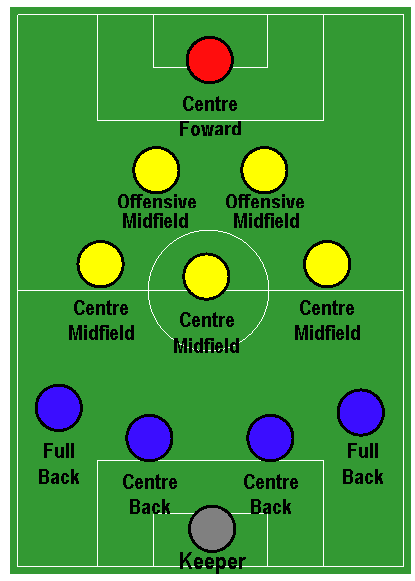
It was not the only formation he used. Toshack is also known for 4-4-2, 4-2-3-1 and three-at-the-back formation with a sweeper (primarily at Swansea). What tied all of these tactics together was Toshack’s knack at strengthening defensive lines by bringing in quality homegrown players. He he did shy away from laying the groundwork for future success by developing young talent.
SIDE NOTE: Christmas Tree formation is an intriguing shape that I would like to eventually try in this save. I’ve had mixed results with it in my other saves with previous FM versions. But I have a feeling that the addition of the out-of-possession tactics might make it better than ever before.
In 1980s, John Toshack was a perfect fit at Real Sociedad due to his track record of encouraging home-grown players. At the time when he became manager, Real Sociedad was not allowed to recruit non-Basque players. This would only change in 1989 after the end of Toshack’s 1st stint with them. In Toshack’s own words, “it [managing Real Sociedad] was a terribly frustrating job at times, but ultimately, very rewarding”.
It so happened that all of my best defenders were left-sided, but you just have to adapt
– John Toshack
Toshack, with his reputation of achieving great things with limited tools at hand and small budgets was exactly what Sociedad needed. And he repaid their faith with success on the pitch, winning 1 Copa del Rey, consistently finishing in the top half of the table and brining the team to another cup final. It also helped that he completely embraced Basque culture, by buying a house in San Sebastián and becoming fluent in Spanish.
Arteta – Smart Use of Space (Positional Play)
My 3rd and final inspiration, is probably the least surprising. When thinking of a contemporary Basque manager who has had a big impact in a short period of time, it’s impossible not to think of Mikel Arteta, the current manager of Arsenal.
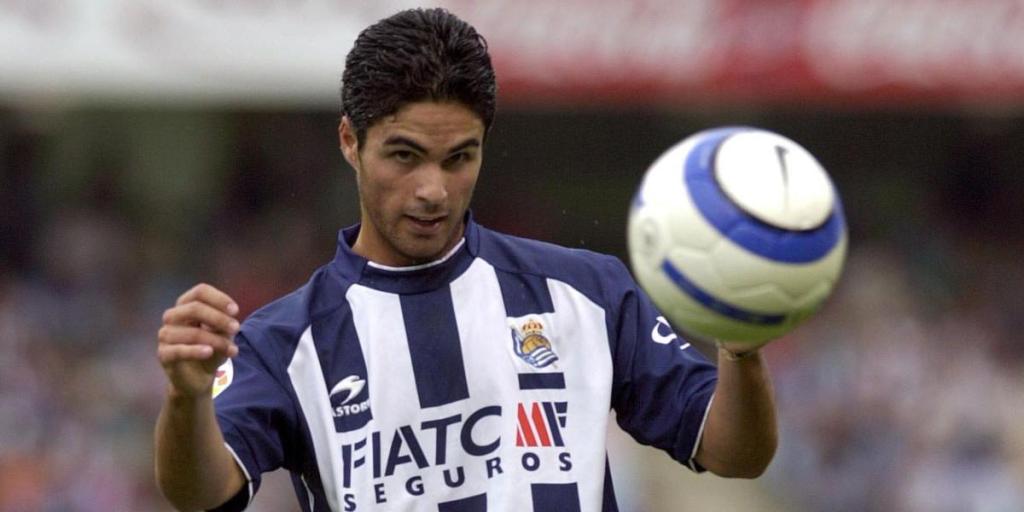
Arteta might not have had a long playing career in his native Basque region, yet through his managerial work he has promoted the key tenets of Basque-style football – collective team identity, strong work ethic, physicality, tough defence and technique. I just hope that he will get a chance to manage his home-town club one day.
In terms of starting formations, Arteta’s Arsenal has mostly gravitated towards 4-2-3-1 and 4-3-3. Yet he is known for having tactics that morph into other shapes depending on phase of play, whether it is 2-3-5 in full-on attack or a 4-4-2 in defence. Like Pep Guardiola, Arteta is a strong believer in positional and spatial play – that is instructing his team to occupy specific zones and structures (be it 2-3-5 or 2-2-6) during possession phase to gain “dynamic superiority” and use space in the most efficient, effective way. According to Arteta, tactics are not static, and teams need to embrace positional play where players occupy pitch space differently according to whether they attack with the ball or defend without it.
So there you have it. My three tactical inspirations for my tactics with Real Sociedad in FM26. Alberto Ormaetxea’s defensive acumen coupled to Toshack’s pragmatic adaptability in turn married to modern Basque tactical sensibility ala Arteta. Because of that final Arsenal influence, I definitely know that it will be a tactic that transitions into a completely different shape in defence. And that is exactly where the new changes in FM26 will help! Finally to be able to create an intricate tactical system that was not possible with older FM games.
Finally some nitty-gritty tactical tinkering!
In-Possession Attacking Shape
I love the fact that we can now mix and match formations, resulting in some truly overpowered combinations. Like choosing a very attacking shape for your in-possession formation and then complementing it with a solid defensive shape for the out-of-possession half.
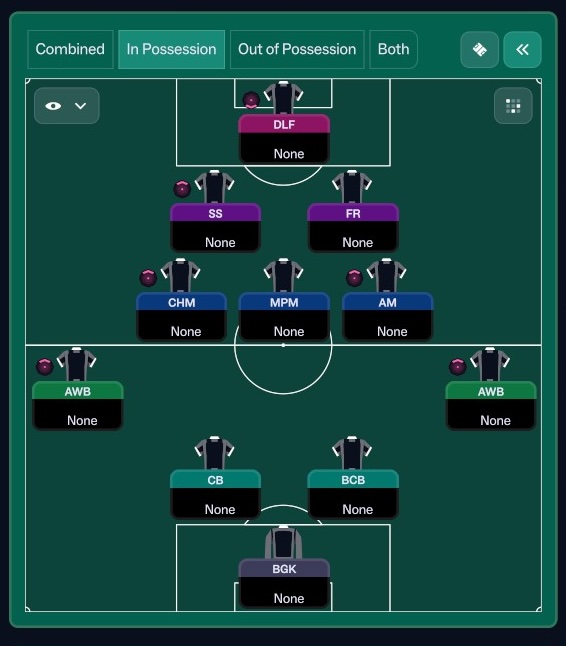
For my in-possession, “attacking” phase tactic, I decided to go with a straight-forward 4-2-3-1. It was a very popular formation in FM24 for one good reason. You could produce some truly amazing offense! In my experience, the 4-2-3-1 formation sometimes almost felt game-breaking when matched with the right club and roles.
The ease with which you can create overloads and exploit space is practically unmatched by other shapes. The staggered lines of attack (having runners paired with supporting players in all three tactical strata) also allows some really beautiful interplay and diagonal passing lines between the positions.
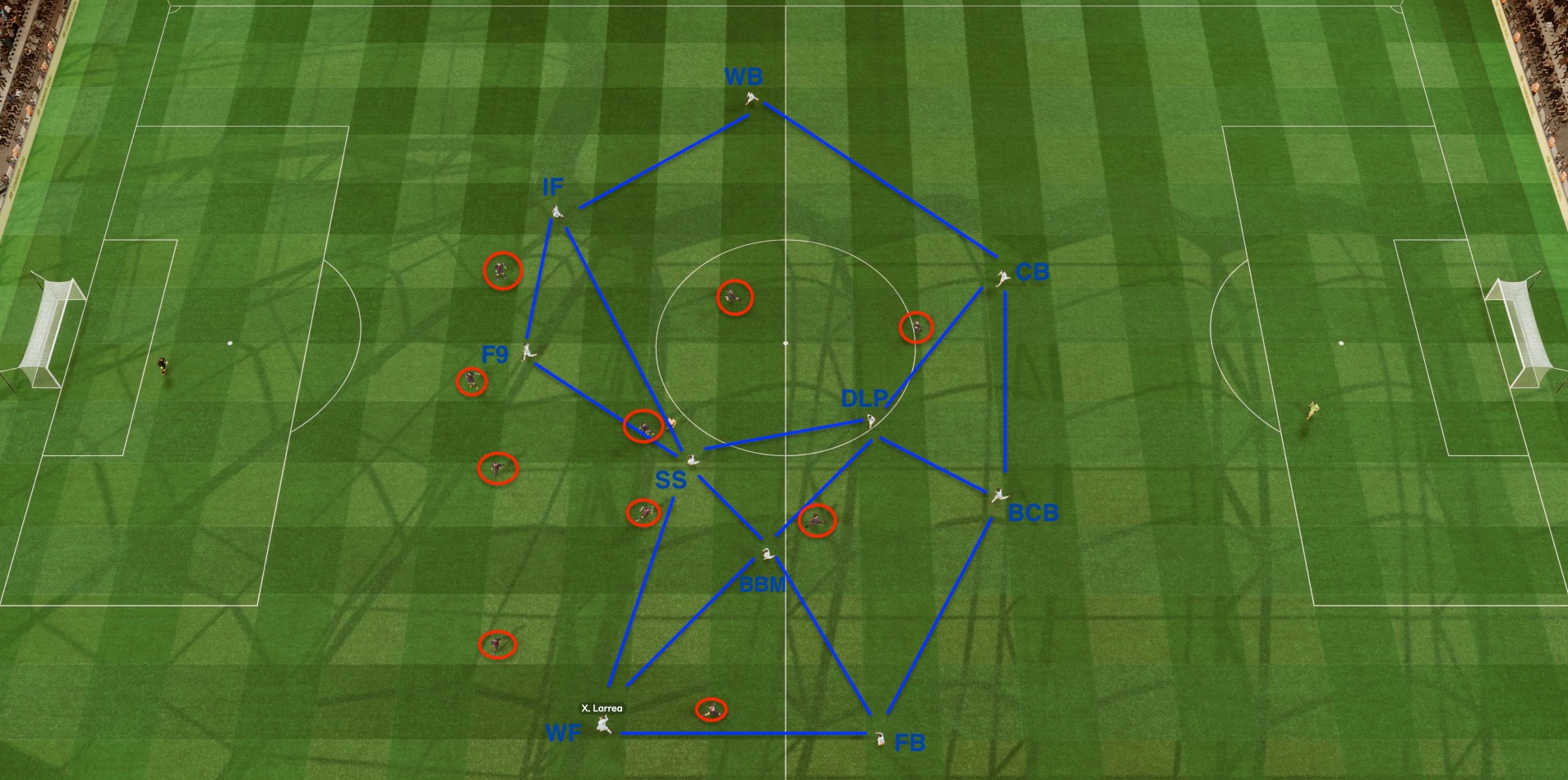
With the right role selection, the ball can be advanced very rapidly up the field. And while the opposition shifts to deal with some of your attacking lanes, other lanes of attack open up. As in example above. The still image above actually resulted in a goal some 5 seconds later. You can view it in the video below. Larrea’s run played a big role in it.
4-2-3-1 can be a very flexible, versatile shape and most importantly adjustable to fit a variety of player types. Essentially you have two choices upfront, to play with either Supporting or Attacking Spearhead striker. While Support and Attack duties don’t exist in FM26, it does not mean that we cannot select them via player roles. For example False 9, Deep Lying Striker and Target Forward are very much on the Support side of the spectrum. While the Poacher, Channel Forward and Complete Forward can be used to spearhead attack. Since my guiding tactical inspiration calls for teamwork-focused and technical style of football, I will be going with the supporting-type striker. A False 9 specifically. A definitive support role.

Of course, capricious nature of football management means we cannot completely rely on a single striker to lead our attack. Injury crisis and lockeroom revolts happen. So it is good to have a tactic where varied player types can be slotted into the tactic without changing it too much. If I were to play my backup, a physical DLF, instead of the technical wizard False 9, then the nature of the tactic should not change dramatically. We still have a supporting striker dropping deeper to create space in front of him and link up with his attacking teammates in the AML/AMC/AMR strata. Except that False 9 will do this by dribbling, and DLF – by holding up the ball.
Of course, in FM24 to get the most out of 4-2-3-1 in attack, some compromises were often made in defence. Now with existence of “out of possession” formations, those defensive compromises can be remedied by a very solid defensive shape when out of possession.
Out-of-possession Defensive Shape
What’s the best way to defend? In my opinion, a simple flat 4-4-2 is a terrific defensive shape due to its one defining feature: the two banks of four. If we continue with Arteta’s idea of maximizing the space that players occupy during attack, then defending in two banks of four is a great way of limiting the space in front of your own goal into which the opposition can attack. Just as 4-2-3-1 can be viewed as the ultimate attacking shape, then 4-4-2 is your ultimate defensive shape.
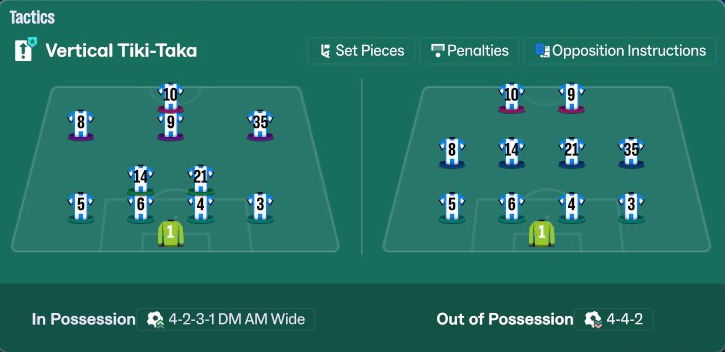
Without getting into details like player roles, let me explain why 4-4-2 is ideal for defending (when out of possession). In a nutshell, it’s mainly because the team forms a very compact shape with the back four of centrebacks and fullbacks and the midfield four staying close to each other to limit space for the opposition to play through. This can be greatly aided by combining mid-block with high defensive line – a combination of defensive instructions which served me well since at least FM22. I will be touching more on this in my future tactical update.
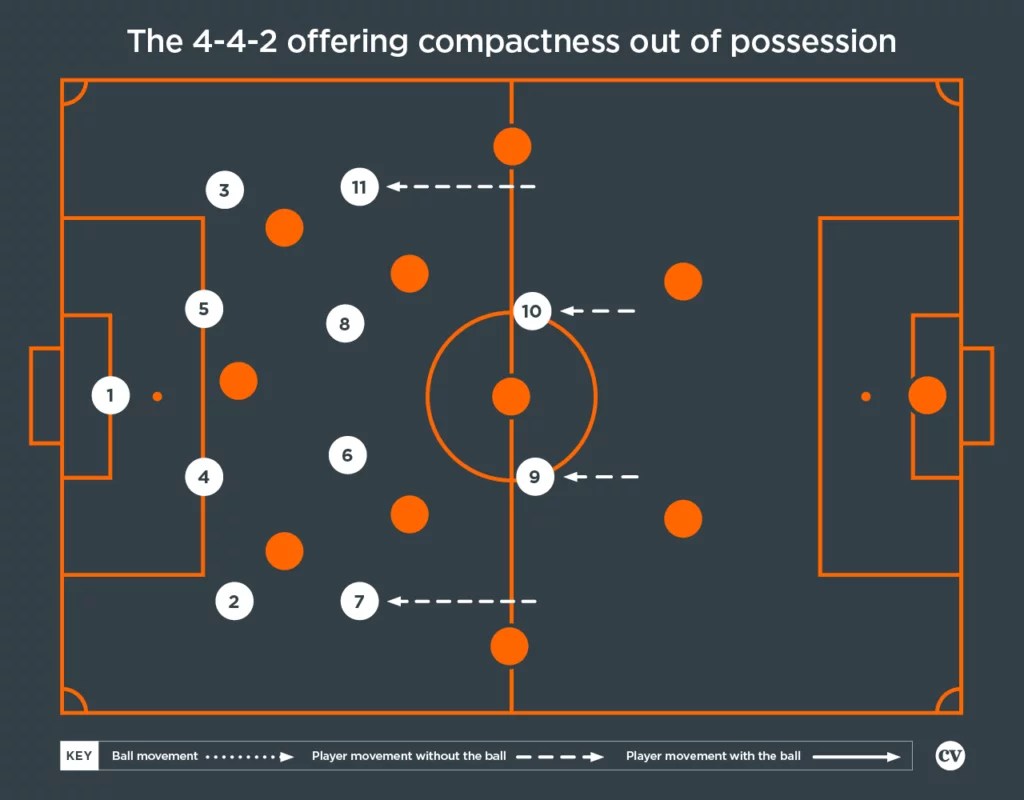
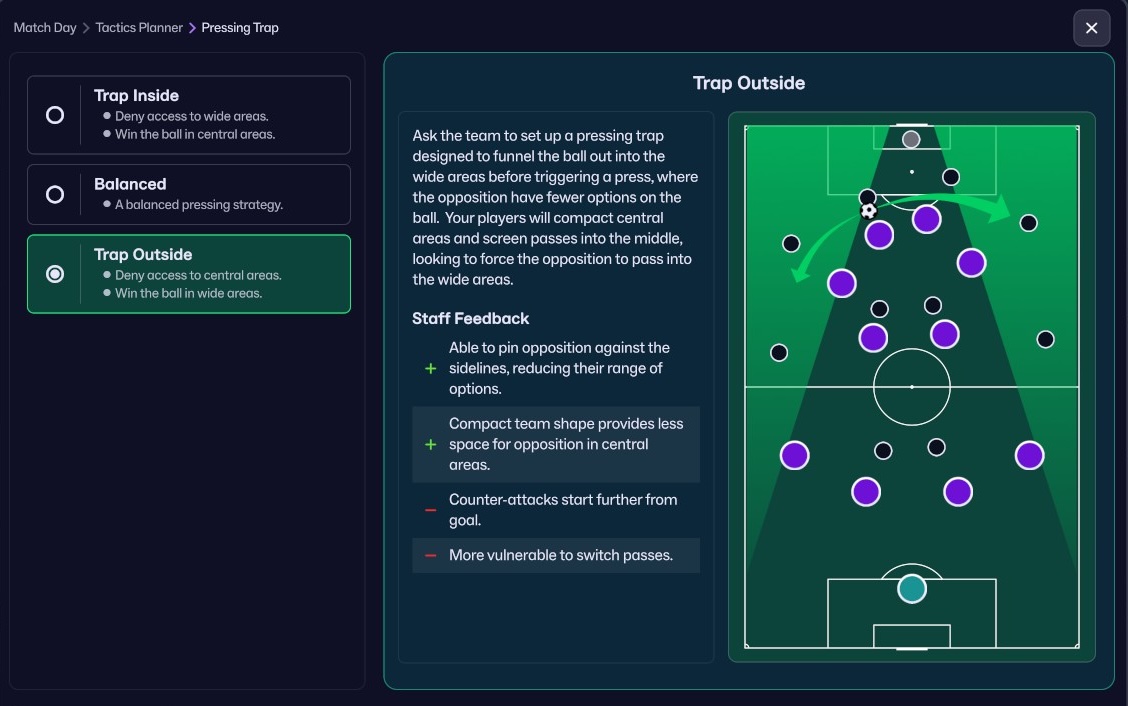
Also via team instructions, you can further accentuate defensive compactness by assigning roles to the two centre-forwards to press and support the midfield. The two forwards will typically press the centrebacks and try to force the ball towards wider areas where opposition attack should be less dangerous. Crosses are always a low-chance method to deliver the ball towards goal, when compared to passes. At the same time the rest of the midfield can be instructed to play more narrow to further guide the opposition into wide outside trap. With a commanding keeper (with good jumping reach), and a pair of tall, strong centrebacks guarding the central space in front of your goal, crosses from wide could lose much of their threat. Thus, wide trap makes a lot of sense in a 4-4-2 defending strategy.
Similarly to the two forwards, the wide midfielders can be instructed to track back to cover the flanks, supporting your fullbacks and countering the opposition’s attacking threats in wide areas. You basically want your wide players to play more narrow in 4-4-2 than in the in-possession 4-2-3-1 in order to form a more compact, defence-focused unit together with the central midfielders. The choice of wide player roles plays a big role (pardon the pun) here – hence the HFB.
As the wide midfielders drop alongside the two central midfielders, they form a cohesive midfield unit, the flat four, which maintains a compact distance between the front line and the back four. The midfield four move across when the ball is in wide areas, with the far-side wide midfielder covering central spaces. The central midfielders can either zonally protect the inside channels or press their midfield opponents man to man, while the wide midfielders mark opposing full-backs. Mind you, I don’t want my players running around like a bunch of headless chickens, so I limit the use of pressing roles. I rather prefer my four lines to stay disciplined and together. This is no Gegenpress.
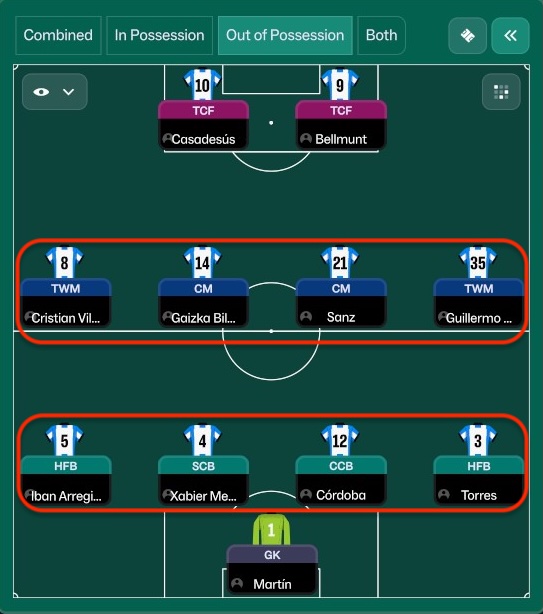
The back four operates with similar compactness to the midfield four. They play rather narrow already but can go even narrower when appropriate. The centrebacks are responsible for marking attackers who drop and attempt to receive the ball between the lines, as well as defending against more direct central plays and crosses. The full-backs will press in the wide areas and mainly look to block crosses. But most importantly, all members of a back four work in concert to cover the spaces behind them. The team pressing is set to “press more”.
In 4-4-2, the two holding fullbacks can play more conservatively and narrower than they usually do in the more adventurous attacking 4-2-3-1 formation. In defence, it is more worthwhile to have your fullbacks stay more compact and closer to your centre-backs, to provide defensive cover and reinforce the defensive narrow shape.
And that is all the tactic theory crafting for now! Sorry if I have gone a little overboard, theorizing about the defensive/out of possession phase. But guess that is only natural, seeing how Defence-First style of football, used by Real Sociedad in the early 1980s, was one of my main inspirations for the tactic. In the future update I am hoping to touch upon how the 4-2-3-1 shape’s fluid attack works during in-possession phase, with even more examples from the game.
ADDENDUM: Okay, I have to be honest I had a 4th, SECRET real manager inspiration. This one was a purely superficial/aesthetic one. The football coach fashion icon that is Marcelo Bielsa, especially during his Leeds period.

I’m firmly in the camp that a football manager should not dress to look like a bloody accountant or Wall Street day trader. Instead, fully embrace the athletic side of the job and look like you belong in the dugout and on the pitch with the rest of the lads. That’s just me.
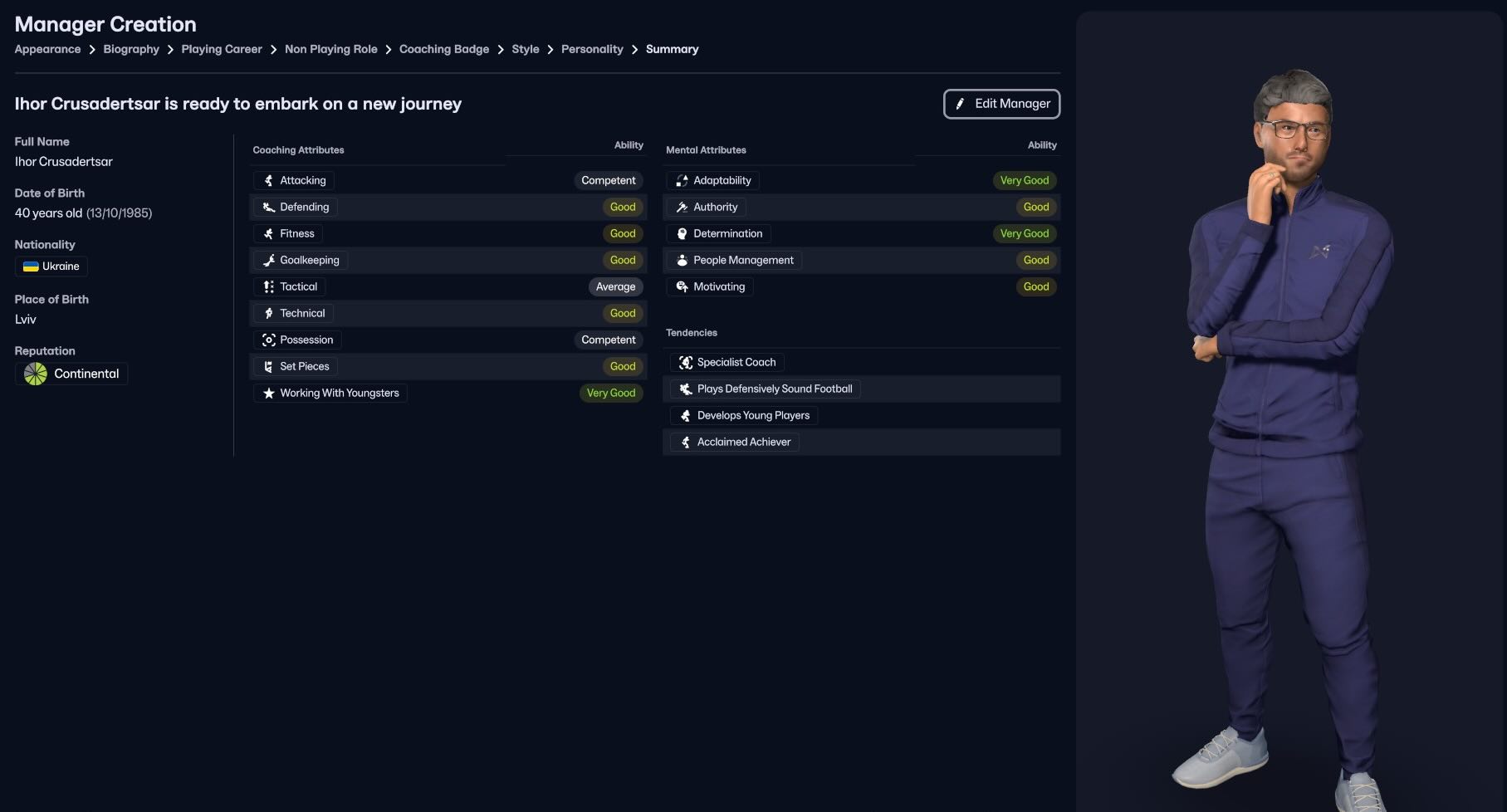
Although if you do decide to wear a suit in the dugout then at least have the decency and class to cover it up with a trench coat.







 The Gaffers Lounge
Leave a comment