
Voices from Graubunden – Part 2: The View from Nearer the Top
Eleven years ago, I began this journey without really knowing where it would take me. I knew only that I needed football, not as an escape, but as a craft. As a man and as a coach, I was searching for something I could commit to fully, something that would ask everything of me and give clarity in return. Life had already shaped me by then, but it was Gernika that shaped me as a coach. Deep in the Basque Country, far from the spotlight, in the fourth tier, it was the perfect place to learn. To fail quietly. To experiment. To understand what kind of manager I was becoming. That period will always live warmly in my memory, even if it was interrupted by personal tragedy. At the time it felt cruel, almost unfair, but with distance I can see it more clearly now. It was meant to be. Every path bends for a reason, even if you only understand it years later.

When I arrived in Chur, the picture could not have been more different. A club burdened by expectation, unsettled by an expensive rebrand that had not delivered, and whispered conversations about crisis hanging over Obere Au. The transition was not seamless. Translating ideas forged in Spain into the reality of semi-professional Swiss football took patience, humility, and more than a few missteps. That first transfer window remains vivid in my mind. My first real one. A genuine rite of passage. Learning how to strengthen a squad without breaking its spirit. Learning how to look a player in the eye and tell him that his role was changing. Learning how to manage minutes, egos, and the quiet disappointment that never makes the headlines. Those lessons stay with you. They always do.
Over time, the club evolved, and so did I. Players passed through Graubünden carrying their own stories. Patjim Kasami and Samu Castillejo arrived as recognisable names, nearing the ends of their careers, but they were never symbols or gestures. They were professionals who helped shape a culture. Alongside them came Spanish technicians, Swiss prospects, calculated gambles and occasional mistakes. That balance, between success and failure, is the essence of management. During these years I refined my approach, leaning more heavily into data, not as a replacement for intuition but as a companion to it. Together with the recruitment team, we built models that reflected who we wanted to be, not just what the market offered us.
Leadership above me has also changed. Simon Hofer, then Semir Chiesa. Different personalities, different pressures, but always the same responsibility: to protect the club and allow it to grow. Now, with promotion secured and full-time status finally achieved, it feels like a natural moment to widen the lens. This story is no longer just mine to tell.
I will, of course, continue to write here. These pages remain my place to reflect honestly on the trials and contradictions of management, on ageing in Graubünden, on carrying loss while still moving forward. Football has never stopped giving me reasons to question myself, and I suspect it never will.
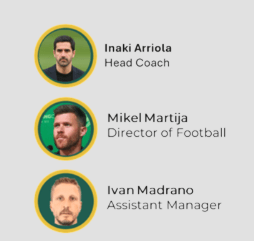
But from now on, you will also hear from others. Mikel Martija and Ivan Madrano will lend their voices. More than ever, we operate as a transfer committee, challenging one another, debating ideas, disagreeing when necessary. Mikel will speak openly about how we intend to push recruitment further, using data intelligently rather than obsessively. There will be moments when he and I do not align perfectly, and that is precisely the point. Ivan, meanwhile, will reflect on the work done on the training pitch, now transformed by our move to full-time football. No more sessions squeezed between shifts, no more compromises. His experience, both with senior players and youth, is invaluable, and I trust his eye deeply.
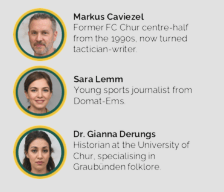
I am also pleased that Calanda will continue to accompany us. Markus Caviezel, whose playing days belong to a very different Chur, will persist with his tactical analyses. Sara Lemm will continue to document the human side of this journey with her journalist’s sensitivity, and Dr Gianna Derungs will remind us where we come from, grounding football in geography, history, and identity. Important announcements will, as always, come directly from the club. This diary is not a press release. It is something quieter. More personal.
We are nearer the top now. Not just in leagues, but in understanding. And from here, the view is clearer – but the air is thinner, and the balance harder to keep.

 The Gaffers Lounge
Leave a comment