

Revista Fútbol Federal
By Mateo Ledesma
Batistuta, Season Four
Another year passes at Parque Patricios, and with it comes a familiar feeling. Pride in what Huracán have become over the long Argentine season, belief in the direction of the project, and yet, once again, the bitter taste of failure when it mattered most.
Gabriel Batistuta’s fourth season in charge of Huracán will be remembered as one of the club’s strongest in league terms—and one of its most frustrating in knockout football.
Huracán lifted the Torneo Clausura, finishing with 12 wins, 1 draw and 3 defeats, scoring 37 goals and conceding just 16. After such a blistering start to the second half of the season, it was never realistic to expect perfection, but Batistuta’s side did just enough to finish one point ahead of Newell’s Old Boys, securing the title with authority rather than dominance.
Across the full Liga Profesional table, combining Apertura and Clausura, Huracán finished as the second-best team in Argentina, a remarkable achievement. Only River Plate, the financial and sporting juggernaut, finished above them, seven points clear, while Boca Juniors were left nine points behind in third. Over 41 league matches, this Huracán side proved consistency, resilience and identity.
And yet, when the playoffs arrived, the season unraveled in painfully familiar fashion.
A round of 16 meeting with Instituto ended 1–1 after 90 minutes, before Huracán once again faltered from the penalty spot. Another season, another early exit. The irony was cruel: Instituto had already eliminated Huracán earlier in the campaign, knocking them out of the cup in the third round. Twice faced, twice defeated, when the margin for error was zero.
Libertadores Reality Check
In continental competition, Huracán’s run to the CONMEBOL Libertadores quarter-finals was a genuine step forward. Progressing through the group stage and knockout rounds reinforced the idea that Batistuta’s side now belongs on this stage.
But the quarter-final clash with São Paulo was a brutal reminder of the gap that still exists. A 1–1 draw at home gave hope, but in Brazil Huracán were dismantled 5–0. The difference in class, depth, and individual quality was stark. This was not a tactical failure, it was structural.
Huracán are competitive. São Paulo are built to win.
Life After Aristizábal and the Return of a Forgotten Star
The sale of Emilio Aristizábal loomed large over the season. Losing the focal point of Batistuta’s attack left fans fearing a fatal void. And for much of the year, that concern seemed justified.
Batistuta’s tenure has been defined by opportunity, by players stepping up when the door opens. This season, that door reopened for a name many feared had been lost.
Chiquichano, once the jewel of Huracán’s youth production line, had endured a nightmare 18 months. A torn lateral meniscus, an Achilles injury, and a lower back stress fracture robbed him of nearly ten months of football. At one point, he barely featured at all, drifting to the edges of the project.
But when the moment came, Chiquichano answered.
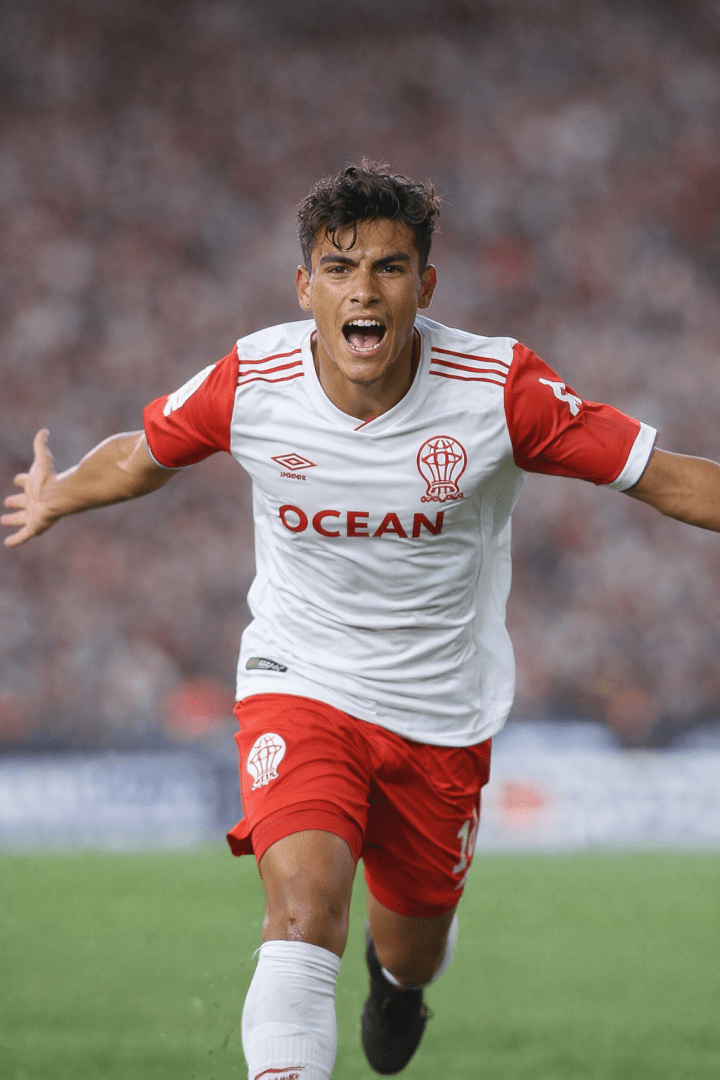
In just 12 appearances, he delivered 8 goals and 5 assists, reminding everyone why he was once spoken about as the future of the club. It was not just production, it was personality. Courage, sharpness, and the sense of a player refusing to let his story fade quietly.
Goals From Everywhere
Perhaps the most encouraging development of Batistuta’s fourth season was this: Huracán no longer rely on one man.
Goals came from across the pitch:
- Nicolás Ibáñez: 14 goals, 3 assists
- Agustín Palavecino: 13 goals, 4 assists
- Brian Aguirre: 13 goals, 8 assists
- Tahiel Peralta: 8 goals, 7 assists
- Deiber Caicedo: 7 goals, 11 assists
- Lucas Robertone: 6 goals, 10 assists
- Jorge Rodríguez: 5 goals, 2 assists
- Alan Morinigo: 1 goal, 10 assists
This was a team built on collective threat, on structure and balance rather than individual dependency. For long stretches, Huracán played some of the most coherent, aggressive, and entertaining football in Argentina.
And yet…
The Questions That Refuse to Go Away
So where do Huracán go from here?
They cannot spend another $8 million this winter. The experienced signings that stabilized the squad are now a year older. Europe continues to circle. Saudi Arabia watches closely. And now comes another blow: Nicolás Ibáñez has announced he will retire in 12 months’ time, placing a clear expiry date on one of the team’s most reliable contributors.
Can Huracán continue to bridge the gap to River Plate without significant investment?
Can Batistuta finally solve his playoff problem or does this project lack the ruthless edge required in knockout football?
How long before the heavy investment in youth recruitment translates into first-team difference-makers rather than long-term promises?
And perhaps most importantly: how many more “almost” seasons will the fans accept?
Ledesma’s Verdict
Gabriel Batistuta has turned Huracán into a serious football club again. The league data, the consistency, the continental progression all of it points upward. This is no longer a project searching for identity.
But elite football is not judged on tables alone.
Until Huracán learn how to survive the chaos of knockout football, until they find the mentality to win when control disappears, this era will remain incomplete. Season five will define everything. Not because Huracán must improve but because they must finally prove they can finish the job.
Progress is undeniable.
Belief remains strong.
But patience, even in Parque Patricios, is not infinite.

 The Gaffers Lounge
Leave a comment