

By Mateo Ledesma
Huracán at the Halfway Point: Progress, Pain, and the Question of What Comes Next
Six months into Gabriel Batistuta’s second season at Huracán, the project sits at a fascinating crossroads. Success has already arrived silverware, continental nights, a restored identity but so have familiar questions. Can this team evolve again? Can it grow without breaking what made it special? And can a club operating under restrictions continue to punch above its weight?
The answers, as ever with Batistuta’s Huracán, are layered, complex and still unfolding.
IMPRINTING AN IDENTITY WITHOUT A TRANSFER MARKET
If Batistuta’s first season was about belief, his second has been about control, control of the squad size, control of wages and control of a long-term sporting vision alongside Director of Football Daniel Vega.
Operating under a transfer embargo and already having absorbed the departures of several key loanees and veterans, the club continued to thin the ranks aggressively:
- Martín Nervo → Melgar ($210k)
- Santino Bima → Atlético Tucumán ($130k)
- Thiago Cáceres → Unión (SF) ($82k)
- Brian Martínez → Unión (SF) ($135k)
All four deals included performance-related bonuses, reflecting Vega’s pragmatic approach: extract value now while maintaining upside later.
Privately, Vega was blunt.
“We have too many players. Far too many. A professional squad should be half this size.”
With the most recent youth intake included, Huracán now sits at 102 registered players across all levels, a number completely at odds with Batistuta’s preference for clarity, hierarchy and defined roles. Expect further departures. This trimming is not cosmetic, it is structural and it is ongoing.
THE NEXT GENERATION: A RAW BUT INTRIGUING INTAKE
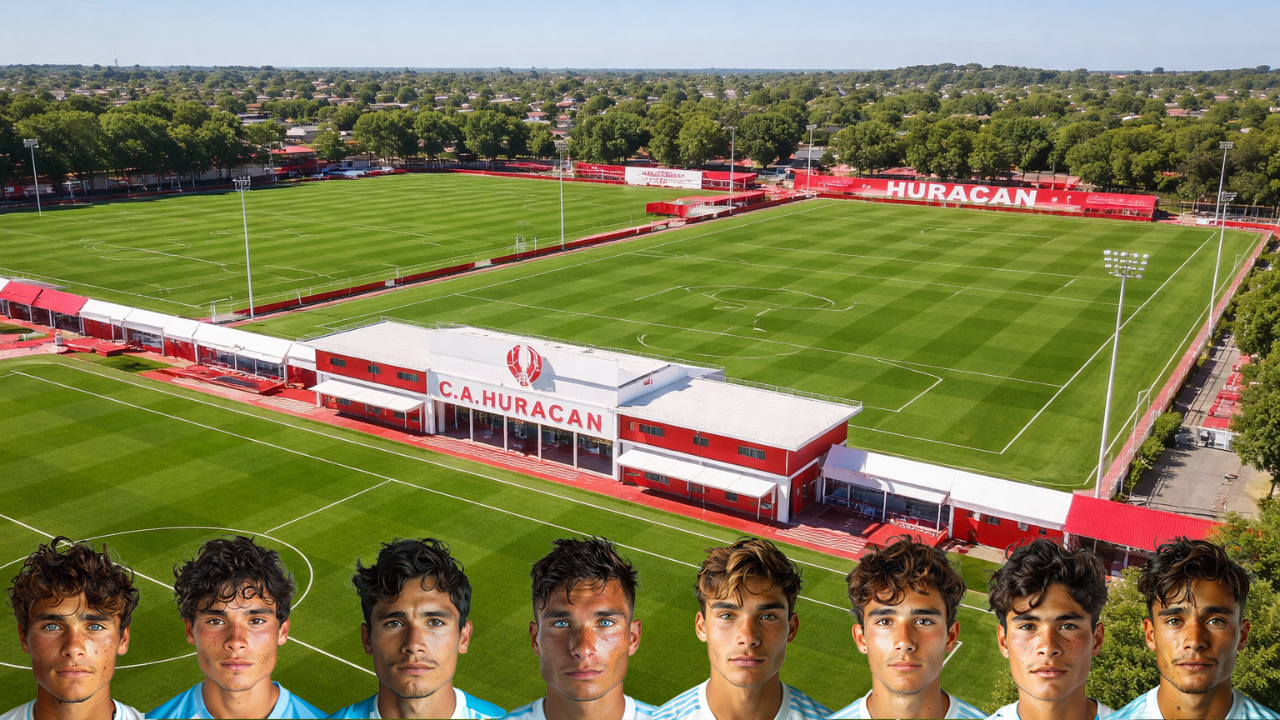
Eight youth players were offered contracts in the latest intake, a group that reflects Huracán’s philosophy more than its polish.
- Guillermo Muñoz (15) – A centre-back whose reading of the game is promising, but his lack of pace may ultimately define his ceiling. Development will determine whether intelligence can compensate for physical limits.
- Lautaro Gagliardi (15) – A wide defender by trade, though his future may lie as an inverted full-back. Defensively sound, but unlikely to offer consistent attacking output.
- Iván Moreno (15) – Technically gifted with creative instincts, though still searching for assertiveness. If his mentality sharpens, he could become a genuine playmaker.
- Iván Urtasun (15) – The standout. A natural No.10 with vision, confidence, and flair. The jewel of the intake and already being closely monitored by the first-team staff.
- Lautaro Martínez (16) – A clever forward profile who could thrive as a false nine. His balance and movement suggest tactical versatility rather than raw goalscoring.
- Agustín Clemente (16) – Physically willing but technically limited. A long-term project requiring significant refinement.
- Guillermo Senatore (16) – A modern wing-back with energy and stamina, though still raw defensively.
- Rodolfo Lazzarín (15) – A direct, one-dimensional striker. Dangerous in the box but may struggle unless his overall game expands.
As ever, the question is not talent, but timing. Which of these players will bridge the gap from potential to production?
BREAKTHROUGH SEASON: WHO HAS STEPPED UP
Necessity has once again accelerated development.
- Eric Ramírez has seized his opportunity emphatically: 11 goals in 20 matches, leading the line with conviction after a season that once threatened to pass him by.
- Sebastián Ramírez has been one of the revelations of the campaign. From central midfield, he boasts an 8.40 average rating, 3 goals, and 3 assists in 17 appearances—a blend of work rate and intelligence Batistuta values highly.
- Tomohiro Yamaguchi (18), the Japanese-Argentinian winger, has quietly impressed, stepping in during Rodrigo Cabral’s absence with 5 appearances and a goal, showing maturity beyond his years.
- Chiquichano, despite ongoing fitness issues, has still managed 2 goals in just 2 appearances, a reminder of his explosive ceiling.
- Agustín Moreyra continues to justify his trust: 10 appearances, 3 goals, 4 assists, offering energy and unpredictability.
Long-term injuries to Cabral and De La Fuente have reshaped the XI, which has largely settled into:
Meza
Guidara – Paz – Carrizo – Ibáñez
Pérez
Bisanz – S. Ramírez – Miljevic – Alanis
E. Ramírez
It is a functional team, but perhaps not yet a complete one.
DOMESTIC PERFORMANCE: SAME RESULTS, DIFFERENT FEEL
In the Torneo Apertura, Huracán finished 4th:
- 7 wins, 7 draws, 2 losses
- Goal difference: +8
On paper, this mirrors last season exactly. But dig deeper, and the shift is clear.
Last season:
- 38 goals scored, 24 conceded (+14)
This season:
- 7 fewer goals scored, 1 fewer conceded
The defensive solidity has marginally improved, but at a cost. The absence of Cabral, De La Fuente, and an intermittently available Chiquichano has blunted Huracán’s attacking edge.
Data backs this up. Cross completion and xG both rank as underperforming areas, while defensively, Batistuta’s side still allows the highest number of final-third passes against per game in the league.
And yet, once again it was enough to reach the playoffs. Batistuta is 0 for 2 in postseason knockout ties so far, but a matchup with Godoy Cruz, who finished 5th with five defeats, offers a realistic opportunity to break that trend.
CONTINENTAL CONTRASTS: GLORY AND FRUSTRATION
Fresh from their Copa Sudamericana triumph, Huracán faced River Plate in the CONMEBOL Recopa Sudamericana.
A stunning 4–2 first-leg win suggested another historic night. But the second leg exposed lingering flaws with game management, emotional control, defensive structure, as River overturned the tie with a 4–1 victory.
In the Copa Libertadores, however, Huracán showed growth.
After an opening 3–2 loss to Nacional, they responded with four consecutive wins, including two victories over Barcelona SC, before finishing the group emphatically with a 4–1 win over Libertad. Qualification secured with a game to spare. They were professional, resilient and mature.
THE ROAD AHEAD: EVOLUTION OR PLATEAU?
Batistuta recently signed a new four-year deal. The embargo is set to lift. A $6 million transfer budget awaits—modest by continental standards, but significant for Huracán, whose biggest transfer fee spent historically sits just under $3 million.
The manager has been clear, even privately:
He does not want a star.
He wants depth.
He wants to raise the floor, not the ceiling.
Daniel Vega has proven he can move players on. The next test is harder, can he bring in the right profiles?
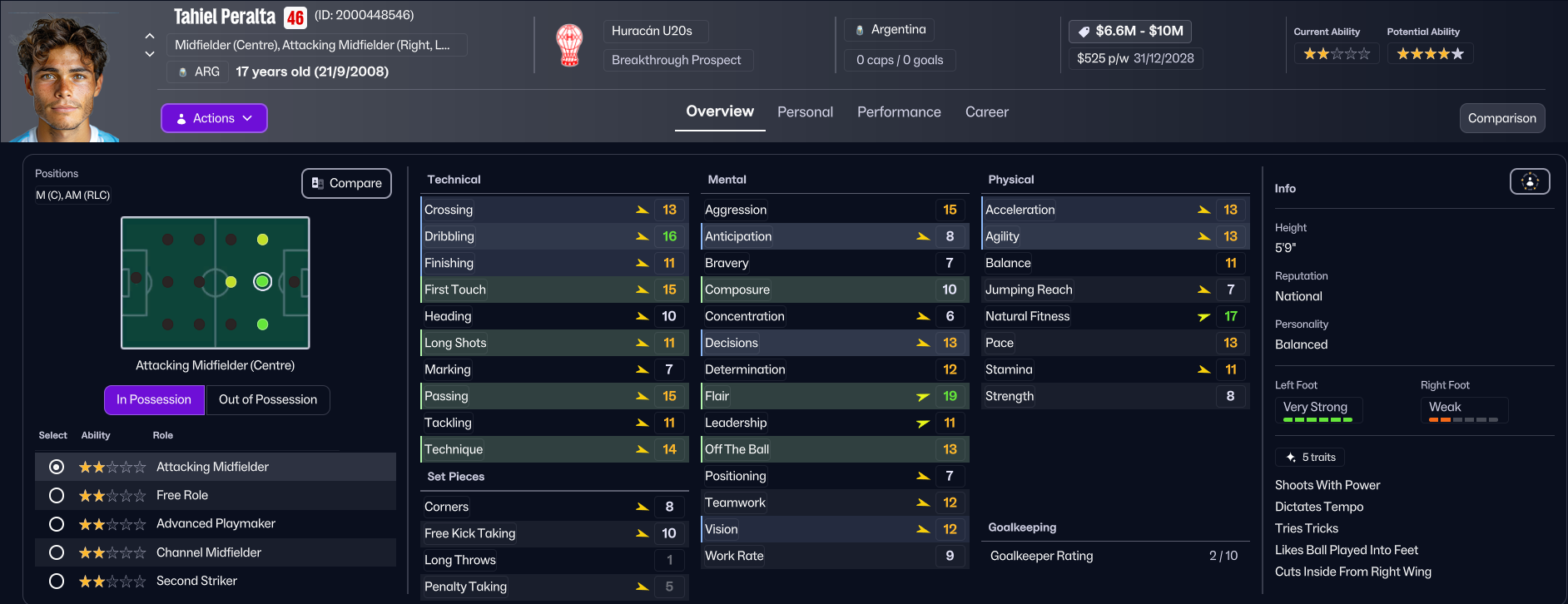
Youth integration remains central to the philosophy, and one name generating genuine buzz is Tahiel Peralta, an 17-year-old playmaker lighting up the academy. His debut feels inevitable. Whether he becomes transformative remains to be seen.
FINAL QUESTION
Has Batistuta’s project reached its natural ceiling relying primarily on internal solutions? Or is this merely the foundation—solid, stable, waiting for the final pieces?
The answer likely lies in the coming transfer window. Because identity alone can only take you so far. To break through again, Huracán may need not just belief but precision.
And for the first time under Batistuta, they may finally be allowed to choose.




 The Gaffers Lounge
Leave a comment