

I step into my sixth season at Chur aware that, by Basque standards, I am already becoming something unusual. We are not a people known for lingering in one place as managers, not in the modern sense. Our coaches are exported, tested, moved on, often before their work is fully understood. Continuity, for us, has always been rare enough to feel almost accidental – a brief alignment of trust, culture and timing. And yet, here I am, still standing on the same touchline, beginning year six with 152 games behind me, 92 won, two promotions earned, and a feeling that this is no longer a project but a foundation.
I find myself thinking often of Imanol Alguacil. Seven years at Real Sociedad. Seven years in an era that barely tolerates seven months. When he finally left for the Middle East, it felt less like abandonment and more like the closing of a cycle – a man who had stayed long enough to leave something permanent behind. That is what resonates with me now. Not the destination, not the next step, but the idea that longevity itself can be an expression of strength. In Basque culture, staying is never passive. It is stubborn, deliberate, almost confrontational. It is saying: this matters enough to endure.
Basque managers have rarely been allowed that privilege. Clemente had his window and it closed brutally. Mendilibar was an outlier because Eibar understood what he represented. Even those who embody our football most clearly are usually temporary custodians, never long-term stewards. Which is why six years at Chur feels heavier than the number suggests. It places me, unexpectedly, in a quieter lineage – not of trophies, but of trust.
There were moments when leaving would have been easier. After a run without wins. After the noise that follows promotion, when expectation outpaces reality. But each time, the answer came back to the same thing: the structure was still sound. The idea still held. The club did not panic, and so neither did I. That, more than any tactical evolution, is what convinces me this place understands the Basque way better than some clubs within our own borders.
Now, as the sixth season begins, I feel myself coaching differently. Less urgency, more clarity. Less need to imprint, more responsibility to protect what already exists. Perhaps this is what Alguacil felt in his later years – the shift from builder to guardian, from coach to reference point. If my time here ends one day, I want it to feel like his did: not a rupture, but a handover. Proof that staying long enough is not about comfort, but about conviction.
I always know when a squad is getting closer to what I want, because I stop talking about it out loud. The idea no longer needs selling. It just sits there, quietly, in the way the sessions feel and the way the players move around each other. This summer has been like that. Less noise. More recognition. Four new faces:
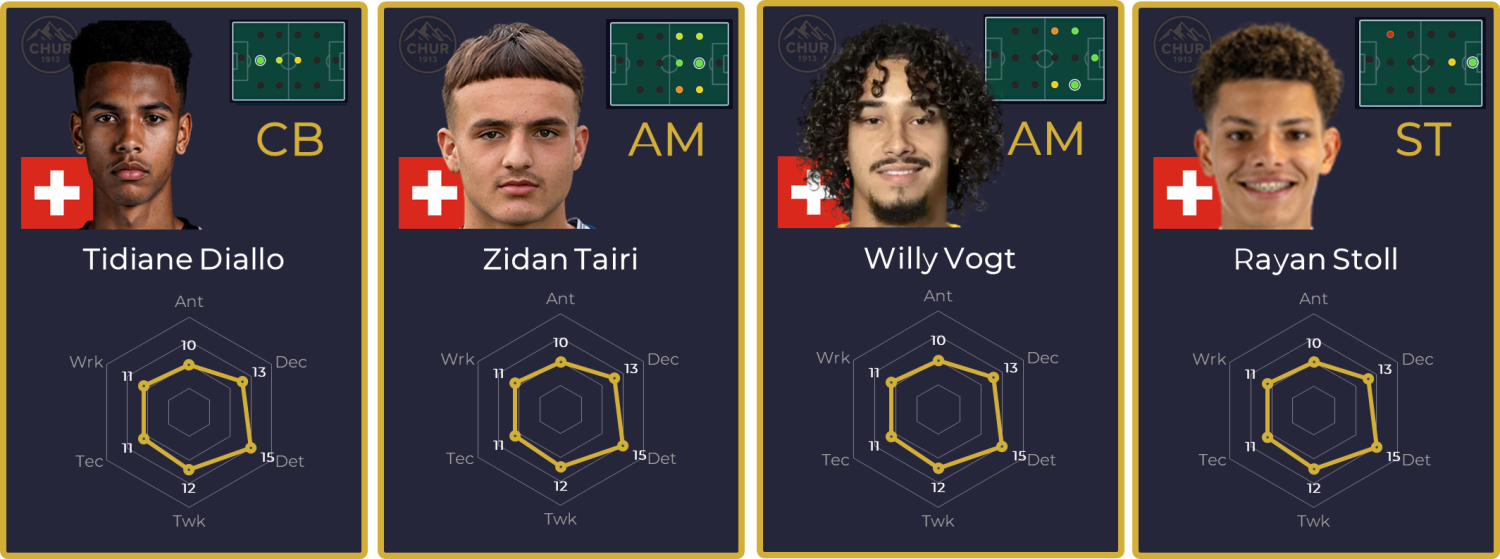
Tidiane Diallo arrived and almost immediately the back line felt different. He’s only 22, but he doesn’t play like someone still learning how to defend. Montpellier gave him habits, Vaduz gave him scars. I see it in the way he steps in early, in how little he panics when the space opens behind us. With him, the defence breathes. I don’t have to raise my voice as much. That might be the biggest compliment I can give.
Zidan Tairi feels like a conversation resumed after a long pause. Zurich-born, once ours, then gone too early, like so many are. Hoffenheim, Lugano – big words, small minutes. At Wil, he finally became a footballer rather than a prospect. Nearly fifty games changes you. Seventeen goal contributions changes how you see risk. He trains with a calm I didn’t expect, and with a hunger I did. He knows this might be his last chance to shape a career instead of chasing one. Technically, he gives us something we haven’t had: someone who can slow a match down without killing it.
Willy Vogt doesn’t need introductions or promises. He’s seen enough football to know when words mean nothing. Born in Brazil, but entirely Swiss in how he approaches the game. Grasshoppers, Basel U21, Winterthur, Schaffhausen, Bellinzona – his path isn’t glamorous, but it’s honest. Sixty games here, seventy there. Promotion pushes, relegation scraps, quiet Tuesdays. He understands the leagues better than I do. In training, he’s already organising others without being asked. Those players rarely make headlines, but managers sleep better when they’re around.
Rayan Stoll arrived quietly too. Sion raised him properly. The Super League showed him how small the margins are. The Challenge League taught him humility. He didn’t find himself at Rapperswil and football, as always, moved on quickly. But I see a striker who runs because the team needs him to, not because it looks good. He takes contact. He finishes cleanly. He doesn’t complain. Basque teams have always loved forwards like that – men who defend first and score second.
When I step back and look at this group now, I feel something I haven’t felt before at Chur: recognition. Not nationality, not accents, but behaviour. Structure respected. Work accepted. Ego kept in check. This is what I meant all along when I talked about Basque characteristics in a Swiss league. Not a copy, but an inheritance.
Imanol stayed seven years at Real Sociedad because the club allowed him to become part of the building. I don’t know where my road goes after Chur, and I’m not ready to think about it. But as this sixth season begins, the squad finally looks like it could carry the idea without me pushing it uphill every day. And that, maybe more than any promotion, feels like progress.



 The Gaffers Lounge
Leave a comment