


Chur’s rise over the past two seasons has been defined by structure, intensity, and a carefully cultivated positional clarity. Last year’s model was built on assertive territorial play, high-volume possession in the middle third, and a coordinated counterpress that suffocated opponents into technical errors. Their metrics reflected a side that wanted to live high up the pitch: aggressive regains, strong defensive intelligence in advanced zones, and a 3-2-5 structure that overwhelmed opponents with territorial occupation rather than raw risk-taking. This season, however, the data reflects a notable shift – not a departure from Arriola’s principles, but a rebalancing. Chur have become more economical, more selective, and significantly more efficient in both boxes. They defend deeper, attack more directly, and rely less on volume and more on clarity.
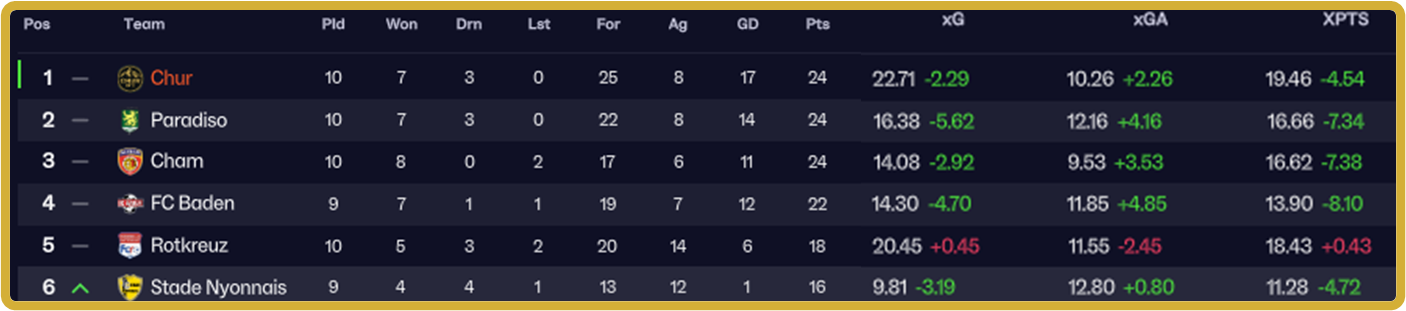
The most striking contrast lies in Chur’s defensive posture. Last season, they were a high-line, high-engagement side, recovering the ball frequently in midfield and forcing opponents into rushed, low-quality entries. This year, the numbers show a side that invites opponents slightly closer to their own penalty area before engaging. Opposing teams complete more passes before Chur intervene; PPDA has risen, and the defensive line has clearly dropped. Yet this is not passive football. Rather, it is a form of zonal patience. Chur perform a high volume of defensive actions just outside the penalty area while conceding very few final-third passes and very few shots. Their opponent conversion rate is low because the shots they allow are typically pressured, angled, or blocked – reflected in the unusually high block numbers and low clearance numbers. Chur rarely scramble; they absorb, hold shape, and extinguish danger at the moment it becomes actionable.
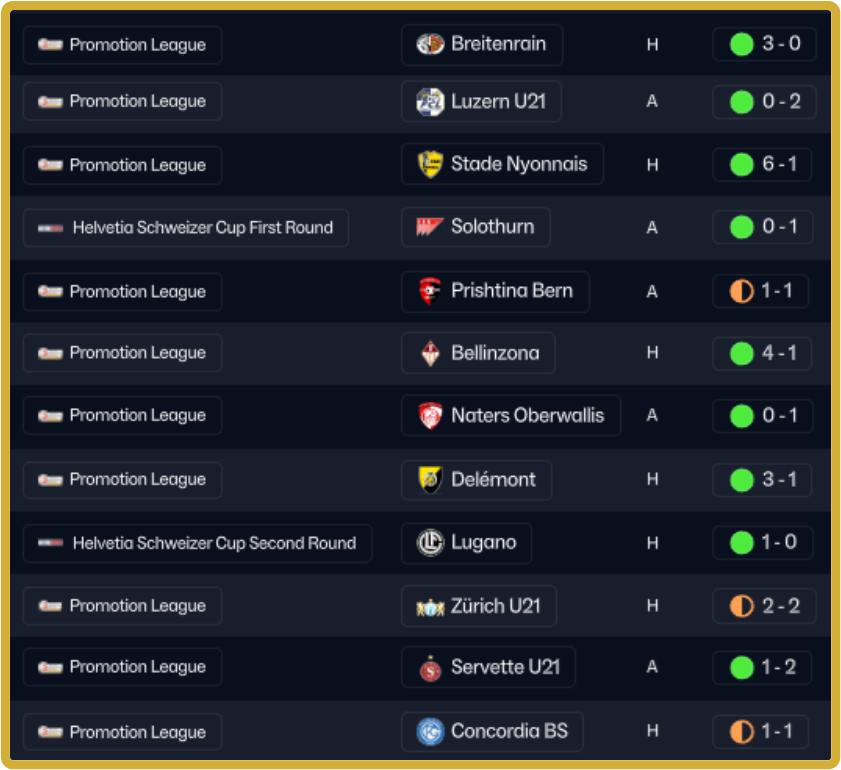
This defensive evolution has also produced an improvement in discipline and timing. The team is committing fewer tackles but winning a higher percentage of them, indicating a shift from volume-based aggression to decision-based intervention. Fouls per game have dropped, clean sheets have increased, and xGA remains one of the lowest in the league despite facing fewer high turnovers than before. Chur concede few set-piece chances and almost no expected assists from dead-ball deliveries, despite facing a high number of crosses – an indication of strong organisation in their penalty-box zones and growing aerial maturity across the back line.
Because Chur now regain possession closer to their own penalty area and lose it more frequently around the halfway line, their transitional profile has changed. Last season’s team were designed to recover early and counter with structure; this season’s unit is more stretched vertically, more reliant on individual dribbling to break pressure, and more willing to attack directly once the space appears. The dribble numbers are high, and with that comes the side-effect of being frequently fouled – often a sign of a team that carries the ball through pressure rather than circulating until space opens. They are looser in possession, completing fewer passes than before, but those passes tend to be accurate and concentrated around decisive zones – especially the penalty area, where the majority of their attempts originate.
This shift in the attacking phase explains the contrast in their passing maps: few final-third passes for, but an unusually high number of passes attempted near the penalty area. Chur are not spending long spells “preparing” attacks; they move quickly from regain to incision, using crosses as a major structural tool. Their cross volume is high, and the accuracy is even higher, forming the backbone of a side that scores frequently but without relying on elaborate possession chains. Their conversion rate has surged, reflecting a team that now prioritises moments of clarity over the accumulation of phases.
Perhaps the most telling change is psychological rather than tactical. Last season’s Chur imposed their game everywhere, even when it produced chaotic moments. This season’s Chur understand the limits of their squad at a higher level and have built a more stable, pragmatic version of their identity. They allow more of the ball, intervene less globally, and defend in more compressed zones. But they produce cleaner shots, concede fewer dangerous ones, and finish their chances with ruthless consistency. Final-third activity – both for and against – is low, yet the team carries a far higher attacking threat because their possessions are designed to end rather than coexist.
In short, the Chur of this season are not less ambitious; they are more mature. Where last year’s model leaned on intensity and control, this one leans on clarity and efficiency. The ball is spent, not hoarded. Space is contested selectively, not constantly. And the result is a side that scores more, concedes less, and wins matches by shaping the game around key moments rather than every moment. It is a subtler evolution, but one that signals a club fully aware of the demands of the level they now inhabit – and confident enough to adapt without compromising who they are.




 The Gaffers Lounge
Leave a comment