
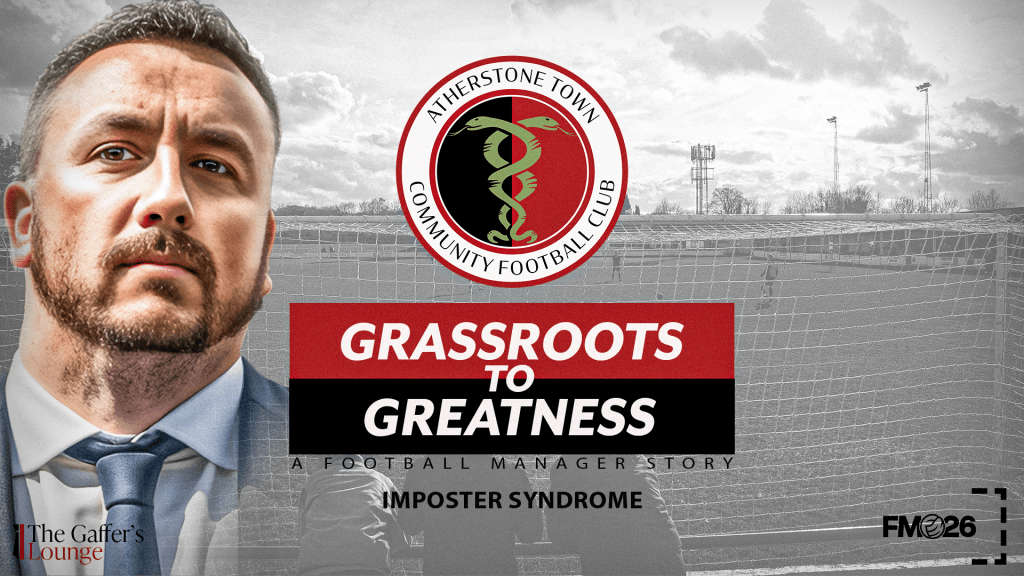
Club Statement: Paul Howarth Appointed as First Team Manager
23rd December 2025
Atherstone Town Community Football Club is delighted to announce the appointment of Paul Howarth as First Team Manager with immediate effect.
Paul joins us having previously worked with the club in various capacities over recent years, including graphic design and media work, and brings with him an intimate knowledge of Atherstone Town and what we represent as a community football club.
Following Mitch Thomson’s departure to Coventry City earlier this month, we received a significant number of applications for the vacant position. The interview process was thorough and we spoke to several impressive candidates with extensive non-league experience. However, the board was unanimous in their decision that Paul was the right person to lead us forward.
Chair Maria Beale said: “When we sat down to discuss what we needed from our next manager, we kept coming back to the same things – someone who understands this club’s values, who will work tirelessly for Atherstone Town both on and off the pitch, and who genuinely cares about our community. Paul ticked every box. Yes, this is his first management role, but his passion and commitment shone through in the interview process. He knows what this club means to the town and he’s ready to put in the work required to succeed at this level.”
Paul will be working alongside Nathan Haines, who will continue in his role as Assistant Manager. Nathan’s experience and knowledge of the squad will be invaluable as Paul settles into the role, and we’re fortunate to have such a strong partnership in the dugout.
Paul Howarth commented: “I’m absolutely honoured to be given this opportunity. Atherstone Town means the world to me and to be asked to manage the club is something I don’t take lightly. I know there will be people who question whether I’m ready for this, and that’s fair enough – I have to prove myself. But I can promise the supporters that I’ll give everything to this job. I’ll work harder than anyone, I’ll learn from those around me, and I’ll do whatever it takes to make this club successful. Nathan has been brilliant in stepping up as caretaker and I’m looking forward to working closely with him. The lads have won four on the bounce and my job is to keep that momentum going.”
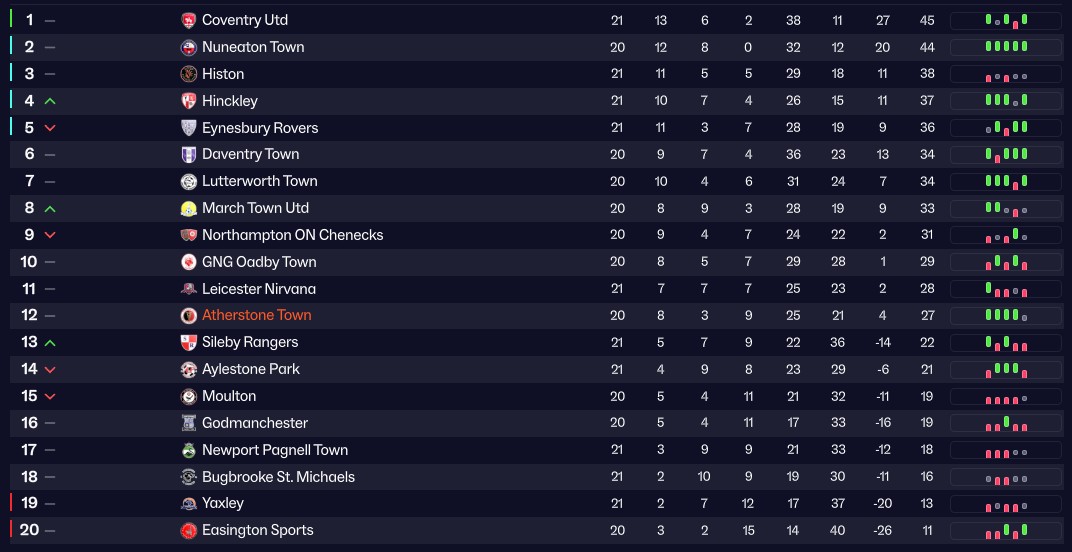
Paul takes charge of a squad currently sitting in 12th place in the league with a record of 8 wins, 3 draws and 9 losses from 20 matches. His first match in charge will be the home fixture against Leicester Nirvana on Saturday 27th December, kick-off 3pm.
We’d like to place on record our thanks to Nathan Haines for his outstanding work as caretaker manager. Three wins from three games speaks for itself, and his decision to remain as assistant manager demonstrates his commitment to Atherstone Town Community FC.
Everyone at the club wishes Paul every success in his new role. It’s an exciting time for Atherstone Town and we look forward to seeing what this new era brings.
Getting Up To Speed
That first week leading up to the Leicester Nirvana fixture was a whirlwind. Hectic doesn’t quite cover it—fun, stressful, exciting, nerve-wracking, all thrown together in one enormous mixing bowl of emotions that Paul had no choice but to navigate. He’d gone from watching on the terrace to being responsible for the actual matches themselves, and the reality of that hit him properly once the announcement went live.
The reception on social media had been warmer than he’d dared hope for. Not universally glowing—there were the inevitable sceptics, the ones who questioned whether someone with no coaching experience belonged anywhere near a dugout—but the majority seemed willing to give him a chance. Not who we expected, but we’re backing you gaffer, read one reply that stuck with him. It wasn’t quite a ringing endorsement, but it was something. At a club like Atherstone, they understood that sometimes you had to take a punt on belief over credentials.
Paul’s first port of call was Nathan Haines. They met at Sheepy Road on the Tuesday morning, the ground quiet except for a couple of groundsmen fixing a drainage issue near the corner flag. Nathan had his notebook out—pages filled with scribbled formations, player notes, observations from the three matches he’d overseen as caretaker. He talked Paul through everything: who was playing well, who was carrying knocks, which partnerships were working, where the weaknesses lay.
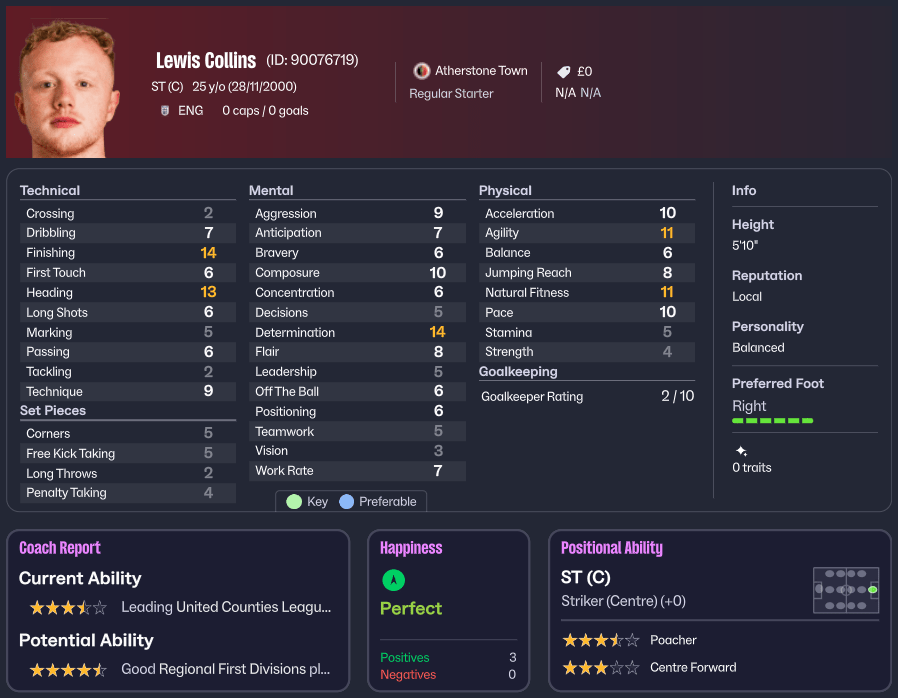
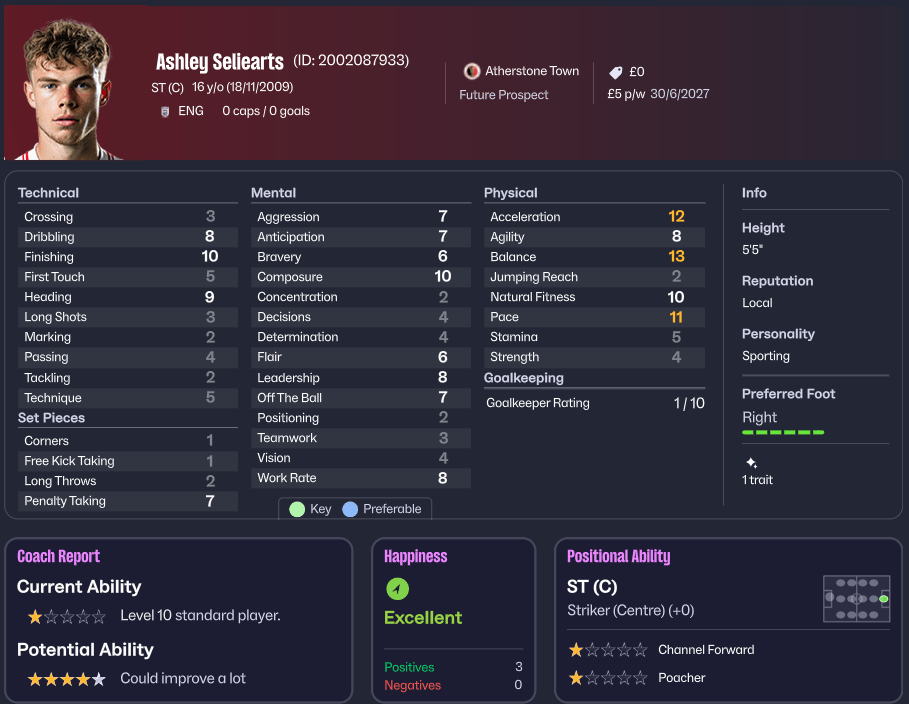
“Lewis Collins is on fire at the minute,” Nathan explained, tapping his pen against a name on the page. “Four goals in four games. Gets in behind, works his socks off, and the lads love him. Ashley Seliearts is another one—only 16 but he’s got something about him. Composure beyond his years.”
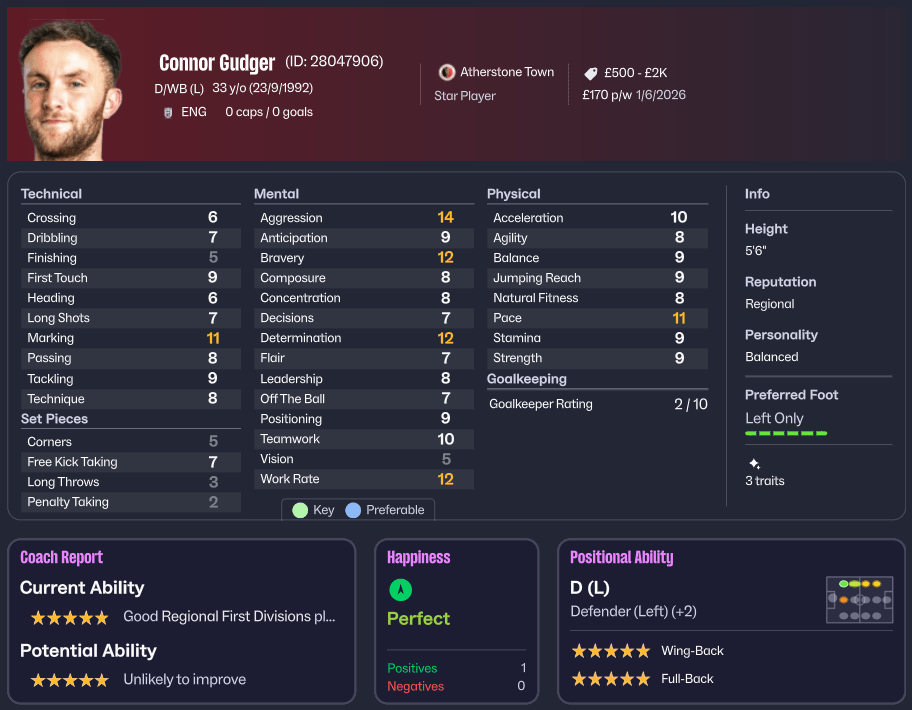
Paul listened, asked questions, made his own notes. Then came the less encouraging part: injuries. Connor Gudger, a solid full-back who’d been a regular for years before Paul arrived, was still three to five weeks away from returning after fracturing his cheekbone. That left them worryingly thin at the back. Another injury and they’d be in proper trouble.
“How thin are we talking?” Paul asked, already dreading the answer.
Nathan grimaced. “If we lose another centre-back, we’re scrambling. Might have to shuffle a full-back inside, play a midfielder there, something like that. We’re not desperate yet, but we’re close.” It was almost as if the players hadn’t been added to a game of football manager…
Paul joked—half-serious, half-terrified—that if it came to it, he’d have to register himself as a player. Nathan laughed, but Paul wasn’t sure he was entirely joking. At forty-two, carrying a bit more weight than he’d like to admit, and with knees that protested every time he bent down to pick something up off the floor, the idea of actually playing was horrific. He’d tweeted the other day that if he dropped his phone under the sofa, he had to plan an entire day’s worth of activities down there to justify the effort required to retrieve it. Playing ninety minutes of competitive football? Absolutely not.
The conversation shifted to recruitment. Nathan mentioned a few names—lads who might be available, contacts at other clubs, the usual non-league grapevine. Paul made calls that afternoon, testing the water, seeing what was possible within their modest budget. Some leads went nowhere. Others were promising but required more time. Then there were the ambitious ones, the players Paul knew were probably out of reach but figured he’d try anyway. What was the worst that could happen? They’d say no. Big deal.
Before the week was out, Paul also managed to get Mitch Thomson on the phone. Mitch was settling in well at Coventry City’s academy, clearly buzzing about the opportunity, but he made time to talk through the squad in detail. He gave Paul the inside track on personalities, who responded to an arm around the shoulder versus who needed a boot up the backside, which players had ambitions beyond Atherstone and which were happy grafting away at step five. It was invaluable stuff, the kind of insight you couldn’t get from watching footage or reading reports.
“You’ve got a good group there,” Mitch told him. “They’ll run through walls if they believe in what you’re doing. Just be honest with them. They’ll respect that more than anything.”
Paul took that advice to heart. Over the next few days, he sat down with every member of the squad individually—some at the ground, others over coffee in town, one lad he caught at his workplace during a lunch break. He asked them about their ambitions, their concerns, what they thought the team needed. Most were cautiously optimistic. A few were clearly reserving judgement, waiting to see if this fan-turned-manager actually knew what he was doing. Fair enough.
The Ambitious Approach
There were two players Paul particularly wanted to bring back to Atherstone. Both were former Adders who’d moved on, and both were now at clubs flying high at the top of the table. It was ambitious—bordering on delusional, really—but Paul figured if you don’t ask, you don’t get.
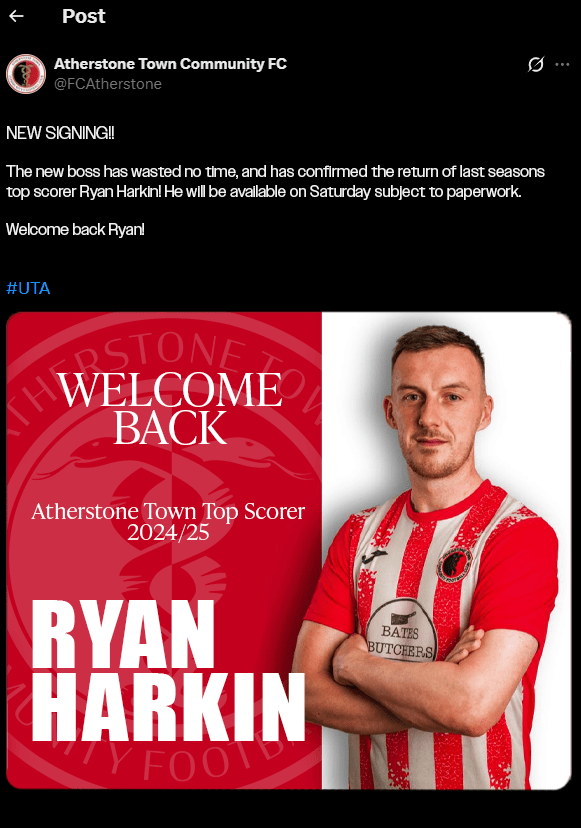
The first was Ryan Harkin, a prolific striker who’d left Atherstone after their play-off exit and joined Coventry United. Coventry were top of the league, flying, and Harkin was their main man up front—12 goals from 20 games, comfortably the division’s top scorer. On paper, there was absolutely no reason for him to drop down to a mid-table side. But Paul had to try.
He approached Coventry United the very day he got the job, partly out of enthusiasm and partly because he had no idea how these things were supposed to work. A quick email to their chairman, polite but direct advising them of his wish to speak with Ryan, they reluctantly agreed—maybe due to knowing we couldn’t match the money they had on offer, and even though that’s not all it’s about, it’s a factor for players at all levels.
Then came the really unconventional bit. As they followed each other on there, Paul went to Ryan’s Twitter account and sent him a direct message. Just slid into his DMs like he was trying to flog him legit Adidudas football boots, if he just sends over a colour scan of his passport and bank card details. Fancy a chat about coming back to Atherstone?
He sat there afterwards wondering if Pep Guardiola had ever taken that approach. Probably not. But then again, Pep had never had to recruit players on a shoestring budget whilst figuring out what the hell he was doing, so who was Paul to judge his own methods?
Ryan replied that afternoon. They arranged a call for the evening.
When they finally spoke, Paul didn’t try to dress it up or sell him something that wasn’t true. He was honest: Atherstone were mid-table, the budget was tight, and they weren’t realistically challenging for promotion this season. But he laid out his vision—building something sustainable, continuing to build a team that the town could be proud of, giving players the chance to be part of something special even if it wasn’t flashy.
“I know you’re flying at Coventry,” Paul said. “Top of the league, banging in goals, probably on your way up. But I also know you enjoyed your time here. The supporters loved you, the lads loved you, and I think you could be massive for us. We need goals, and you guarantee them.”
Ryan listened. He asked good questions—about tactics, about the squad, about Paul’s plans. He didn’t dismiss it out of hand, which was something. Eventually, he said what Paul had been half-expecting: “Look, I’m interested. Genuinely. But I need to speak to my family. The distance was part of why I moved in the first place—Coventry’s closer to home—and that hasn’t changed. Give me a few days to think about it.”
“Course, mate. Take all the time you need. Whatever you decide, no hard feelings.”
They left it there. Paul had done everything he could. The pitch was made, the vision laid out, the passion evident. Now it was just a case of waiting. If Ryan came back, brilliant. If he didn’t, well, Paul would have to find goals elsewhere.
The call came the next afternoon. Paul was in the middle of watching footage from Atherstone’s defeat against Histon back in October when his phone lit up. Ryan Harkin.
“Alright, Paul. You got a minute?”
Paul’s heart immediately started hammering. He paused the video. “Yeah, course. What’s the verdict?”
“I’m in. If you’ll have me, I want to come back.”
For a second, Paul couldn’t quite process it. “Seriously?”
“Seriously. Look, I spoke to my wife last night, went through all the pros and cons. On paper, staying at Coventry makes complete sense—we’re top, I’m scoring, the money’s better, it’s closer to home. But I couldn’t shake the conversation we had. There’s something about what you’re trying to build at Atherstone. I can’t really put my finger on it, but it felt… I dunno, special? Like you actually believe in it, properly believe in it, and that matters more than I thought it would.”
Paul exhaled slowly, trying to keep his voice steady. “Ryan, mate, that’s… that’s brilliant. Absolutely brilliant. You won’t regret this, I promise you.”
“I know I won’t. Just needed to make sure Coventry were sound with it first. I’ve loved it there, don’t get me wrong, and I didn’t want to leave them in the lurch.”
“How’d they take it?”
“Better than I expected, to be fair. Their gaffer wasn’t thrilled—they’re pushing for promotion and losing your top scorer mid-season isn’t ideal—but he understood. We agreed I’d see out training this evening and then move across. Left on good terms, shook hands, all that. They’re a class club and I wish them all the best going forward.”
“That’s good. Really good. Right, so when can you start with us?”
“Whenever you need me. I’ll sort the paperwork with Coventry today, have a chat with Maria, and assuming everything goes through smoothly, I’ll be available for selection by the weekend.”
Paul was already doing the maths in his head. If Ryan trained with them Thursday, there was no reason he couldn’t feature on Saturday. Even coming off the bench would be massive. Having a striker with twelve goals already this season as an option? That changed everything.
“Fantastic. I’ll get Maria to give you a bell today, get it all sorted properly. Welcome back to Atherstone Town, Ryan.”
“Cheers, gaffer. Looking forward to it.”
Gaffer. There it was again. Still sounded strange coming from a player—a proper, proven goalscorer at that—but Paul was starting to get used to it.
After they hung up, Paul sat there for a moment, staring at the paused video on his screen. Ryan Harkin was coming back. The league’s top scorer was dropping down from the league leaders to join mid-table Atherstone Town because of a conversation, because of belief, because something felt right.
Maybe, just maybe, this was actually going to work.
He picked up his phone again and messaged Nathan: Harkin’s in. Paperwork sorted by end of week. Available Saturday.
The reply came back almost instantly: You’re joking. How’d you manage that?
Paul smiled and typed: Honestly? No idea. Just talked to him like a human being.
Well keep doing that then. This is massive.
It was massive. Paul knew it, Nathan knew it, and once word got out—which it would, probably within the hour—the supporters would know it too. Ryan Harkin returning to Atherstone Town.
Paul allowed himself a moment to savour it before diving back into the video footage. There was still work to do, still a match to prepare for, still a team to manage. But for the first time since taking the job, he felt like he’d actually accomplished something tangible. Not just talked about building something special, but actually made it happen.
One signing down. Plenty more work ahead. But it was a start.
The Inner Critic
With Ryan Harkin’s signature confirmed and the paperwork sorted, Saturday morning arrived with the kind of inevitability that Paul Howarth had been both anticipating and dreading in equal measure. It was matchday. His first matchday as a football manager.
He’d gone to bed around midnight, exhausted from the week’s frantic activity but too wired to properly switch off. Sleep, when it eventually came, was fitful—fragmented bursts between lengthy periods of staring at the ceiling, running through tactics, questioning team selections, replaying conversations in his head. By the time his alarm went off at seven, Paul wasn’t entirely sure he’d slept at all.
The doubts crept in almost immediately. That voice—the inner critic, the one that lives somewhere in the darker corners of your consciousness—started up before he’d even got out of bed. What are you doing? You’re not qualified for this. You’ve never managed a team in your life. These are real players, real people depending on you, and you’re going to let them all down.
It was a dangerous voice, that one. Paul knew it well. Anyone who’d battled with depression, anxiety, or any other mental health struggle would recognise it instantly—that persistent, nagging presence that chips away at your self-belief, telling you you’re not good enough, that you’re an imposter waiting to be exposed. Over the past few years, Paul had got fairly good at shutting it up, at recognising when it was lying to him and pushing back against it. But today? Today it was working overtime, pulling a double shift for triple pay.
He made coffee. Strong coffee. Checked his phone. Dozens of messages had come through overnight and into the morning—supporters wishing him luck, mates sending encouragement, even a few from people he hadn’t spoken to in years who’d seen the announcement. Good luck today gaffer. Up the Adders. You’ve got this mate. Make us proud.
Oddly, each message of support made him feel worse. Not because he didn’t appreciate them—he did, genuinely—but because they reinforced the weight of expectation. All these people believed in him, or at least wanted to believe in him, and what if he couldn’t deliver? What if the team got battered and everyone realised this whole thing had been a massive mistake?
The temptation to run was briefly overwhelming. Just send Maria a text, tell her he couldn’t do it, apologise profusely, and slink back into anonymity. Nobody would blame him, would they? Well, actually, they probably would. And even if they didn’t, Paul would blame himself. Forever.
It wasn’t just about him anymore. His brother Andy was coming to watch, along with their mum and his two nephews. The supporters would be there, the ones who’d tentatively backed his appointment despite their reservations. The players who’d listened to his plans and believed—or at least tried to believe—that he knew what he was doing. The volunteers who kept the club running, the staff who’d welcomed him into their world. If he bottled it now, he’d let them all down. He’d never be able to show his face in Atherstone again.
So Paul did what countless people do in situations like this: he put the mask on. The confident one, the one that says everything’s fine, that he’s got this, that there’s nothing to worry about. He got dressed, gathered his notes and tactics board, and headed to Sheepy Road.
The Final Preparations
Nathan Haines was already at the ground when Paul arrived, looking considerably more relaxed than Paul felt. They’d finalised the team selection on Thursday after training, going through the options methodically, weighing up form and fitness and tactical considerations. No fresh injury concerns had emerged since then, which was a relief given how thin the squad was at the back, so they’d stuck with the plan.
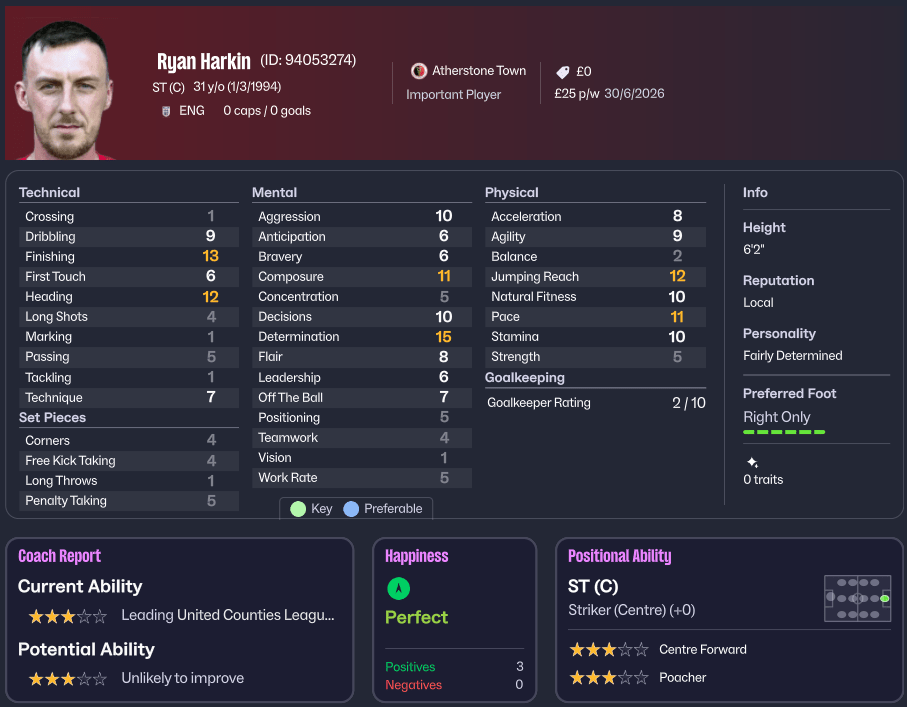
Ryan Harkin would start on the bench. It was tempting to throw him straight in—the supporters would love it, and having the league’s top scorer leading the line was an obvious boost—but Paul and Nathan agreed it made more sense to ease him in. He’d only trained with the squad once, and Lewis Collins had been on fire lately. Four goals in four games. You don’t drop someone in that kind of form.
The defensive setup was sorted: Nathan himself would slot in at right centre-back, with Josh Steel on the left. In the middle, they had Niall Rowe partnering the towering Joshua Williams, the 6’5″ twenty-two-year-old who’d arrived from the Welsh non-league pyramid earlier in the season and was slowly finding his feet at this level. Jake Bull would be between the sticks—solid, dependable, the kind of keeper who wouldn’t cost you points.
Harry Walker-Donovan was getting the nod in defensive midfield, tasked with sitting in front of the back four and breaking up play. Alongside him, Ryan Quinn would operate in a more advanced role, with sixteen-year-old Andrew Jones-Woods getting his chance. The kid was talented—everyone at the club said so—and Paul figured if you’re good enough, you’re old enough. Baptism of fire for the lad, but that’s how you find out what someone’s made of.
Out wide, Mitchell Woakes would start on the right, Chris Cowley on the left. Both had chipped in with goals recently and offered genuine threat going forward. And up top, Lewis Collins, the man in form, leading the line.
Paul looked at the names written on the tactics board and felt a flicker of confidence. Despite the missing players—Connor Gudger still weeks away, a couple of others carrying minor knocks—this was still an eleven capable of winning the match. On the bench, they had Harkin ready to make an impact, plus Edmonds and a few of the younger lads who’d step up if needed.
“You alright?” Nathan asked, catching Paul staring at the board.
“Yeah. Just… you know. Nerves.”
“That’s normal. You’d be worried if you weren’t nervous. The lads are in good shape, they know what we’re asking of them, and they want to do well for you. Just trust yourself.”
Paul nodded, not entirely convinced but grateful for the reassurance. “Cheers, Nath. Right, let’s get on with it then.”
The Walk
The dressing room was buzzing when Paul walked in an hour before kick-off. Players were getting changed, stretching, chatting amongst themselves—the usual pre-match routine. A few glanced up when he entered, offering nods or quiet greetings. Paul cleared his throat.
“Alright, lads. Listen up for a second.”
The room quietened. What felt like a thousand pairs of eyes turned towards him, along with Nathan standing by the door. Paul suddenly felt very exposed.
“Look, I’m not going to stand here and pretend I’ve got decades of experience or some magic formula that guarantees we win today. I don’t. What I do have is belief—in you lot, in what we’re building here, and in the fact that if we work hard and stick to the plan, we’re more than capable of getting a result. You’ve won four on the bounce. You know how to win. Just go out there and do what you’ve been doing. Play for each other, play for the badge, and make sure when that final whistle goes, you’ve given everything. That’s all I’m asking.”
It wasn’t Churchillian. It probably wasn’t even particularly good. But it was honest, and judging by the looks on their faces, it landed well enough. A few of the senior players—Quinn, Cowley, Rowe—nodded approvingly. Young Jones-Woods looked petrified, but then again, he was sixteen and about to make his debut. Petrified was probably appropriate.
“Right, Nathan’s got a few tactical bits to go over, then we’ll head out for the warm-up. Let’s have it.”
Nathan took over, running through defensive shape, pressing triggers, set-piece responsibilities. Paul half-listened, his mind already racing ahead to the match itself, to the thousand things that could go wrong, to the decisions he’d have to make in real time without the luxury of pausing to think.
When the warm-up finished and the teams headed back to the dressing rooms for final preparations, Paul felt his stomach tighten. This was it. No turning back now.
The referee knocked on the door. “Two minutes, gents.”
Nathan gathered the players into a huddle. “Come on then, lads. Let’s go and do this. Up the Adders!”
“UP THE ADDERS!” they roared back, the noise bouncing off the walls.
Then they were filing out, boots clattering on the concrete floor, voices echoing down the tunnel. Paul followed them out into the late December afternoon, the cold air hitting him like a slap. The pitch at Sheepy Road looked immaculate—the groundstaff had done a brilliant job—and the stands were filling up nicely. Not a huge crowd, maybe three hundred or so, but loud. Proper matchday atmosphere.
Paul walked across the pitch towards the dugout on the far side, legs feeling slightly disconnected from his brain. He was moving, but it felt dreamlike, surreal. The supporters in the main stand applauded as he passed, a few shouting encouragement. He raised a hand in acknowledgment, trying to look composed even though his heart was hammering.
Reaching the dugout, he paused and scanned the opposite stand. There—halfway up, slightly to the left—he spotted them. Andy, his mum, and his two nephews, all wrapped up against the cold. His mum caught his eye and waved, a huge smile on her face despite what Paul knew would be absolute terror churning inside her. She’d be as nervous as him, probably more so. That’s what mums do.
Andy gave him a thumbs up. His nephews in unison did the double thumbs up and mouth “ooh, football friend”.
Paul waved back allowing himself a slight laugh, then turned to face the pitch. Nathan was already in the dugout, organized and calm as ever. The referee was checking his watch. The teams were lining up in the centre circle. The home supporters were singing.
This was happening. Paul Howarth, football manager, was about to take charge of his first competitive match.
He took a deep breath, pulled his coat tighter against the December chill, and sat down on the bench.
“Here we go then,” Nathan said quietly beside him.
“Here we go,” Paul echoed.
The referee’s whistle pierced the air. Atherstone Town kicked off.



 The Gaffers Lounge
Leave a comment