

The commencement of the new era at FC Porto under the dual mandate of Mística and Meritocracy was not merely a change of manager; it was a philosophical and tactical reset. Farioli’s complex, possession-driven 4-3-3, built on the rejection of purely data-driven dogma, is meant to be an “expression of the self.”
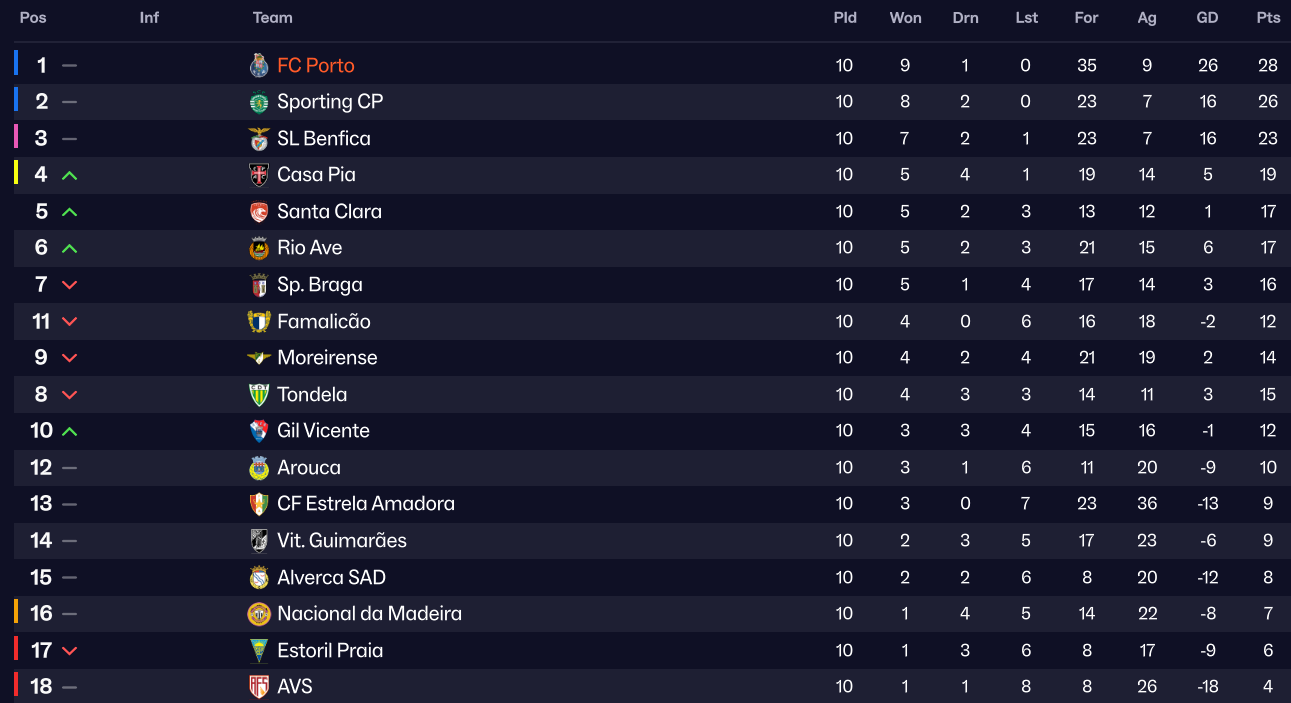
After 10 league games, we step away from the results board and dive into the underlying data. Is this intricate philosophy manifesting on the pitch? The short answer is a thrilling yes, but the metrics also reveal a single, glaring flaw that demands immediate tactical attention.
I: The Torrent of Goals — Meritocracy Unleashed
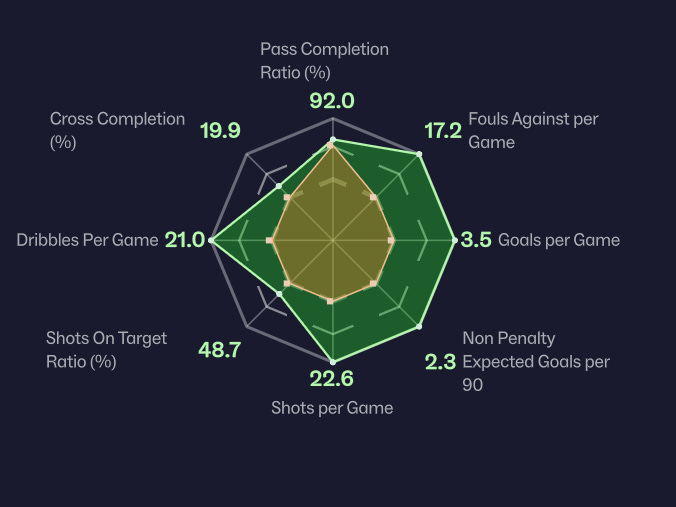
The attacking metrics provide the most sensational evidence that the Meritocracy philosophy—valuing individual brilliance and hard work—is fuelling what appears to be an unstoppable offensive machine.
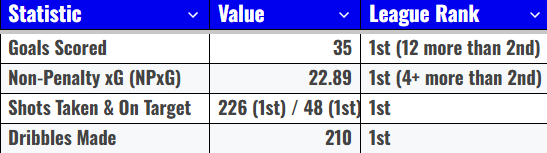
Goals Scored: We are annihilating opponents, scoring 3.5 goals per game. This conversion rate suggests supreme confidence and clinical finishing that far exceeds the historical norm.
NPxG For: Our dominance isn’t luck; it’s design. We consistently generate the highest quality and volume of chances, averaging nearly 2.3 NPxG per game. This is the statistical foundation of our attack.
Shots Taken & On Target: The sheer volume points to relentless pressure and constant occupation of the final third. We are suffocating teams with continuous waves of attack, never allowing them to settle. This is a statistical signature of individual talent.
Dribbles Made: Our wide players and advanced midfielders are empowered to beat their man, breaking defensive lines through direct skill—a perfect reflection of the Meritocracy principle.
The overwhelming numbers confirm that the 5-man central overload—orchestrated by the intelligence of Inverted Fullbacks pulling inside and led by Gabri Veiga (’The Creator’)—is functioning flawlessly. We are creating the best opportunities and, thanks to the quality of our personnel, converting them at a spectacular rate.
II: The Farioli System Check — The Rolling Dominance
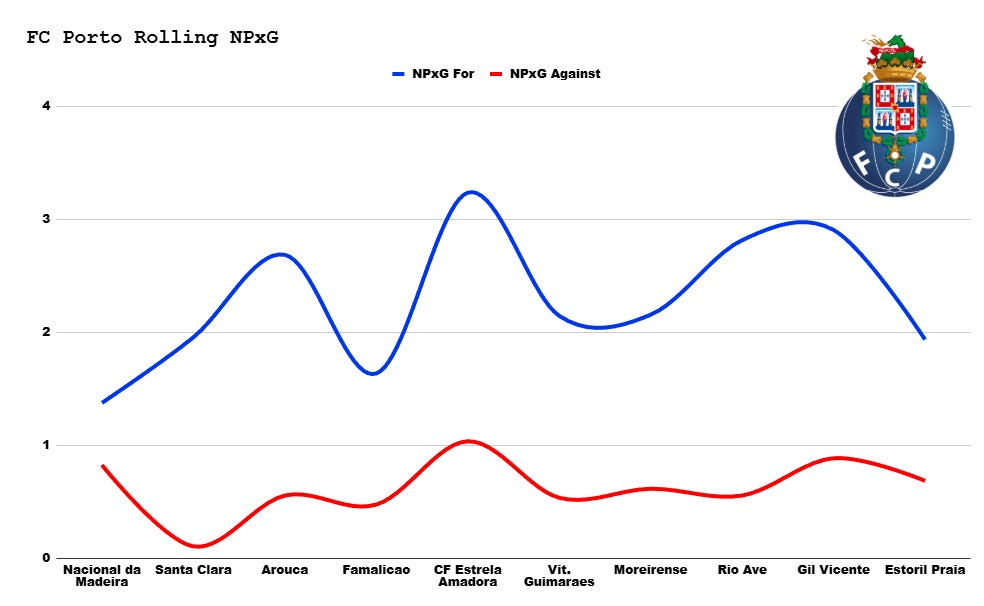
To truly test the tactical integrity of Farioli’s system, we must examine the game-by-game flow of quality chances. The Non-Penalty Expected Goals (NPxG) differential reveals a level of control few teams in Europe achieve:
Offensive Stabilisation
The NPxG For trend, consistently hitting or exceeding the 2.1 NPxG mark since Game Three, demonstrates that the initial period of integration is over. The team has mastered the build-up mechanics. The peak of 3.24 NPxG against Estrela Amadora is the ultimate validation of the ‘Lure and Third-Man Principle’: slow, patient build-up successfully drags the opponent into an uncomfortable press, allowing the Diogo Costa (Ball Playing Goalkeeper) and Alan Varela (The Holder) to bypass the first two lines and unleash rapid, high-quality attacks.
Defensive Control
The defensive metrics are stunningly consistent. The NPxG Against is never higher than 1.04 in any match, averaging an elite (approx.) 0.63. This means that even on our worst defensive days, we are still limiting the opposition to a single goal’s worth of chances. The 0.11 NPxG conceded to Santa Clara is almost unattainable dominance, showing the iron grip of the team’s structure.
The consistent, strong positive Dominance Differential in every single match is the clearest statistical reflection of the Farioli tactical design: we control the game, not just by possession, but by dictating the quality of chances for both sides.
III: The Flaw in the Diamond — The Mística Test
While the system is almost flawless structurally, the aggregated defensive metrics expose a critical weakness related to individual execution.
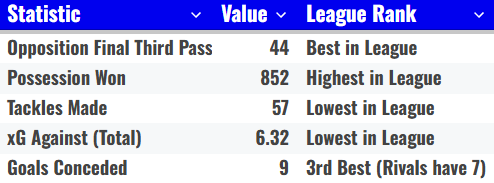
Opposition Final Third Passes: Proof the high-press/defensive structure chokes off the supply line.
Possession Won: Elite counter-pressing. The team immediately hunts the ball.
Tackles Made: We defend by positioning, limiting the need for lunging tackles.
XG Against: The ultimate confirmation of structural brilliance.
Goals Conceded: We concede too often for the quality of chances we allow.
The problem lies here: our defence is built to avoid tackles, as evidenced by the low volume of tackles made. But when the system is bypassed—a rare occurrence that forces a 1v1 duel—we are failing.

Area of Critical Concern: We are failing in the decisive individual duel too often.
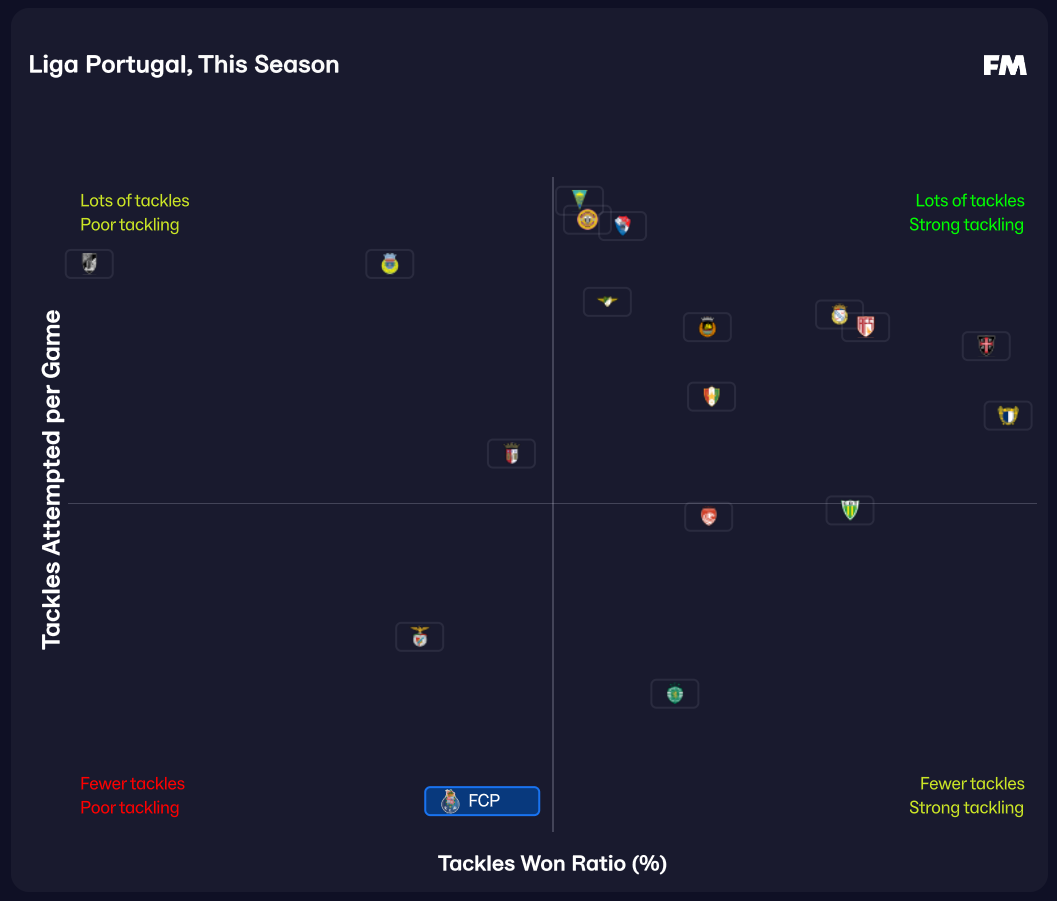
Our goals conceded are higher than our rivals despite conceding the lowest quality of chances. This gap is the penalty for poor individual defensive execution. The Mística demands an absolute, uncompromising will to win the ball; this data point is currently the antithesis of that spirit.
Conclusion: Refinement is Paramount
The Farioli system is a success. We are achieving Domestic Dominance through a statistically overwhelming attack and a structurally secure defence. However, the final line of defence—the individual tackle—is failing us, allowing opponents to over-perform their low xG Against.
Tactical Resolution: Harnessing Controlled Aggression
To address the league-worst 70% Tackle Win Ratio without sacrificing our structural integrity, a balanced decision is necessary:
- Systemic Change (Too Risky): Removing the “Stay On Feet” team instruction would lead to increased tackling across the entire pitch, likely exposing huge gaps and threatening our elite xG Against metric.
- Specific Refinement (The Path Forward): The best solution is to maintain the “Stay On Feet” team instruction—thereby preserving our flawless structure—but applying the “Tackle Harder” Player Instruction to the select individuals who must perform decisive defensive actions.

This refinement will target the Defensive Midfielder (Alan Varela) and the Centre Backs. These are the players required to make the last-ditch, high-stakes tackle when the press is broken. By instructing them to Tackle Harder, we are injecting the Mística into the individual duel, demanding uncompromising aggression and timing where it matters most.




 The Gaffers Lounge
Leave a comment