
I wanted to wait for the big patch to drop before trying my 4-2-3-1/4-4-2 hybrid tactic with Real Sociedad 2025/26 squad. The tactic worked rather well with my FM24 squad from the future haha (2037 season). But I felt like the real test would come when I tested it in my post-Beta, patched save in the current season and with players that were not world-class. In reality, the club has not had the best of starts – currently (Nov 13th) sitting at 14th in La Liga with 3 wins, 4 draws and 5 loses in 12 matches. So my first in-game objective is simply to see if my tactic can give better results than Sergio Francisco’s did so far.

Basque Tactical DNA
The Basque region has significantly shaped the way football is played today, not just in Spain but in other European leagues and world-renown clubs. Just like names of Unai Emery, Ernesto Valverde and Mikel Arteta have become household names in Europe, the concept of Basque Football Style has evolved and crystalized in recent decades. So what is Basque Football in the nutshell?
The article linked here is an excellent complementary reading, which I highly recommend you look at after reading my blog. I will try to summarize some of its important insights as they relate to not only Basque-style football but also the Spain’s historic connection to the 4-4-2 formation.
As you might remember from one of my previous blogs, my chosen out-of-possession (OOP for short) shape is the good old 4-4-2. I’m of the school of thought, that believes that a simple flat 4-4-2 is a terrific defensive shape. This is due to its one defining feature: the two banks of four. Putting eight of your players between your goal and the opposition attackers, just makes for solid, compact defending. Simple as that.
Many Basque teams over the years have gravitated towards the simple and defensively solid 4-4-2. The smaller Basque clubs like Eibar (as mentioned in that “Between The Posts” article) and Ossasuna don’t have the budgets of Real Sociedad or Athletic Bilbao and often had to struggle for their survival in La Liga. The 4-4-2 formation which is easy to fill with lower-level talent and an excellent fit with the stereotypical strengths of the footballers from the Basque region. The area has become quite famous for its quick-footed wingers, tireless workhorse midfielders and strong, energetic target men. But more on that later.
The timelessness of the 4-4-2 formation
Lower league teams, like Segunda Division Eibar, have smaller budgets and usually can’t field the same kind of playmaking talent that the top league, elite clubs can afford. Thus, their tactical choice becomes to go more direct and to set up more compactly and be more disciplined in their off the ball tactics, or against the ball if you will. And the 4-4-2’s two strikers help in compensating for the lack of top goalscoring talent. It also helps to bypass the opposition press through more direct passing and taking control away from opponent’s playmakers (by forcing them into physical duels). More importantly to our discussion is the fact that having two strikers, with the right attribute profile, can also help your team to defend better. Pressing Forward is still a thing in FM26. It’s just been renamed to Tracking Central Forward.
Tactics may have become more complex and technical in our modern footballing era, which made us look down on the “the good old” 4-4-2. Yet, its simplicity also allowed the 4-4-2 formation to remain timelessly relevant across football game’s long history and its many changing tactical trends. The 4-4-2 has been relevant since the early days of football for good reasons.
So what are some of these timeless defensive advantages of 4-4-2 shape and how can we take advantage of them in FM26?
- Easier pressing and defending: The compact lines of four in a 4-4-2 formation is probably the most straightforward positional distribution of players for the purpose of defending. Foremost in this is the ability to pack the midfield with no less than 4 midfielders. In transitioning to 4-4-2 OOP, the 4-2-3-1 formation’s advanced wingers become tracking wide midfielders (TWMs) who can track back and support the central midfielders. Also, having two strikers upfront, especially if they are hardworking team players (plenty of those in Basque region), also helps with defending when you instruct them to track back and aid the midfielders. This can be done very easily via selection of roles. I make sure that at least one of my strikers (the one with best Workrate) is set as a Tracking Central Forward (TCF).
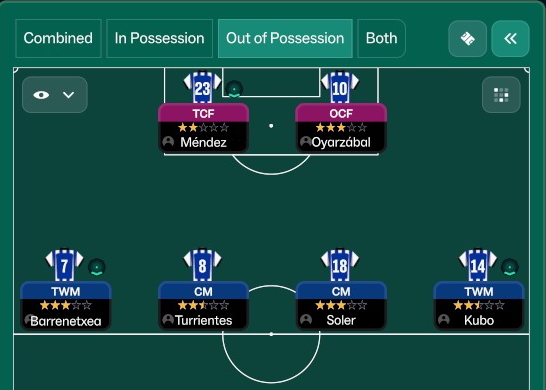
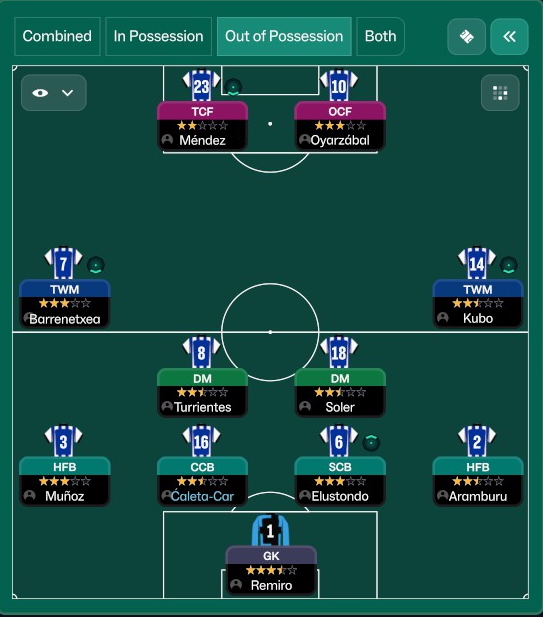
- Role flexibility: In Football Manager, popular in-possession formations, like 4-3-3 or 4-2-3-1, require many specialized roles, such as the lone support striker, the inside forwards, or the BBM midfield runner, to be most effective. While the 4-4-2 formation can function even with the most generic roles, be it for its strikers, wingers or midfielders. The out of possession 4-4-2 utilizes a double pivot central midfield which does not require a holding midfielder (not like 433 does). In fact for my defending 4-4-2 shape, I am very happy with two generic central midfielder roles. And CM role in FM26 is a great one with fewer important attribute requirements. In turn it can also be modified with individual instructions to accommodate a variety of midfielder player types. And it’s not a ball magnet like playmaker roles are. However, what is most important for me is for the central midfielders to hold a disciplined line with my tracking wide midfielders. CMs can even be turned into defensive midfielders if you want to further solidify your defence and they would still stay inline with the wide midfielders (who tend to track back pretty deep anyway). In fact on occasion I use the OOP shape below for the tougher games against elite opposition like Barcelona.
- Finally, another reason why 4-4-2 is so great in defence is the previously-mentioned dual striker partnership. It’s the defining element of 4-4-2 and can play a big role in the defensive phase of play. As you will soon see, the Basque region is well known for producing some great strikers.
Basque Tactical DNA and 4-4-2
When we think of 4-4-2 defending, we often imagine teams playing “Dycheball” with Low-Block and “park the bus” anti-football strategies. Pack eleven bodies within thirty meters of goal and hope for the best, sort of thing.

Sean Dyche-led sides have become famous (or infamous depending on your perspective) for playing very rigid, “boring”, defensive tactics using 4-4-2 and 4-5-1 formations. As much as I respect a manager who puts defending first, this is NOT the objective with my Defence-First strategy at Real Sociedad.
Both Real Sociedad and Athletic Bilbao have had great success in utilizing the “fancier”, more complex 4-3-3 and 4-2-3-1 formations. But while the specific formations varied over the years, a common tactical framework remains. Modern Basque Football has roots in a unique high-effort, fast-paced football style which combines a strong technical and possession-based approach with a deep connection to local Basque identity and tradition of long-suppressed ethnic minority and its struggles. Nobody will ever forget how tough Franco era has been on the Basques, especially the Basques themselves. But their community has persevered and is flourishing more than ever today. Same thing with Basque Football. It’s this competitive fighting spirit that allowed Real Sociedad to win two back-to-back La Liga titles in the 1980s. It also helped Athletic Club on its road to becoming 4th most successful club in La Liga’s long history, with 8 league titles and 24 domestic cups. They have never been relegated too.
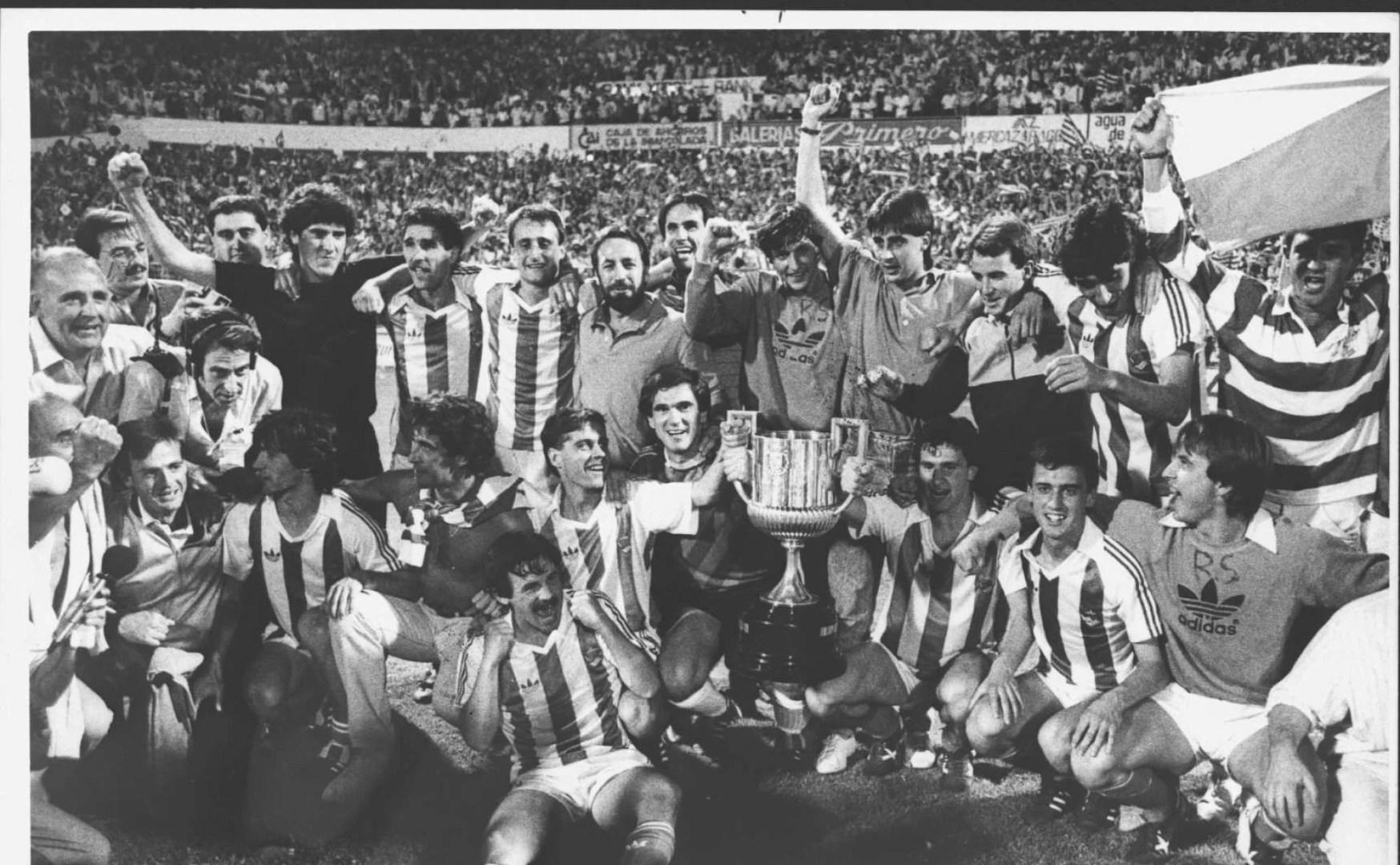
In contrast to the celebrated Spanish Tiki Taka style, Basque Football, both historically and currently, incorporated more directness and physicality rooted in the region’s industrial, working-class past and heritage of rural sports communities. The Basques have the reputation as some of Europe’s toughest warriors and fighters for a reason. They stand up for each other and their close-knit community. Don’t mess with the Basques.
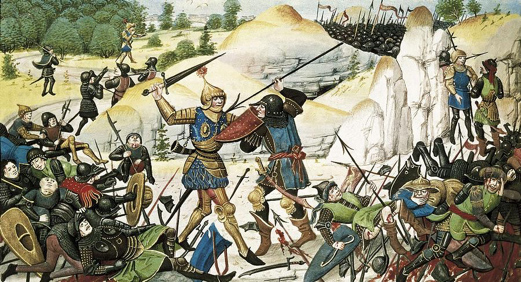
One excerpt from John Toshack’s book Toshack’s Way: My Journey Through Football is in my favourite chapter called “Basqueing in Glory” (where do you think I got this FM Story’s name haha?) where Toshack describes his first trophy win as team’s manager and the subsequent bus journey back to San Sebastián after winning their 1st (if you don’t count the one they won when still called Club Ciclista de San Sebastián) Copa Del Rey in 1987.
Travelling back on the coach was one of the most memorable days of my career. Going through the Basque Country, seeing all the villages and all the people waving in the streets, and getting back to San Sebastián with the city a sea of people; I’d never seen anything like it…These lads who’d done it were from all the towns and villages in the Basque Country – Deba, Zerautz, Getaria, Fuenterrabia, all sorts. They used to bring their own supporters to games. There were groups who knew the family of this player or another; it was very much a family thing. They all came out in each village to celebrate with us. They had their radios on to find out where the coach was and when it would be coming through. It’s normally a two and a half-hour journey back from Zaragoza but we slowed right down as soon as we got to Pamplona. It must have taken another two hours from there alone. It was marvellous…
You get the idea. It is probably my favourite passage in the whole book but do read the whole book if you get a chance. It is marvelous.
I like to believe that when your squad shares in a unique cultural identity then this communal spirit should also permeate into your tactics and recruitment philosophy and hopefully become a starting point for something great. My long-term intention with this Real Sociedad project is to nourish a unique “grass roots-style” cultural DNA that I can confidently call “Basque Football”. A Tactical DNA that is infused with the Basque communal spirit of teamwork and tough hard working heritage. Historically “Total Football” (Totaalvoetbal) has become associated with both Ajax and Dutch football style of technical possession football. Similarly I am hoping to mould Real Sociedad tactical system into one that epitomizes the unyielding spirit of Basque region and its stalwart people. And hopefully, you are starting to see why, as with all successful football tactics, everything starts with defence. Defence First!
Modern 4-4-2 defensive tactics, especially those in Spain with its history of aesthetically-pleasing football, do not have to be “Anti-Football” tactics. You can have your team press responsibly in very specific situations and areas of the pitch, lure the opponent into traps, and still have them play a beautiful style of football. “Defence-First” does not, I repeat, DOES NOT mean Anti-Football. So now that we have that important distinction out of the way, let’s examine how I set up my defensive out-of-possession tactic at Real Sociedad. And most importantly, how I try to fit this strategy into the bigger historic framework of Basque Football style.
The Land of Wingers and Strikers
When I first started to theorize about my OOP tactic, I settled on 4-4-2 (or possibly 4-2-2-2 DM version) as a fitting formation for my Basque football style. There were some famous aspects of the local footballing culture which I wanted to be represented and this formation seemed like the best one for this. Specifically to tactically emphasize the elements that the region is celebrated for. Basque clubs like Athletic Bilbao and Real Sociedad are well-known for producing some very good strikers and wingers.
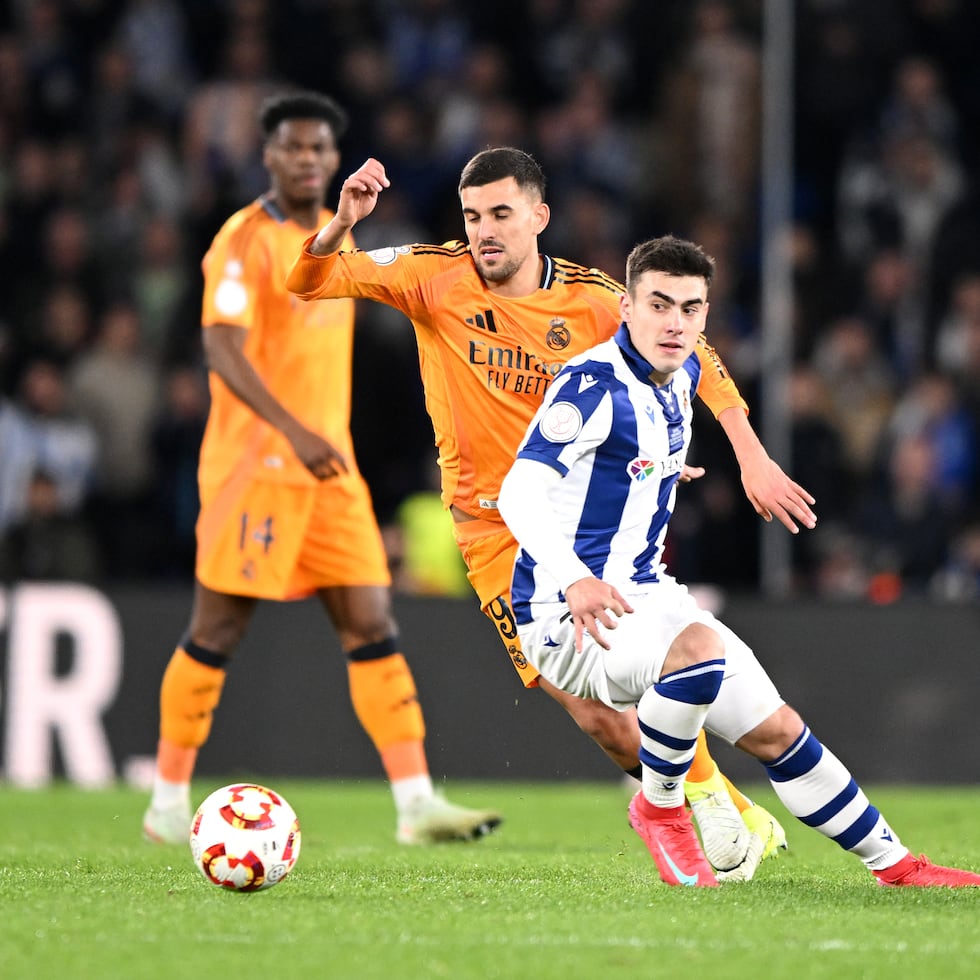
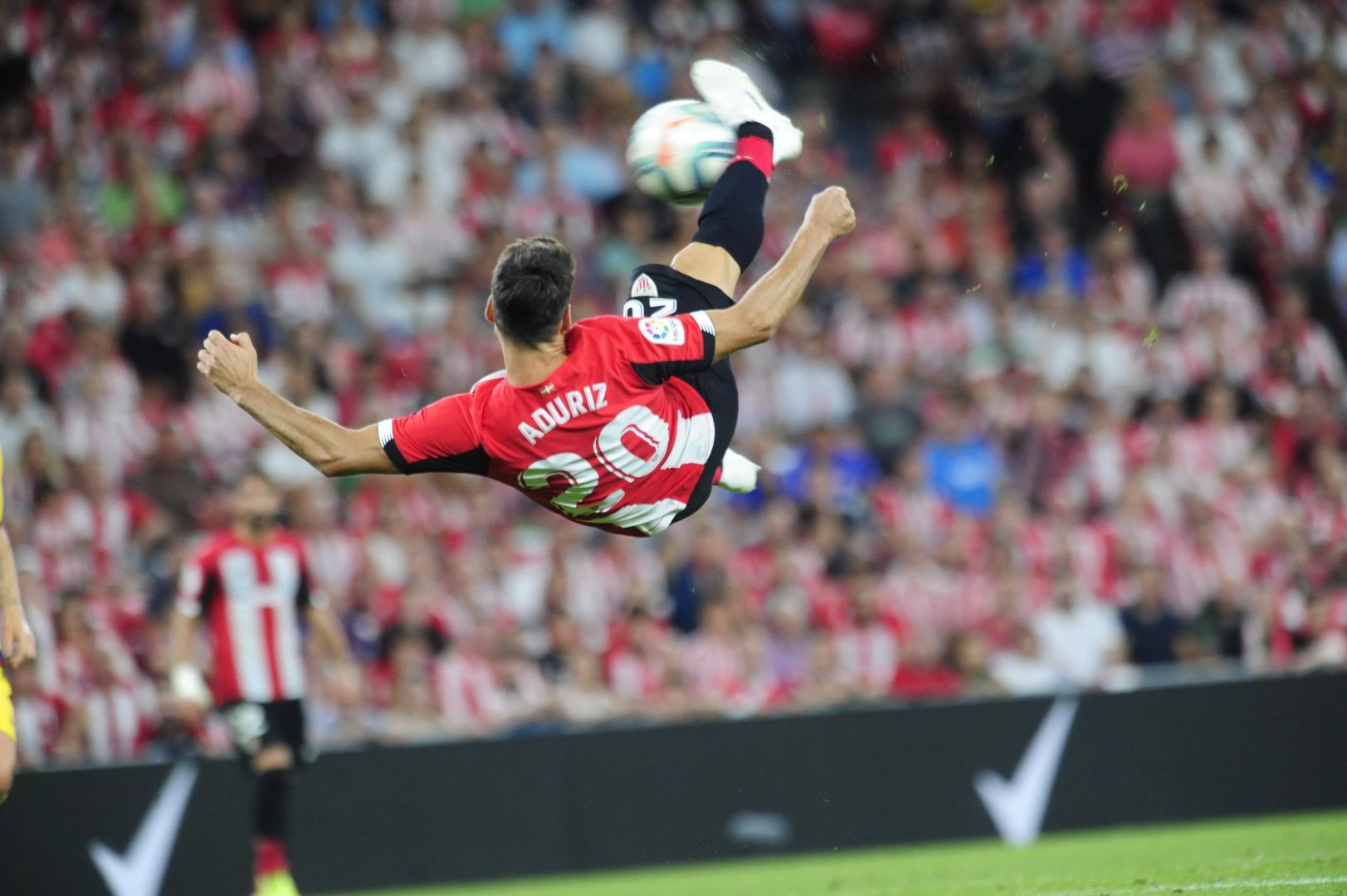
More specifically some very hard-working yet technically gifted wingers and tough as nails, strong strikers. Real Sociedad boasts one of the best hardworking and versatile young wingers in La Liga today – Ander “Barrene” Barrenetxea (pictured above). Ander is a San Sebastian native and a product of Sociedad’s academy. Most recently, Athletic Club produced world-renown strikers Aritz Aduriz and Fernando Llorente and a pair of wingers – Williams brothers. Bilbao’s dynamic brother duo have become the envy of other clubs and have really put the region on the world map.
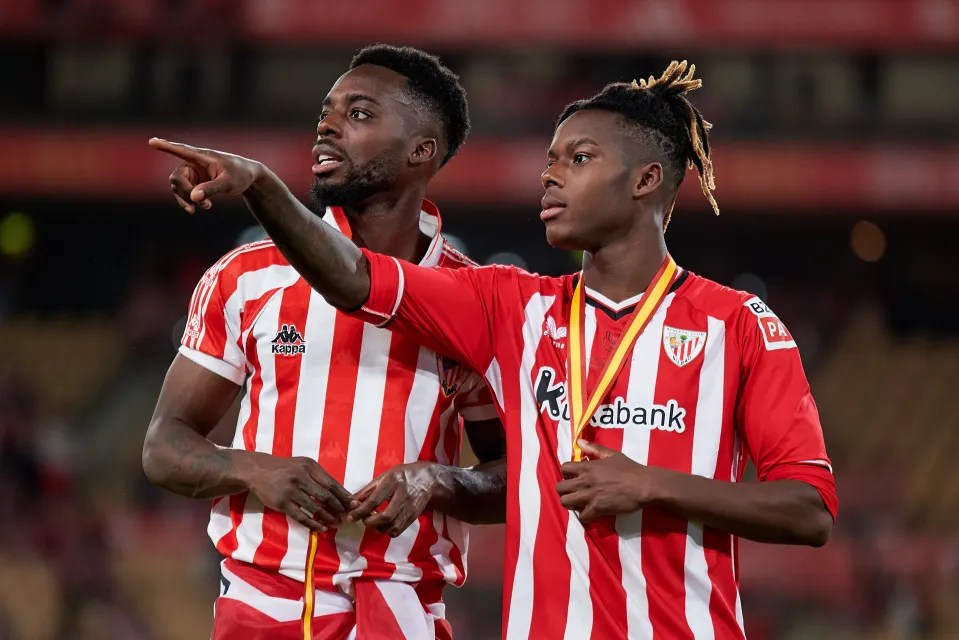
Evidently, Basque Country has a reputation for creating some great wingers and strikers, and one cannot speak of 4-4-2 without mentioning these roles – the heart and soul of the classic formation.
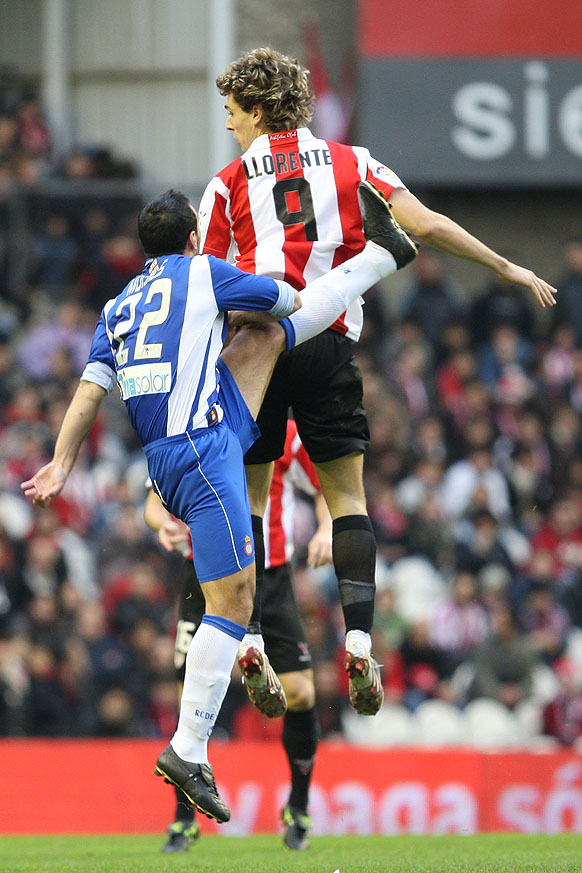
A prime example of the kind of player that the Basque region boasts of, is Fernando Llorente. A tall and physically imposing striker, Llorente’s main traits were his heading ability and strength in the air, which enabled him to function effectively as a Targetman, spearheading his team’s attack. Fernando was also known for his offensive movement, positional sense, and goalscoring ability inside the penalty area.
Quite unusual for a Targeman-type striker, Llorente was also gifted with good technical skills and link-up play ability, which allowed him to play well with his back to goal and hold up the ball for his teammates in order to create space and scoring opportunities. Exactly what I want my striker to do in my tactic. To act as creative support and hopefully bring out the best out of his attacking partners, be it other strikers and attacking midfielders.
At the moment I am trying to fit my tactic around Oyarzabal, who is more technical than physical in his preferred False 9 role, but ideally the tactical system which I am developing should fit a tough strong DLF/Targetman type as well as a False 9. And if my Targetman could also be a great technical player like Llorente… then even better!
KISSing, Basque-Style
I do not like extremes in my tactics, nor in my team instructions. Never did.
Why?
The way that the team instructions work in Football Manager, is that they accentuate/intensify the tendencies of the players to do something. First example: you could implement a nice short passing, possession-focused system by simply filling your squad with very technical players with suitable technical attributes and individual traits (such as “likes to pass short”, “dwells on ball” or “plays one-twos”) and putting them into appropriate possession-focused roles (lots of playmakers and specialists like False 9 naturally) and, magically!, your team will play some beautiful Tiki-Taka style football. No, not really magic. It is just the way the game is programmed. FM footballers are made of visible and hidden attribute values. These values help them fit into specific roles and which in turn dictate their behavior. So theoretically, by assembling a collection of roles that work well together is enough to recreate a specific style of football. Second example: as an experiment put two Targetmen, some fast wingers and fullbacks with great crossing in the Blank Slate 4-4-2 formation and you will get some kind of Direct/Route One football. Don’t even bother with adding instructions. The quality of the football on hand will of course depend on your players, their attributes, and how they fit their roles.
This is something that has not really changed under the hood since the days when team instructions first replaced the old slider system (bonus points if you played FM when it still had “sliders”). One could technically create a tactic with not a single team instruction (or just by keeping everything on default/balanced setting in FM26) and the tactic could be very successful. Or one could embrace tactical tinkering to its fullest and adjust every single element of their tactic. And also be successful this way. Or not. The more you adjust, the more you have to know what you are doing. Changing one or two instructions can sometimes have a huge impact on the tactic. That is the beauty of tactic crafting in Football Manager. There are many roads to victory.
Anyway, my point is – I like to create tactics with least fiddling and least added instructions. “Keep It Simple, Stupid” (KISS for short) is my motto.
Keep most instructions on Default/Balanced and let the player roles and attributes do their thing. Because the more behaviors that you “accentuate”, the more things could go too far to the extreme and cause tactical issues within your formation. Issues which could only be solved with more tactical fiddling/tinkering. When in the first place the main reason your tactic was not working as well as you thought it should was simply because your players are not as good as they should be for the style of football you want them to play. Possession-heavy, Tiki-Taka requires very good technical players. There is a reason why it was best played by the likes of Barcelona. To play like that, you will need better players than what Everton, for example, has, or even Real Sociedad for that matter. So have some patience. It is definitely a virtue in Football Manager 26.
Of course, there exceptions to the KISS rule, such as when you are trying to emphasize a very specific tactical element or aspect of team culture DNA. Defence-First football at its core needs to be compact, disciplined and will require selfless, fearless sacrifice and “hardness” from its players – they should not be afraid to tackle the opposition hard and stick close to their teammates. Some of these behaviors will need to be added via instructions. Some won’t (there are learned traits that increase the frequency of tackling, ect). Below is a quick overview of what instructions I am starting with in my OOP 4-4-2.
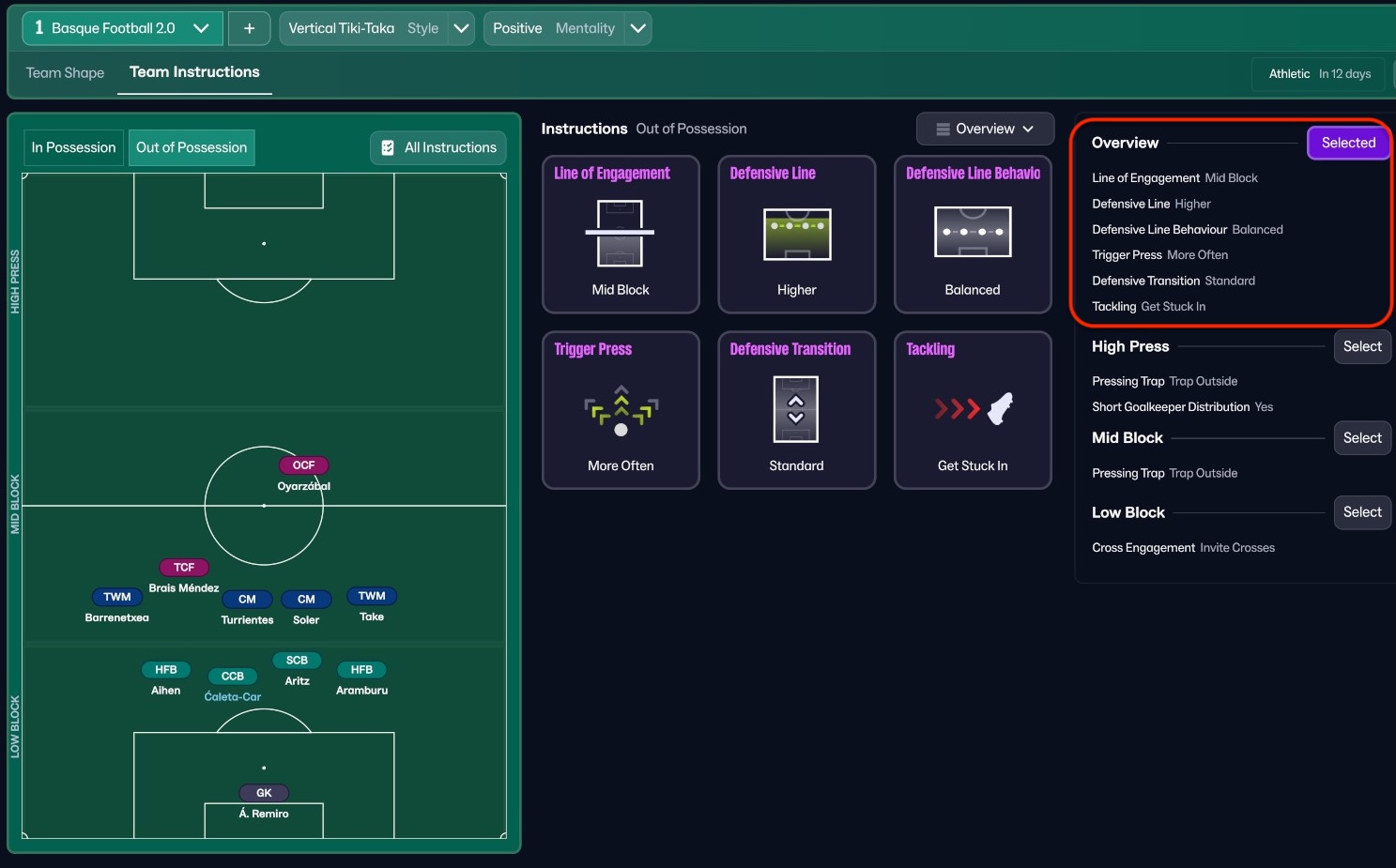
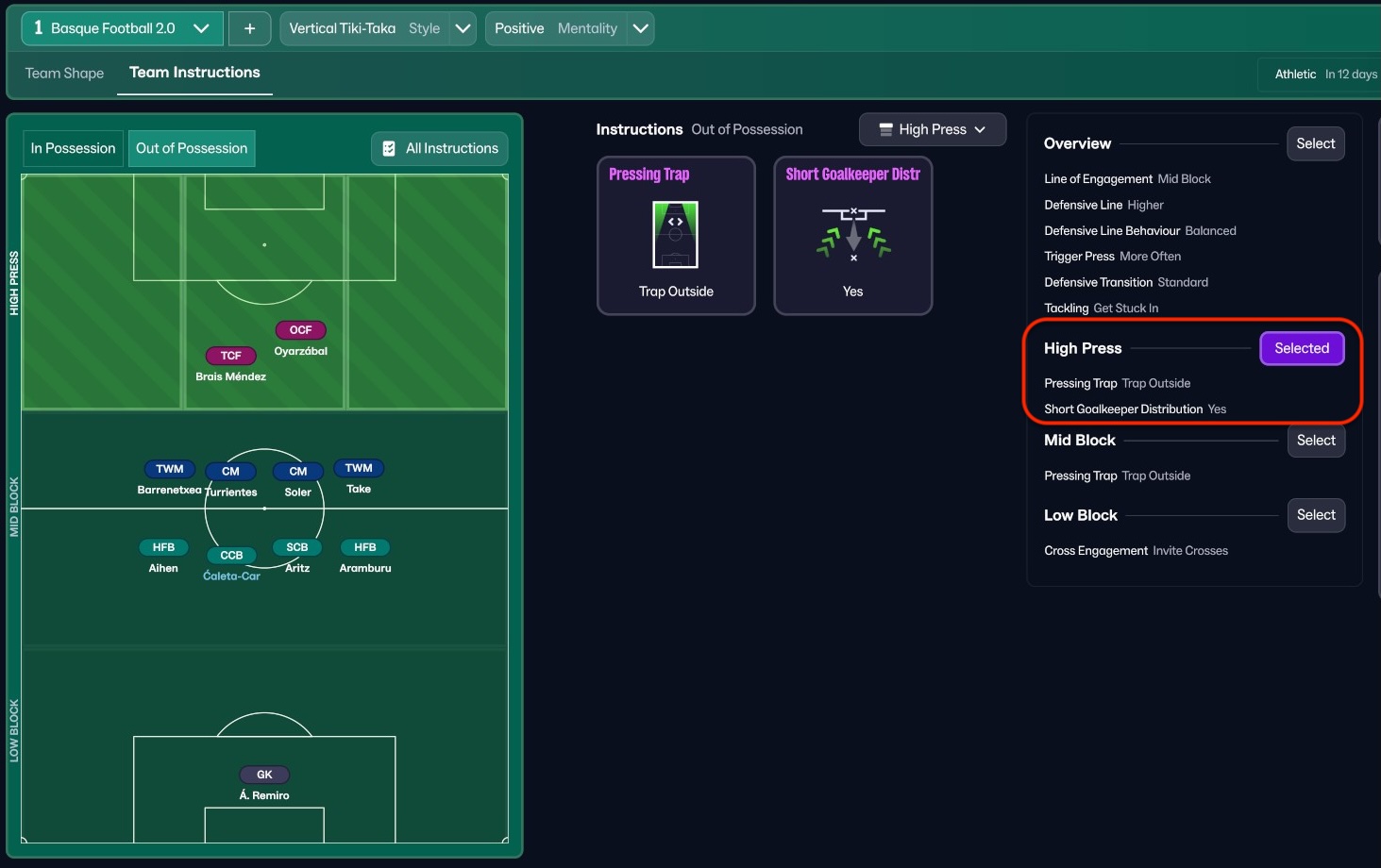
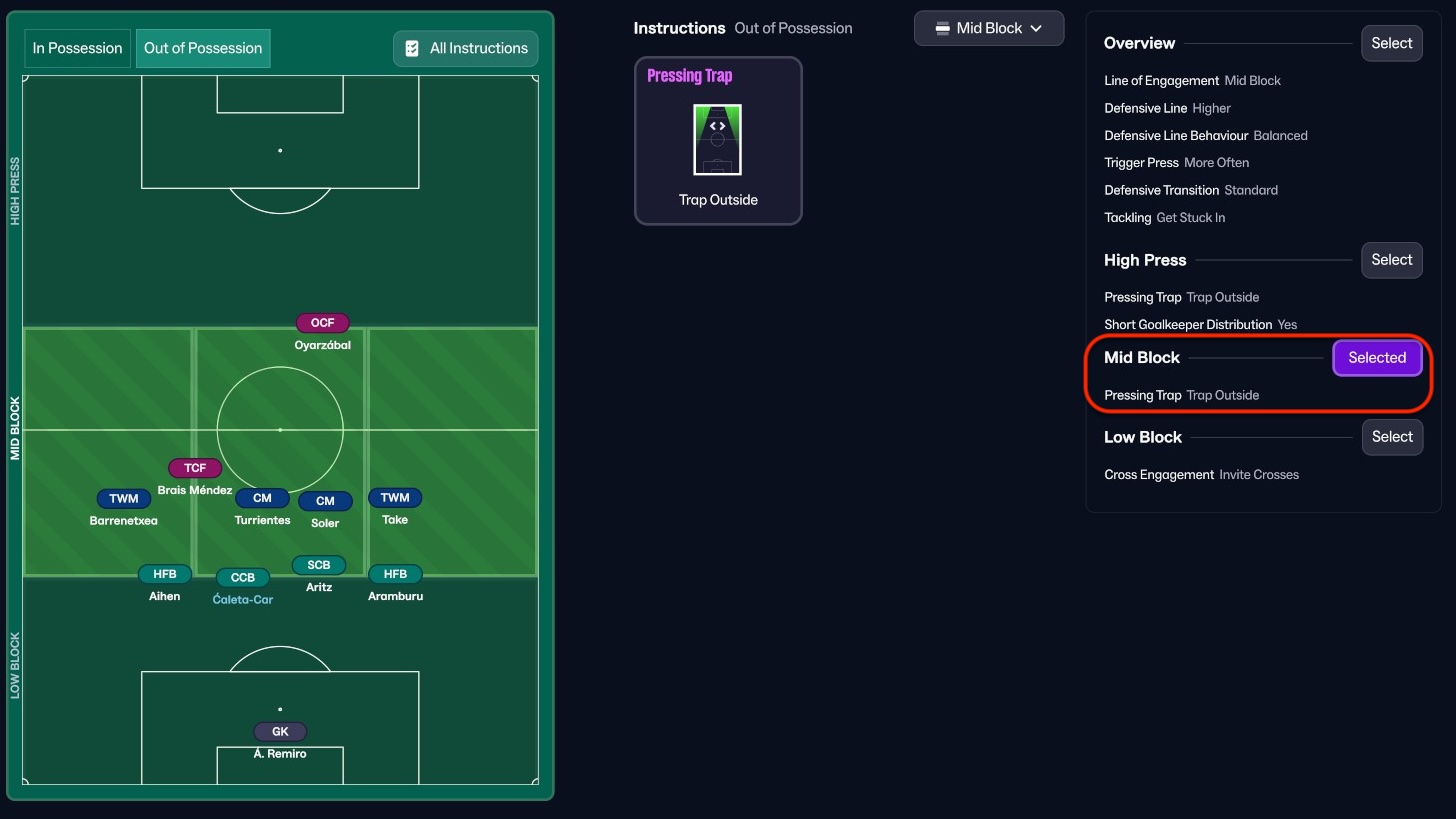
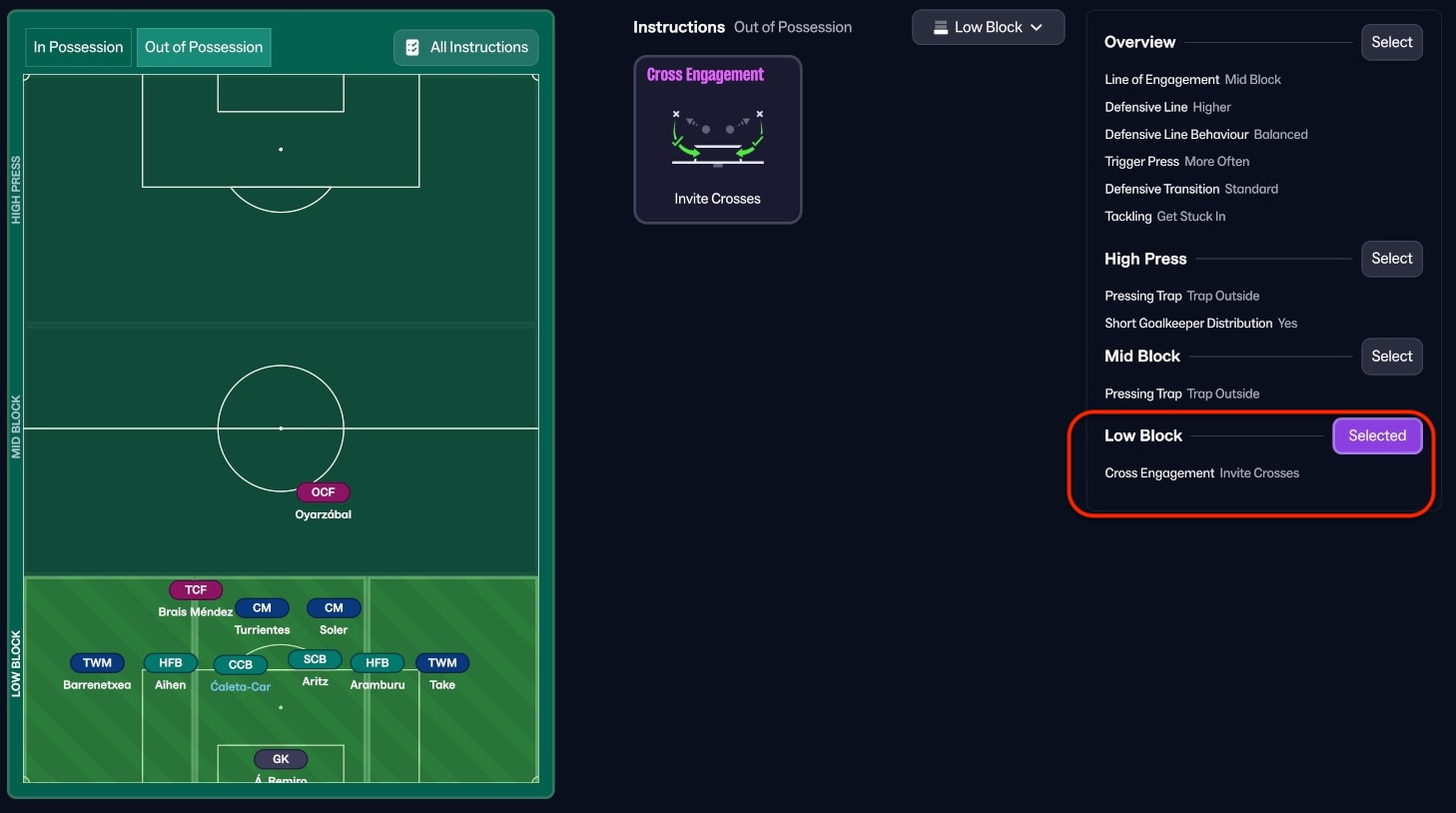
I had a basic vision of what my defensive football should look like and tried to find instructions to best fit that, if a simple role change was not enough. Note, some of these instructions might still change as the season goes on. Nevertheless, my job of tactical tinkering is less complicated then if I was dealing with a ton of instruction adjustments. For the most part, Real Sociedad’s path to domestic and continental success is a long one because it involves developing our youth players and assembling a far better Basque XI than what they have currently. It will take many seasons, but that’s where the fun of football management lies.
Some Early Results and Tactic Download
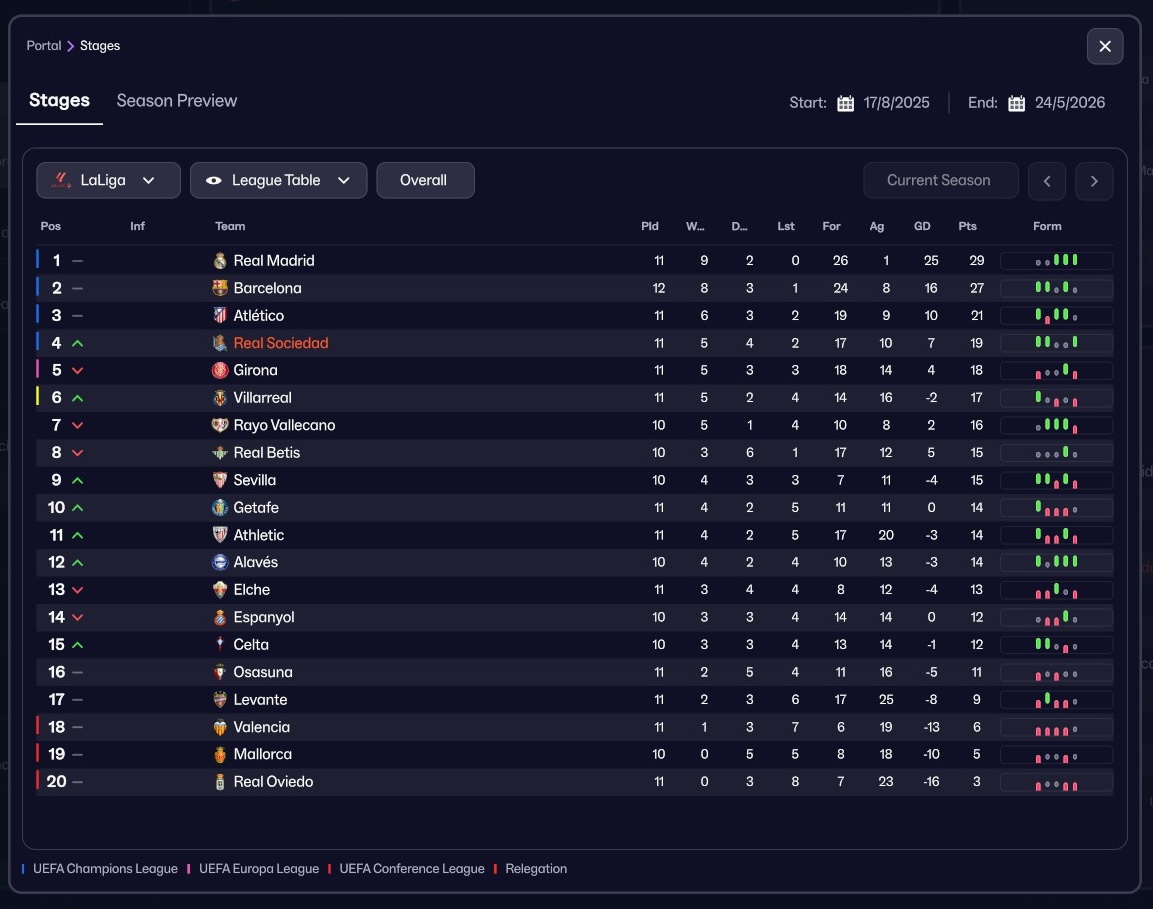
The tactic is still a WORK IN PROGRESS (although already in its 2nd more refined version) and that is one reason why I am trying not to be too critical of the results so far. As you can see, we have had a marked improvement following 22 day international break in September.
Image of Results
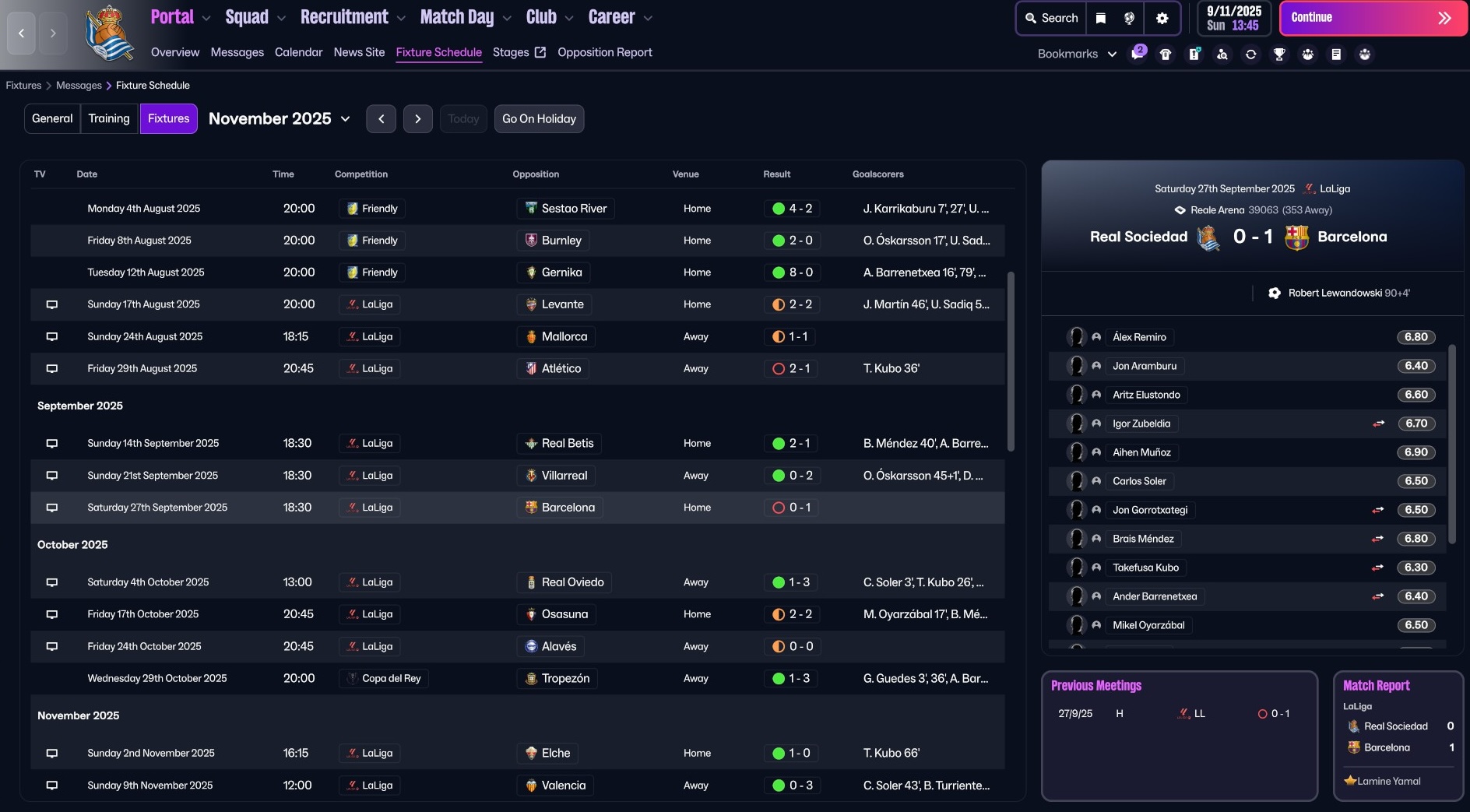
I am hoping that the post-international break improvement (in both player development and on-pitch results) continues as Txuri-Urdin march on in 2025-26 season. The 0-1 Barcelona loss was a little heartbreaking since we managed to hold off Barca’s onslaught for over 90 minutes until the VAR-ruled Lewandowski goal turned what could have been a defensive masterclass tie into a loss in the last minute. But that’s football for you. So far, my Real Sociedad still managed to do better than the real life club – sitting at 4th place with 19 points (and one less match played) in La Liga. So our 1st objective achieved!
Finally, I decided to upload the most recent copy of my tactic for those interested in trying out my 4-2-3-1IP/4-4-2OOP hybrid in their own save. The tactic currently resides in my SI Forum thread associated with this FM Story. Please find it in the link below (until I can figure out how to upload it here): DOWNLOAD LINK
To be Continued…





 The Gaffers Lounge
Leave a comment