
The Run Ends
All good things come to an end — and so, eventually, did ours.
Our ten-game unbeaten streak had carried us to the summit of Serie C/B. While no one at the club truly believed we’d go the whole season without defeat, the first loss still hit hard. The fans felt it, the players felt it, and I definitely felt it.
What made it worse was the opponent: Ternana. A rival.
If you’ve been following along, you’ll know our Achilles’ heel by now — the dreaded back five. Once again, it proved our undoing. Ternana lined up in a compact 5-2-2-1 and, despite us producing 1.87 expected goals to their 0.51, they edged it 1–0. We’d done enough to win but couldn’t find a way to.
Still, there’s no time to dwell in Serie C. The fixtures come fast, and the next opponent, Carpi, also deployed a 5-2-2-1. I’ll admit — I was nervous. To make matters worse, Emiliano Pattarello picked up a knock against Ternana and was ruled out.
That handed a first start of the season to 21-year-old loanee Francesco Dell’Aquila. He didn’t disappoint. Four minutes in, he whipped in a teasing cross that Ravasio met at the back post to give us the lead.
Carpi equalised midway through the second half with their first real effort on goal, but when Pattarello came off the bench late on, he reminded everyone why he’s our talisman — cutting in from the left before curling a beautiful shot into the far corner.
Back to winning ways. The response I wanted, and the one the players needed.
We carried that momentum into the next game too, brushing aside Guidonia Montecelio 3–1. A satisfying end to a testing spell — and perhaps, a small sign that this team is learning to bend, not break.
The Relentless Pursuit of Better
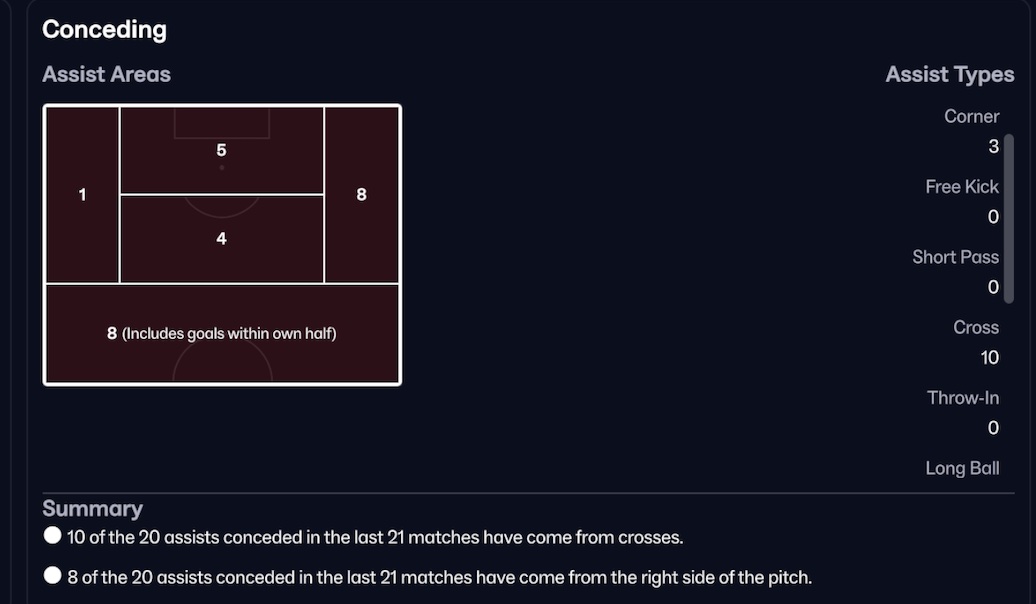
Even when results are good, I can’t help looking for cracks. The last three games brought three wins — and three goals conceded. Normally, that wouldn’t bother me, but every single one came from the same place: our left side.
The data didn’t lie. The “goals conceded” chart lit up red on that flank like a warning light.
Once I studied the shape, it wasn’t hard to see why.
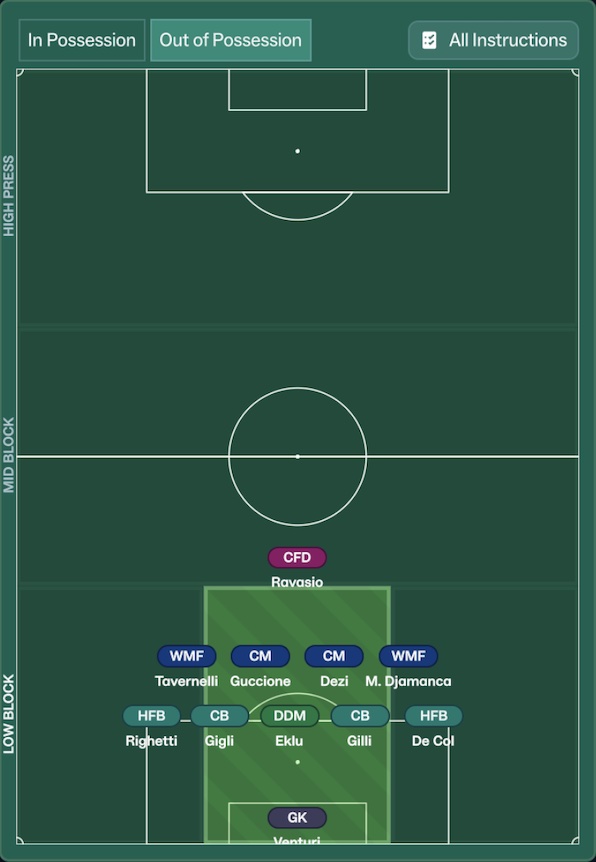
In possession, the left-sided central midfielder is Guccione — our creative spark, but also the slowest player in the squad.
When we lose the ball, his advanced positioning leaves him chasing shadows.

Out of possession, Tavernelli stays high and wide to offer a counter outlet, while the striker drops in to block passing lanes through the middle.
The result? An exposed left-back with too much grass to defend alone.

Something had to change.
So I tweaked the system. Out of possession, the defensive midfielder now drops into the back line, allowing the left-sided centre-back to pull wider and cover that vulnerable channel. Tavernelli’s been shifted into a more traditional wide-midfielder role, with the striker now serving as our primary outlet. The hope is a better balance — compact when defending, dangerous when breaking.
While in a tactical mindset, I made two further adjustments:
- Underlaps on both sides — to get our central midfielders arriving in the box via the channels and giving defences problems.
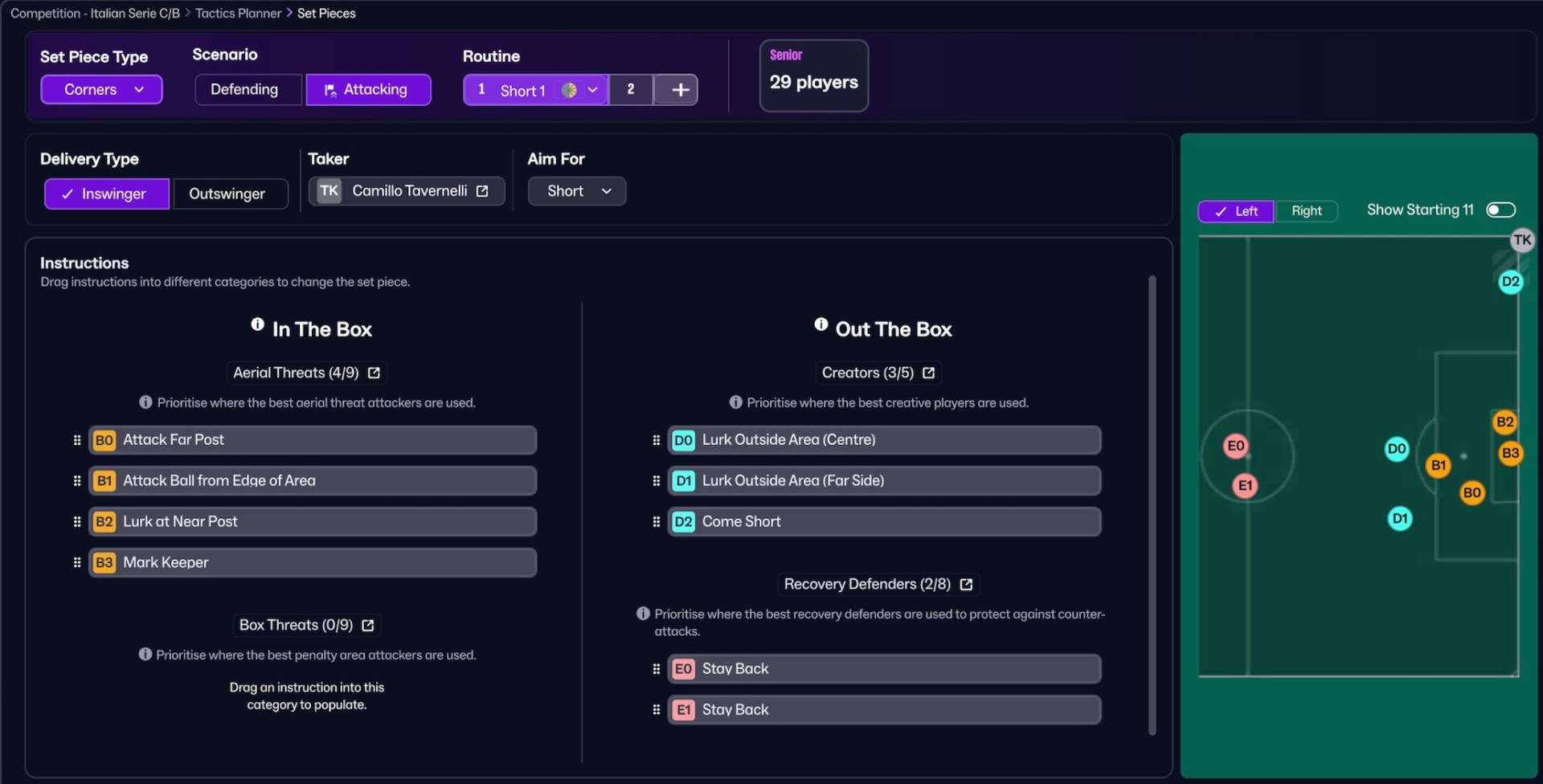
- Corner routines — we’d yet to score from one, so I refined our near-post inswinger and added a short-corner option to keep defenders guessing.
The first test of the new setup came away to Sambenedettese. We ground out a 2–1 win, even if we were hanging on by the end.
A positive result, but it highlighted another issue entirely.
Running on Empty
Fitness. Or rather, the lack of it.
When I joined, I’d sacrificed two fitness coaches to meet the board’s staffing limits — leaving us with just one. I knew this could massively affect team fitness levels, but I deemed it more important to have dedicated technical coaching staff.
I stand by that decision, however, in recent games, I’ve been forced into four or five substitutions around the hour mark simply to keep legs on the pitch. Training intensity isn’t extreme, and our schedule has been kind, so the problem clearly lies in conditioning.
I went to the board again — expecting another initial “no” — but to their credit, they approved my request for an additional coach. Enter Sean Rush, an Englishman with experience at Birmingham, Middlesbrough, and most recently, Triestina. A step up in quality and, hopefully, a turning point for our physical levels.
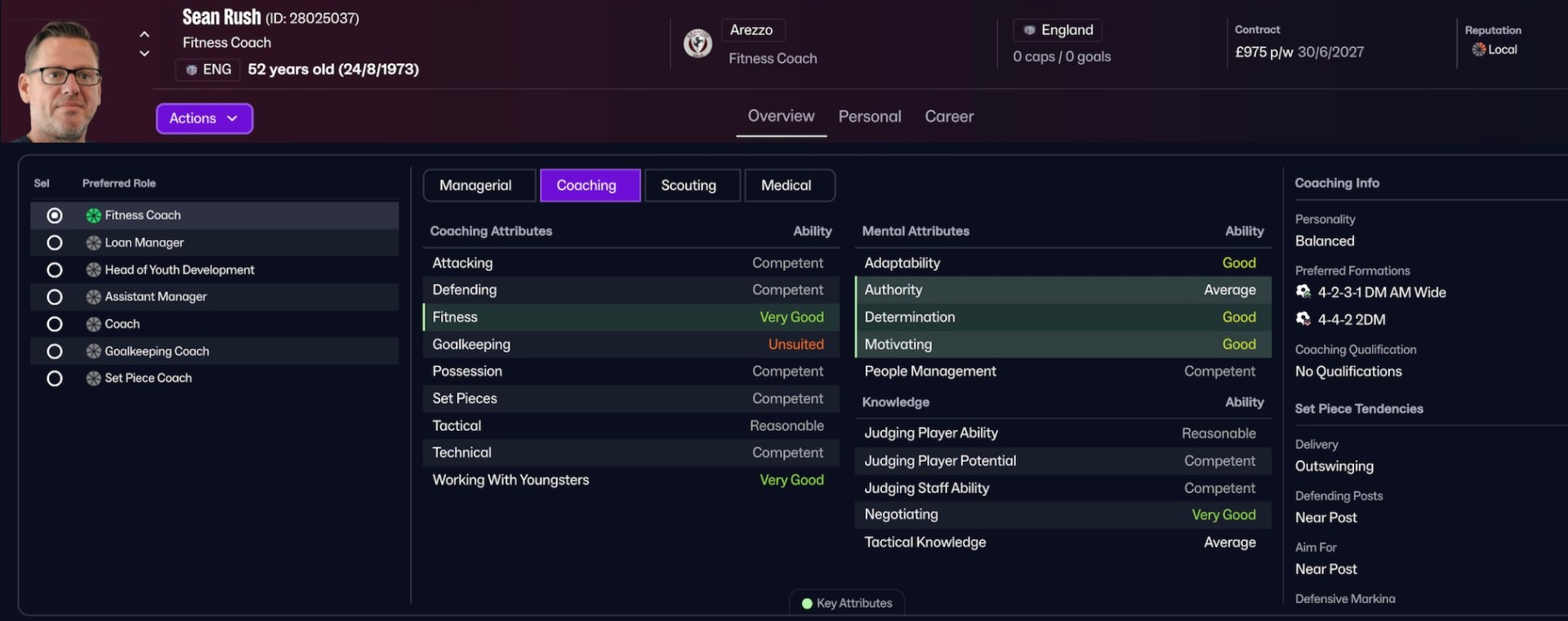
Hopefully in a month or so I’ll start to see much better conditioning.
Against Pianese, another side using a 5-2-1-2, we tore them apart. A 4–1 win, goals from Pattarello, Iaccarino, and a brace from Ravasio. The sort of performance that restores belief and reminds everyone why we’re top of the table.
With Ascoli dropping points against Carpi, we opened up a two-point lead — and fate decreed our next league match would be against them.
A six-pointer in early November.
Win it, and we’d go five clear.
I rotated heavily for the cup tie with Serie B’s Salernitana, resting key players. We lost 1–2, but it felt like the right call. Bigger battles await.
The Battle for the Top
For weeks we’d been chasing Ascoli. Second place, clinging to their coattails, hoping they’d finally slip.
They’re a bigger club — more success, a larger stadium, a deeper wage bill. Everything about them screams “favourites.”
But football doesn’t always follow the script.
The 1–1 draw between Ascoli and Carpi opened the door, and we stepped through it — two points clear at the top of Serie C/B. Suddenly, the hunter had become the hunted.
Next up? Ascoli away. A chance to stretch the lead to five points. A chance to make a statement.
Only one team earns automatic promotion to Serie B; everyone else is thrown into the chaos of the playoff system — ten clubs in each of Serie C’s three divisions battling for the final promotion spots.
That’s not where I want us. This game mattered.
Reading the Enemy
One of the features I’ve come to really appreciate in Football Manager 26 is the next-opposition scouting report. It’s a goldmine of data if you know how to use it — and heading into Ascoli, I studied every line.
Formations
They’ve used two shapes for over 90% of their matches — a 4-2-4 and a 4-2-3-1. My assistant predicts a 4-2-4 at home, and I’m fine with that. On paper, it suits us.
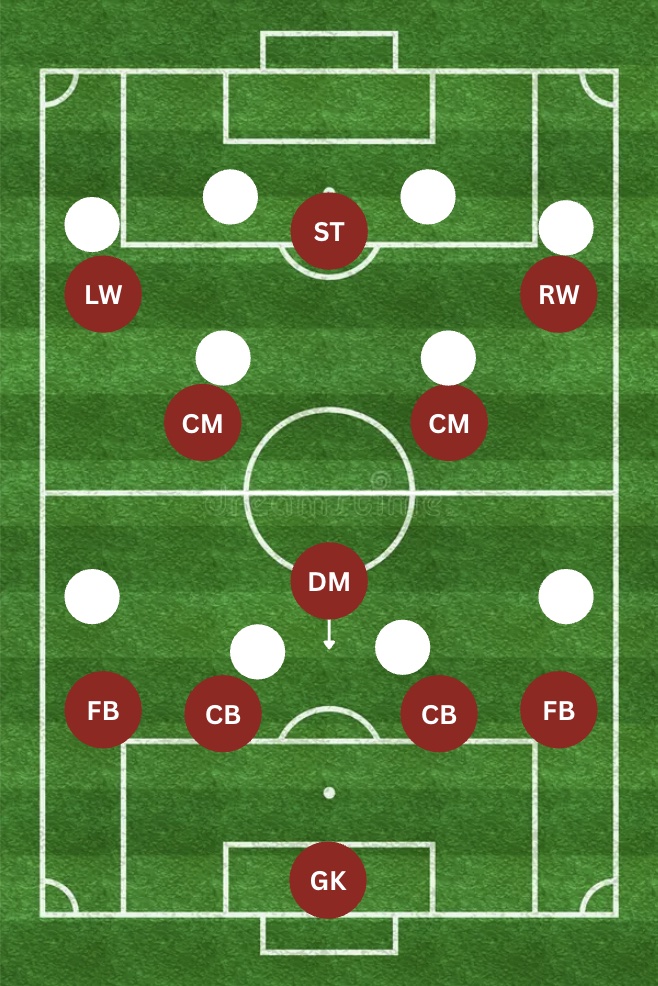
How our 4-3-3 matches with Ascoli’s 4-2-2
With Eklu holding in front of our defence, we’ll have a 3-v-2 advantage against their two strikers, and our full-backs can go toe-to-toe with their wingers. It’s not a perfect matchup — a 5-v-4 overall — but it’s one I fancy we’re good enough for.
We’ll have to be!
Play Style
Ascoli lead the league for possession at 61 %, well ahead of our 56 %. They’ve also scored 30 goals — joint-top with us. They’re quick, creative, and confident on the ball.
I knew we couldn’t give them space to run. Against my coaches’ advice to play Cautious, in a low block. But, I opted instead for a mid-block, in a Balanced mentality, with a slightly deeper defensive line — compact, controlled, and ready to absorb pressure before springing forward.
Key Players
Right-winger Enrico Oviszach (8 goals) and striker Simone Corazza (7) have been ruthless. Both would be tightly marked.
Their deep-lying playmaker Giovanni Corradini might be the best midfielder in the division — and he’s been on my shortlist for weeks. Stopping him from dictating tempo was essential.
Weaknesses
They’re not the most determined side and struggle to defend balls delivered inside their own box. That suits us. I added one small tweak: hit early crosses. Test their back line. Force errors. Otherwise known as “getting it in the mixer”!
The Game
The biggest game of the season so far began with both sides tense, cautious, feeling each other out.
We created the first real chance — Pattarello drilling a low cross across the six-yard box that Ravasio missed by inches. A fraction earlier and it was 1–0.
The breakthrough came on the half-hour mark. Shaka Mawuli Eklu — immense all game — lifted a precise ball over the top of, and in-between, Ascoli’s right-back and centre-half. Guccione anticipation afforded him a step on them both, met it on the volley, and saw it deflect off a defender into the net. 1-0.
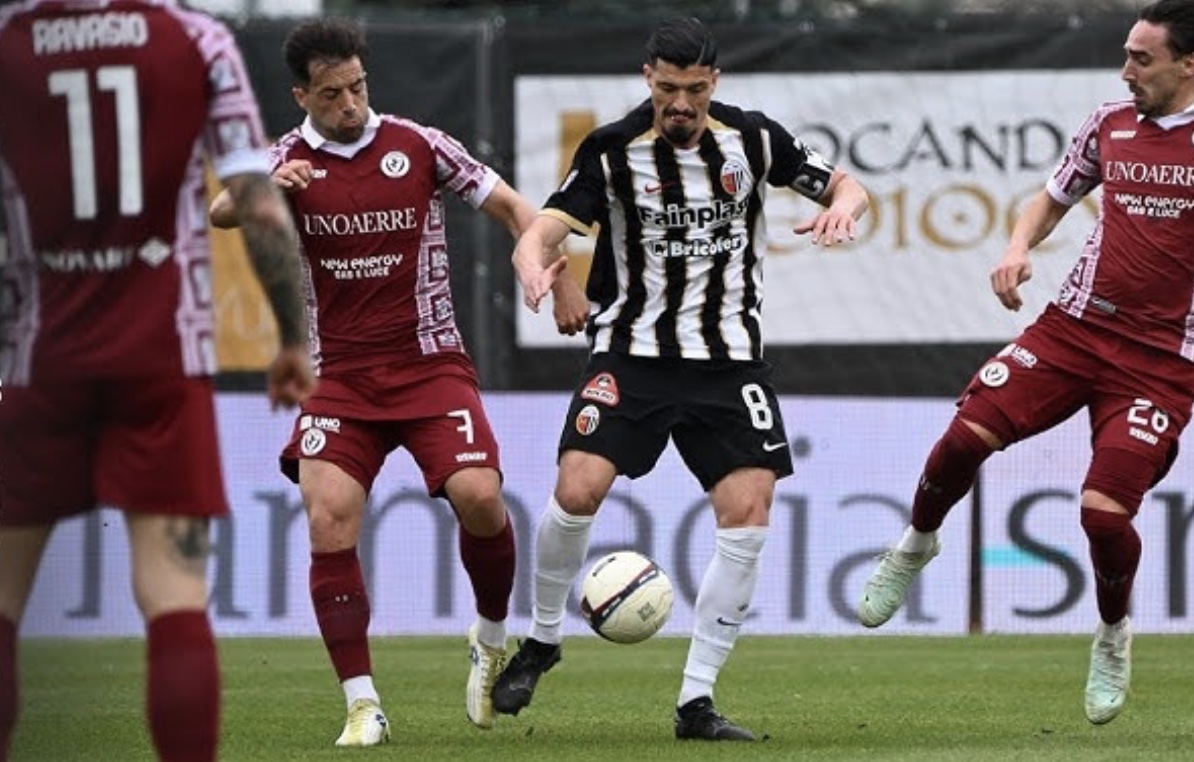
From there, it became a battle of will. Ascoli pushed, but we stayed organised. Compact. Disciplined. We had chances to seal it but couldn’t find a second.
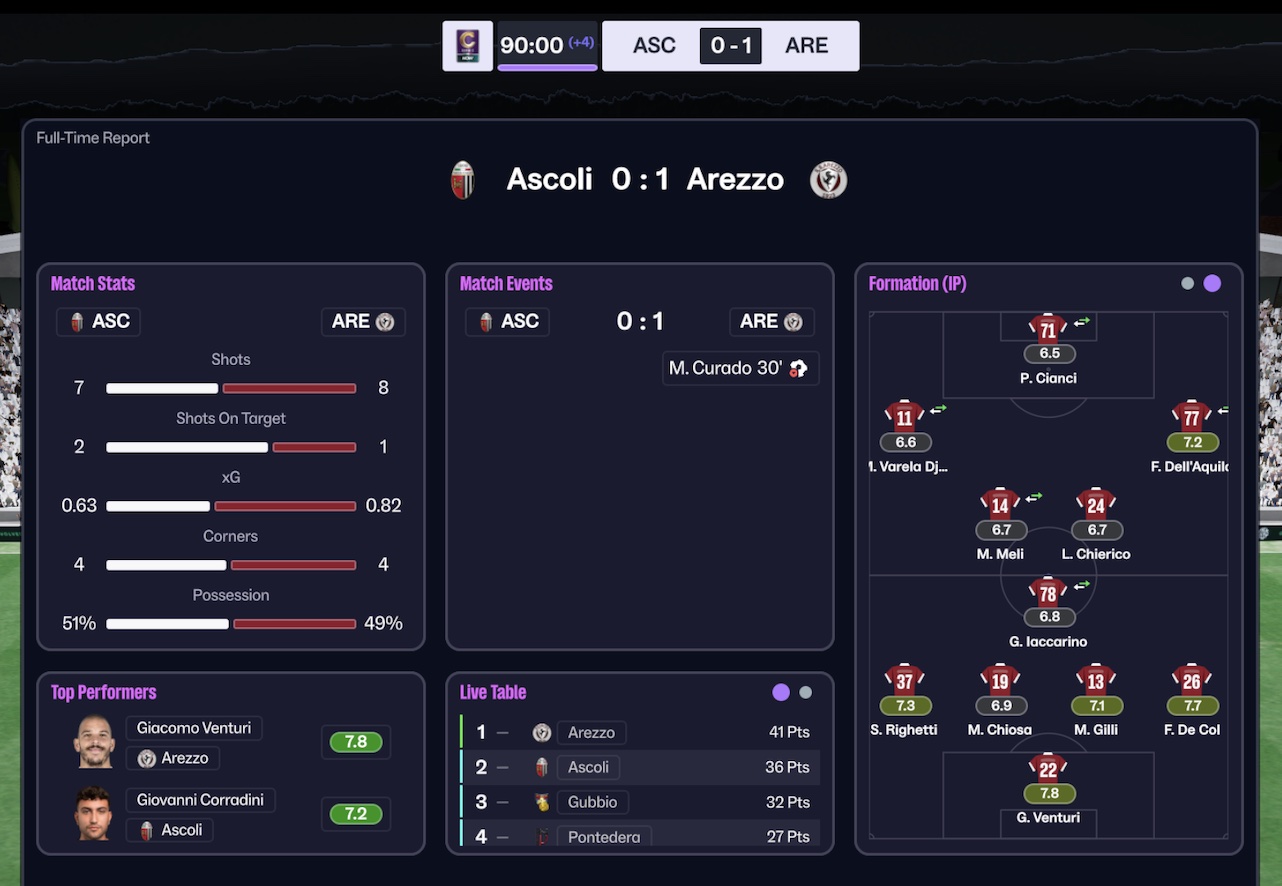
When the final whistle blew, relief washed over me. A win. Five points clear.
The plan had worked.
Looking Ahead
As November draws to a close, I finally have a moment to breathe — five points clear at the top, the squad playing with belief, and the system feeling more balanced than ever. Yet in football, comfort is always temporary.
December will test a different side of management. With form strong and spirits high, the attention now shifts from the pitch to the spreadsheet. A few contracts are running down on players I’d like to keep, and unless I can free up some wages or stretch the budget, we risk losing them.
It’s the less glamorous part of the job — the calls with agents, the balancing acts, the quiet diplomacy behind closed doors — but it’s where seasons are often won or lost. Renewals now could save a rebuild later.
Beyond that, January looms. There won’t be much money to spend and the vultures will be circling around our better players. I’ll need to be smart — maybe a loan or two, maybe an opportunistic deal if someone becomes available. Depth will be vital once the winter grind begins and injuries start to bite.
For now, though, I’ll take a quiet satisfaction in what we’ve built.
The team is growing, learning, evolving.
The philosophy — Disciplina & Controllo — is taking shape.
The challenge ahead isn’t just staying top. It’s building something sustainable.



 The Gaffers Lounge
Leave a comment