
After having spent quite a bit of time within the match experience in FM26, I can confidently say that 4-2-3-1 formation s still a pleasure to use. This is primarily because of the simplicity in setting up this popular shape with almost any team in the game but also in how realistically it is recreated by the game engine. With the right roles, it is truly a formation to make the tactical engine sing. Especially if you are looking for an attacking, in-possession shape to use with a mid to top tier, relatively technical side. A side like Real Sociedad for instance.

So how does my 4-2-3-1/4-4-2 hybrid tactic work in FM26? In the in possession attacking phase especially.
Roles, Movement and Tactical Variability
The front attacking quartet of False 9/DLF (depending on the player you have), Second Striker (old Shadow Striker role) and the two wide AM attackers are key to a good offence in my 4-2-3-1. These four players run into open space, make quick one-two interchanges and generally create good chances for each other. Of course, the key here is the right combination of attributes and Real Sociedad has been blessed in that department. We might not be Barcelona-level but still the attributes needed for a good 4-2-3-1 attack are here.

Great technical attributes (Finishing, First Touch, Dribbling), Off the Ball (very important in my opinion) and above average physical attributes (especially Acceleration and Pace for the wide attackers) are essential for these four players. Mentals such as Anticipation and Composure help a lot too.
In general, your Second Striker could get away with weaker Dribbling and Pace than the others. As long as he has plenty of Finishing, Off The Ball and perhaps Acceleration. Above average Passing, First Touch and Work Rate (just like with the old Shadow Striker role) is also a bonus for my AMC player. The ball will go through him very often, as it makes its way to your other attackers. The False 9 can be the slowest of the four as long as he makes up for it with exceptional technicals (especially Dribbling and Passing) and mental attributes.
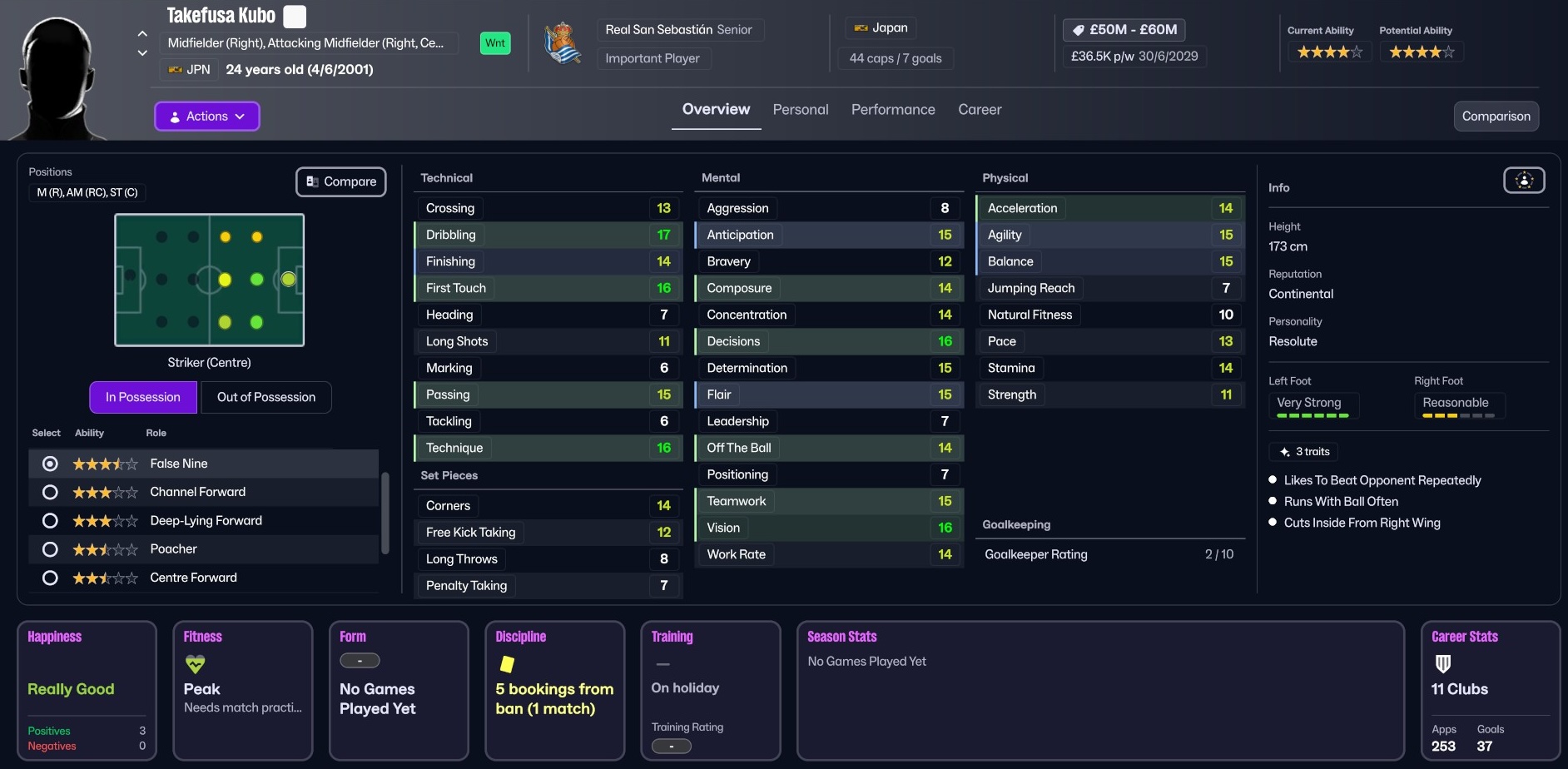
I’m actually sad that Kubo is not Basque and probably won’t be staying in my squad very long, because he is actually a very good choice for the False 9 role. Oyarzabal is still my first choice however, and probably the role he plays the best.
And here is how I have set up the Txuri-Urdin front four in a 4-2-3-1.
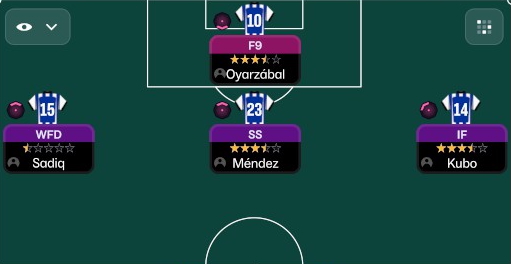
In general, in all of my created tactics I always look for ways to create tactical variability. This simple concept has been my mantra throughout all FM games. I don’t like duplicating any single role within a tactic. So I set all of my roles differently, even the centrebacks. Same goes for Out-Of-Possession formations (but that’s a topic for another update). This is done not only to play to each player’s individual strengths but also to encourage different movements and behaviours on the pitch. Tactical variability is a good way to keep your attacking play unpredictable and hard for AI opposition to counter.
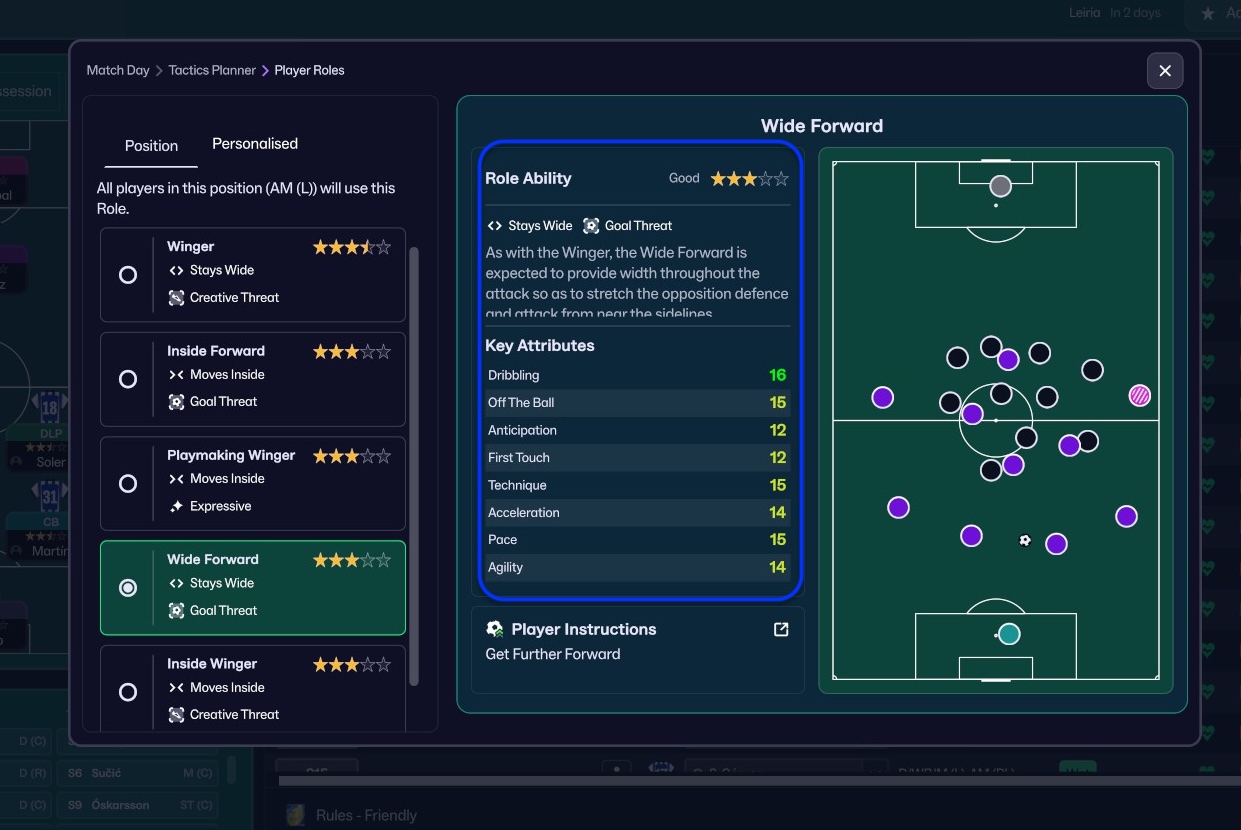
With the False 9 dribbling and dropping deeper when in possession of the ball, I want the other three attacking players to move into the spaces in front and to the sides of the False 9 – especially the channels (spaces between CBs and Fullbacks) and the wider flanks. Ideally, I want my attacking players to occupy all of these spaces. In my 4-2-3-1 formation, I have the SS and IF (IF suits my players best but you could theoretically use any other wide attacker role here, as long as it cuts inside) going into the central and channel spaces while the other wide attacker is instructed to stay wide and attack from the left flanks. For this task, the Wide Forward is a great new role in FM26. Well it’s not really new, as much as a fusion of some other old roles – principally traditional Winger and Raumdeuter (no longer available in FM26).
In the previous FM games, Raumdeuter (“Space Interpreter” in German) was a unique role created to model the way Thomas Muller played at his prime.

The old Raumdeuter role differed from how both Winger and Inside Forward functioned, because it did not dribble as much with the ball and instead looked to run off the ball into open spaces to pick up passes and through balls. Sort of like a wide poacher. It was the only goal-scoring focused wide forward to operate without a lot of cutting inside, dribbling and/or crossing. It was possible to create a true wide channel poacher/goal-scorer but it often required tricky combinations of roles, individual player instructions, and traits. Such as having a dominant foot-same flank player as an IF, which encouraged him to stay wider and stretch the opposition before cutting inside. Using a winger role was a simpler solution but the nature of the role was that it would focus much more on dribbling and crossing rather than going for the goal and shooting.
Now with the Wide Forward, we have exactly what I wanted, a true attacking wide forward role similar to Inside Forward but with much less cutting inside (or very late cut ins). This naturally leads to some truly interesting tactical combinations for the front four in a 4-2-3-1. And beautiful goals like the one below. Note that the player X.Larrea in this clip is playing in the Wide Forward role.
As it looks in the game, our starting position formation is 4-2-3-1 as set up in the tactics creation screen. Below is what our attacking phase looks like early in the build-up. Note the nice lines which correspond to the three tactical strata (Defence, Defensive Midfield and Advanced Attack) of the formation and the Second Striker (Bellmunt) AMC role in between the lines but ready to run forward and join the three pronged attack.
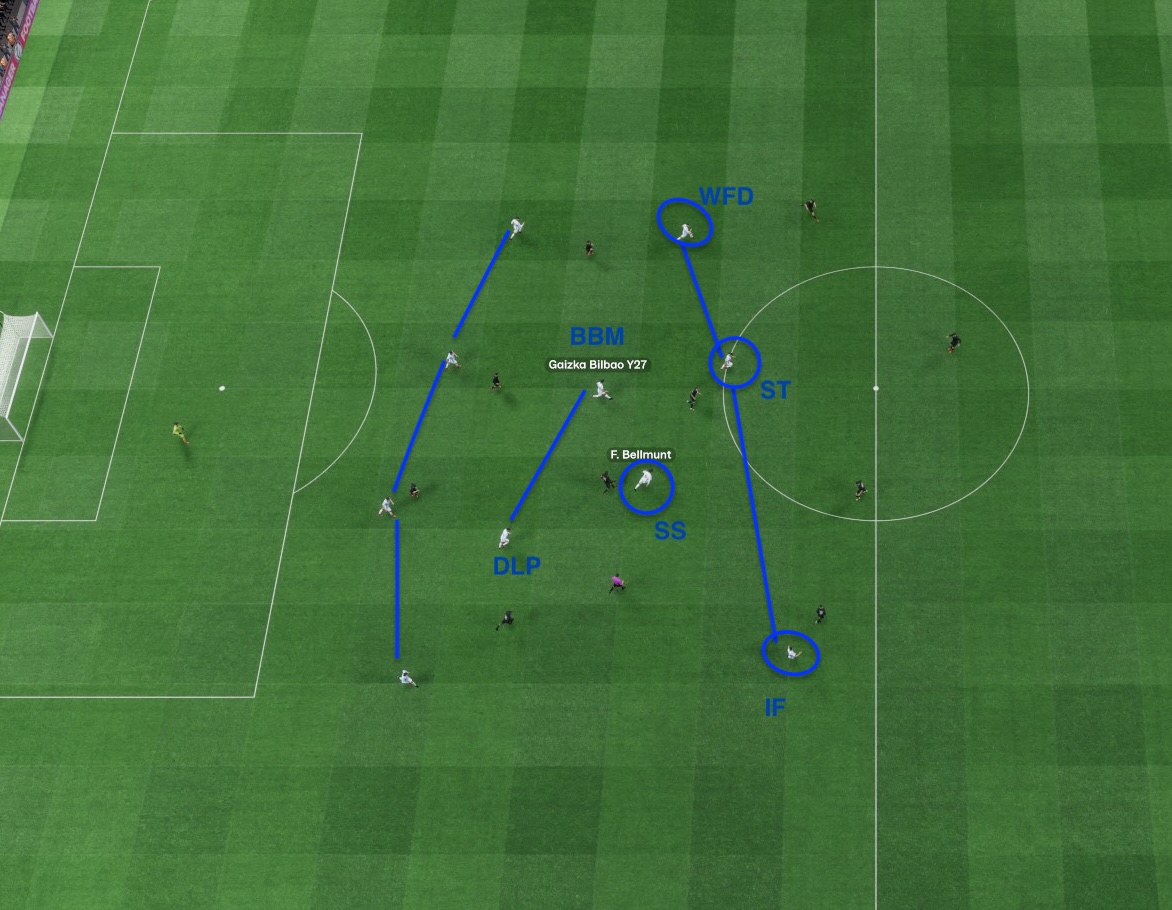
In seconds, the formation quickly shifts into a fluid, approximate 3-3-1-3 shape during the latter phase of attack. Note the staggered positions of the Fullback (staying back) on the left and the Wingback on the right. The Wingback’s forward run, actually takes him out of his starting defensive strata position into the next strata where he joins the DLP and BBM in their advance. And if he receives the ball then he won’t stop at that line but dribble on to join the advanced attack line of the striker and the wide forwards.
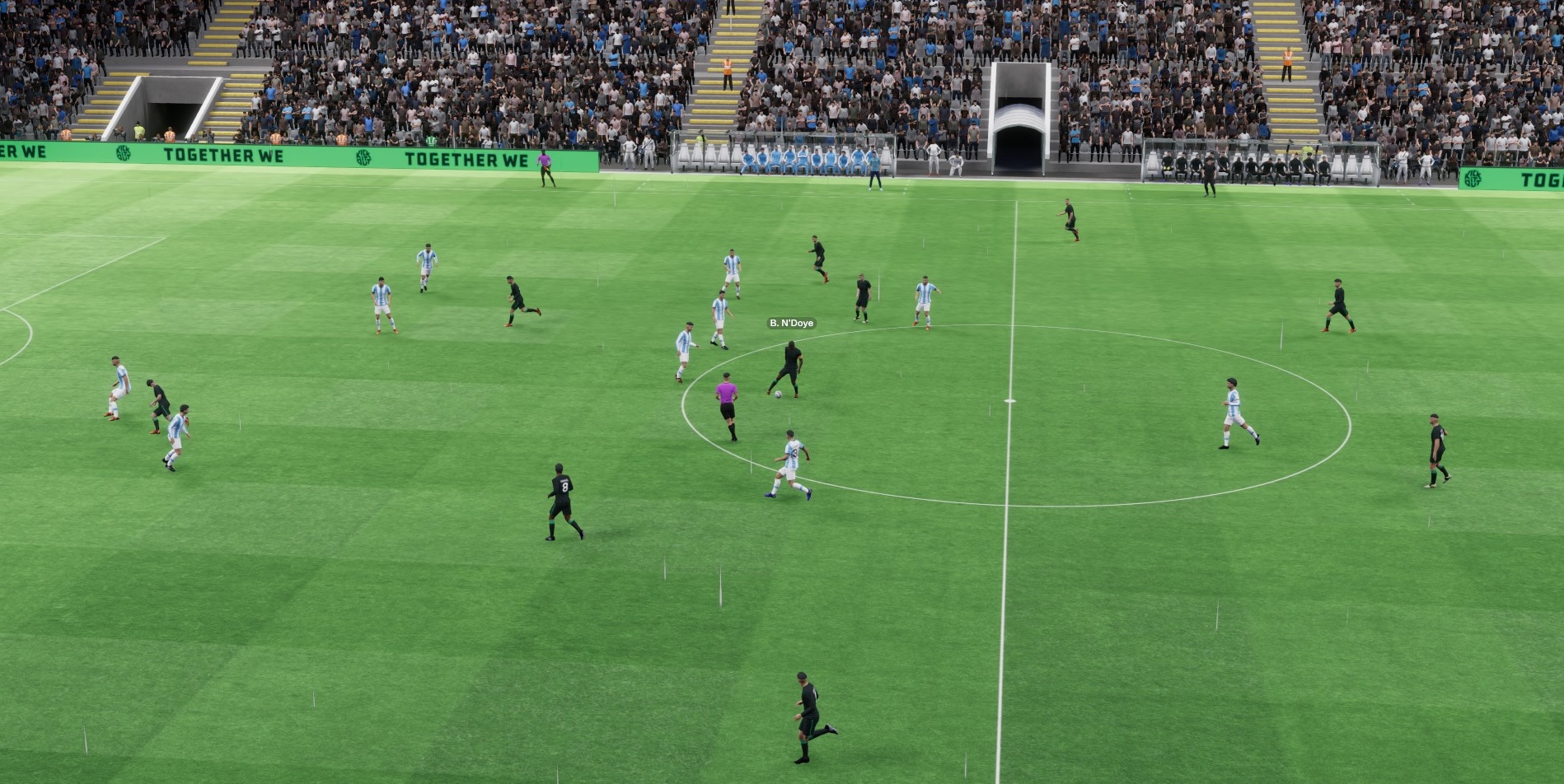
Unfortunately that attack was repelled by the opposition. When the ball is lost, the 4-4-2 (or 4-4-1-1 at times) becomes our defending, out-of-possession shape. It is shown in two different pitch views below. This time note the clear two banks of four as they move back in disciplined order to congest our half and block avenues of advance for our opponents.
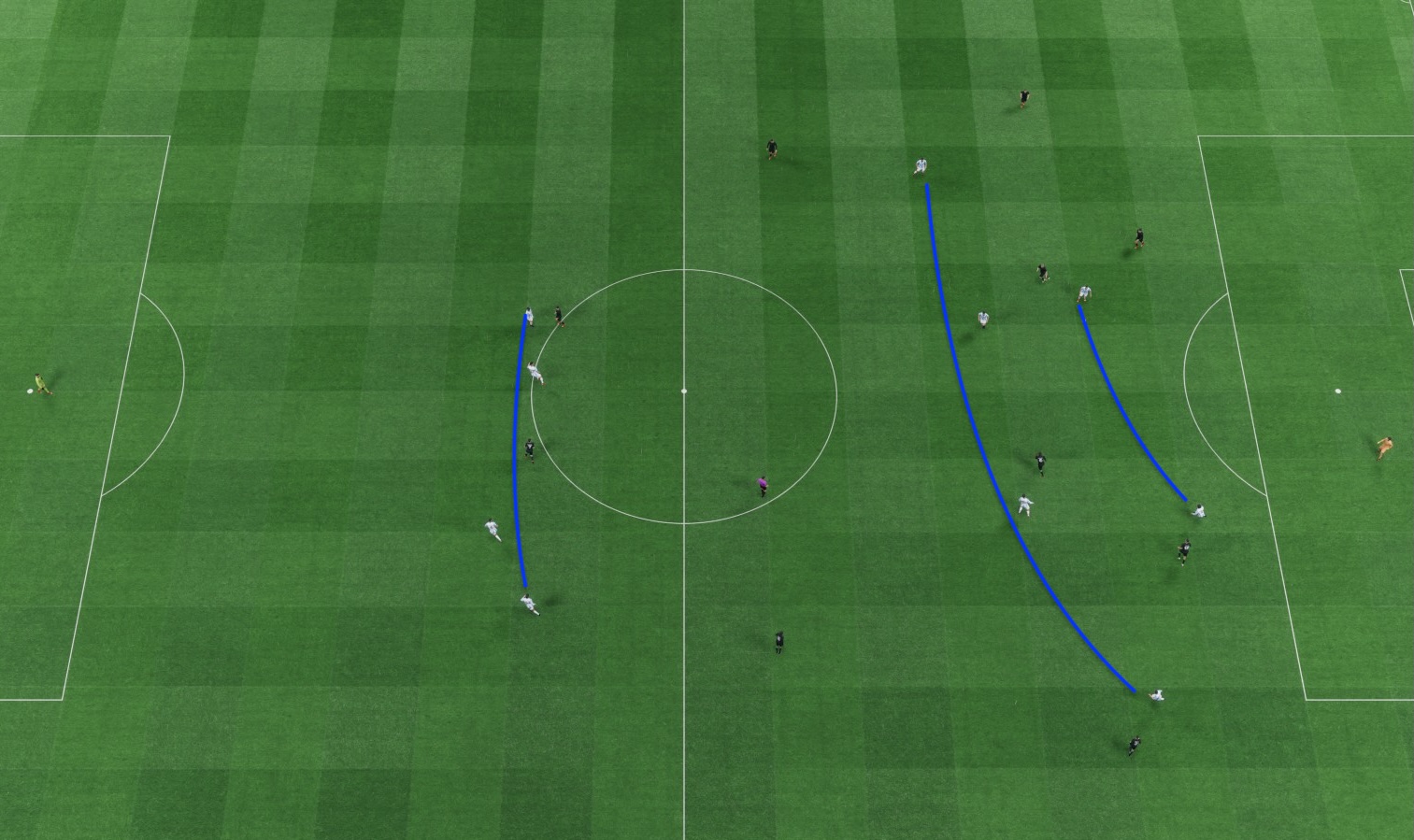
I really like how my two fullbacks (holding fullback role in OOP formation) are going narrower and sticking closer to our centrebacks to compact our defensive line and limit the space the opponents can attack into. At the same time the wide players are tracking back to support our midfielders. The opposition is definitely not having an easy time in their attack.
That is as much detail as I will go into our defensive tactics for now. In future updates, I plan to spend more time examining the details of how our 4-4-2 OOP formation works in creating that beautiful Defence-First football that I love. Developing effective defensive strategies and keeping clean sheets in FM26 is definitely one of the main objectives of this FM story series.
In summary, depending on where the ball is and who is in possession of it, there are 3-4 formations that are happening on the pitch. The attack is wide and fluid while defence is compact and disciplined. That is the beauty of using two different tactics for in-possession and out-of-possession phases.
4-2-3-1 Signature Moves: Overloads and Six Player Attacks
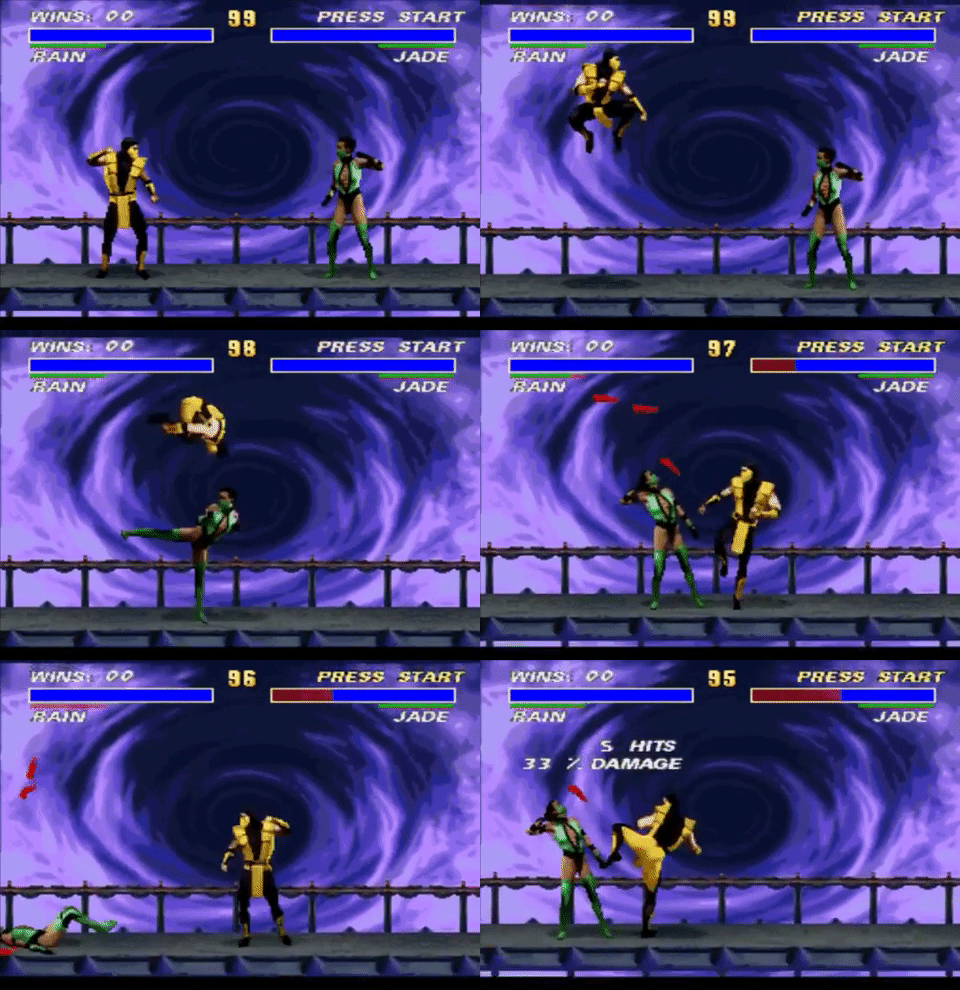
Like any great fighting game, a great football formation has a set of signature finishing moves that make it special and it raise it above the pack of other formations. This is especially true in the case of the good old 4-2-3-1.

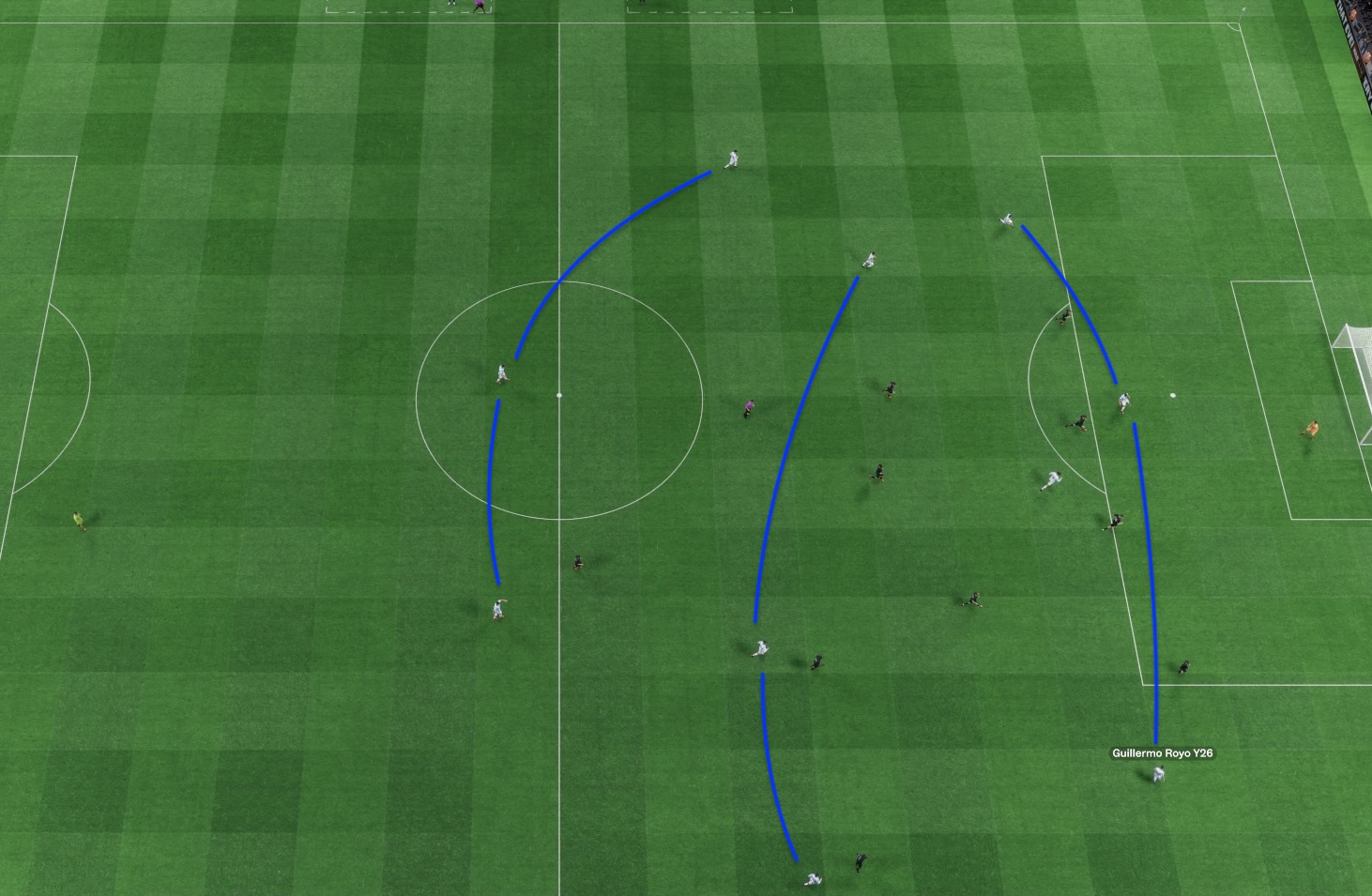
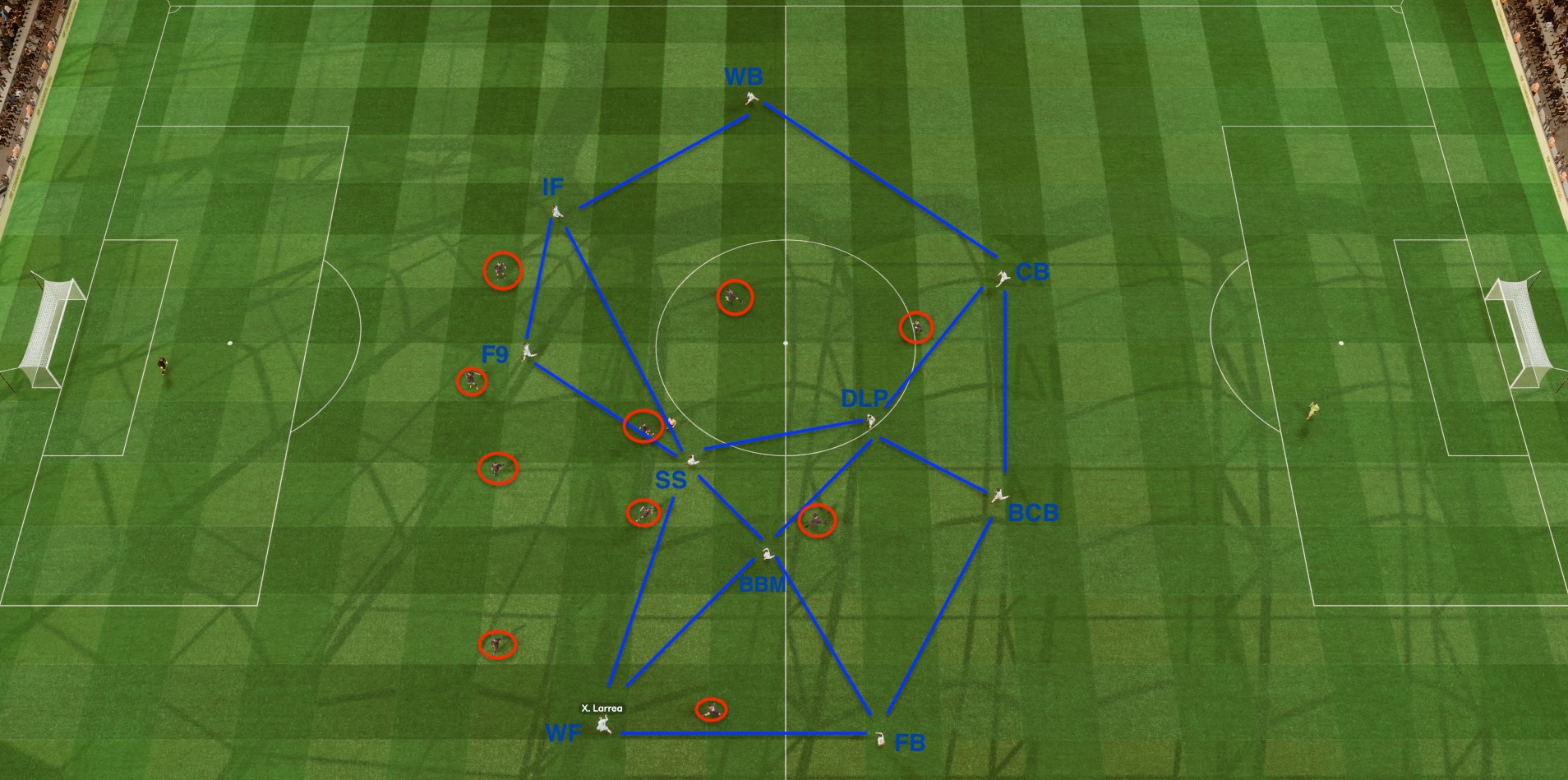
Firstly, my choice of player roles for the in-possession tactic is what contributes to the creation of that nice 4-2-3-1 to 3-3-1-3 shapeshift during attack. The beauty and flexibility of the 4-2-3-1 is further evident in how every pitch space is filled by various roles. The undeniable Positional Play influences are definitely at play in my Basque Football tactic. The wide attackers (WFD and IF) are attacking wide spaces and inside channels (space between the fullback and the centreback) respectively. The fullback and wingback roles are there to stretch the opposition on the flanks. They achieve this in different ways. Fullback – more conservatively and through well-timed crosses and late overlapping runs behind the WFD, and the Wingback by going more aggressive with dribbles and crosses on the right flank. The objective is to stagger our attack, and once again create more unpredictability for the opponents to deal with. Late runs from deep are key in exploiting the space generated by Overloads when opponents shift to deal with immediate threat on one flank and leave future threat unmarked on the opposite flank (left in the image below).
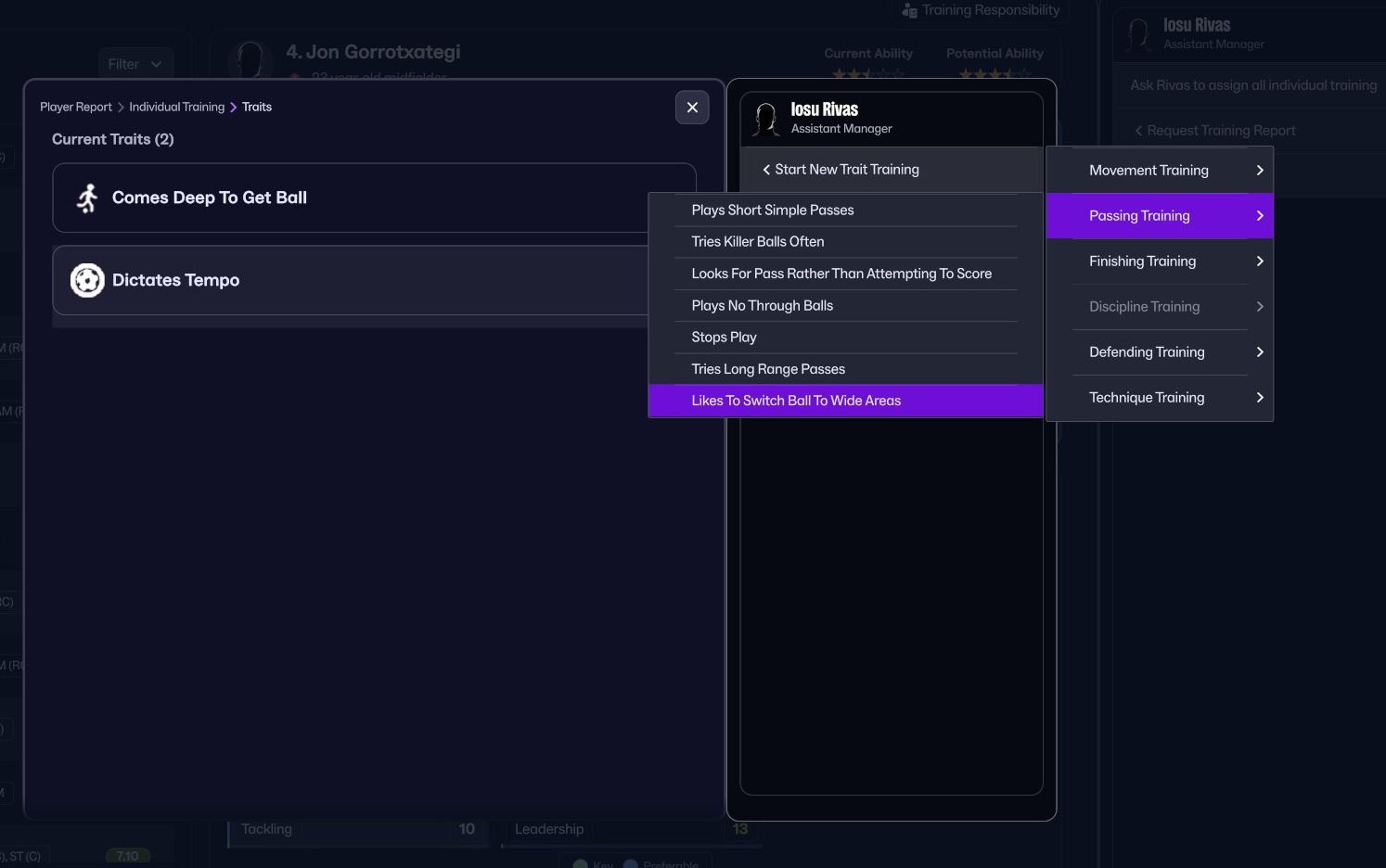
Having a deep playmaker role (DLP for short) is key in generating overloads. Especially if the player has “Likes to Switch Ball to Wide Areas” trait. If he does not, then I would train this trait as soon as possible. “Dictates tempo” and/or “Likes to pass long” are the other two individual traits that work well for your DLP for the exact same reason. I don’t think I need to explain the obvious here but you basically want your DLP to act as your quarterback (to those familiar with American football) to launch the ball towards the side of the pitch that is not being congested with opposition players and where your own players would have an easier time bringing it towards opponent’s goal area.
One of the 4-2-3-1 formation’s other signature attacking plays is the very dangerous “Six Player Attack”. As always the attack involves my striker (False 9), Second Striker, Wide Forward (WFD), and IF (Inside Forward). The other extra attackers are committed via the runner from deep – BBM (Box-to-Box Midfielder) role, and at least one of the fullbacks (the more attacking one like a Wingback or Advanced Wingback).
So this is how the 4-2-3-1 formation’s Six Player Attack is created. The Striker, SS, IF, and WFD occupy most of the central and flank spaces, while either FB or the WB overlaps with the forwards (the FB is instructed to overlap while WB does so naturally). The FB and WB attack the left and right flanks by staying wide to get crosses in or just simply stretch the opposition horizontally to create more gaps for the four front attackers to exploit. The wingback of course does this more aggressively, as his role name would suggest. I really like using wingbacks (and in the older games, the Complete Wingback role) as a sort of a deep-lying wing attacker. It is a very Brazilian-influenced aspect of my 4-2-3-1.
4-2-3-1’s Brazilian Origins and “Luxury Player” Role
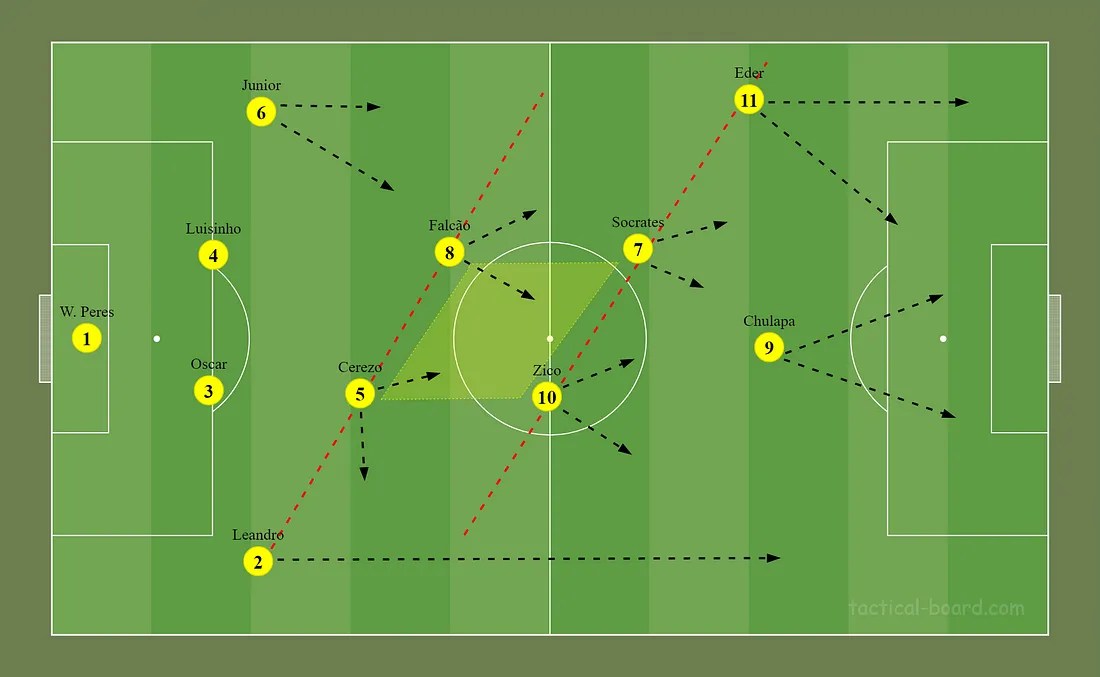
A true wingback, in the most attacking sense of that word, is uniquely Brazilian role. In truth, it was Brazilians that invented the modern wingback as we now know it and it is a role that thrived in the Samba-infused Jogo Bonito-style of football. Carlos Alberto was of course one of the most famous wingbacks to score one of the most historically memorable goals during 1970 World Cup. How can you forget that beauty?
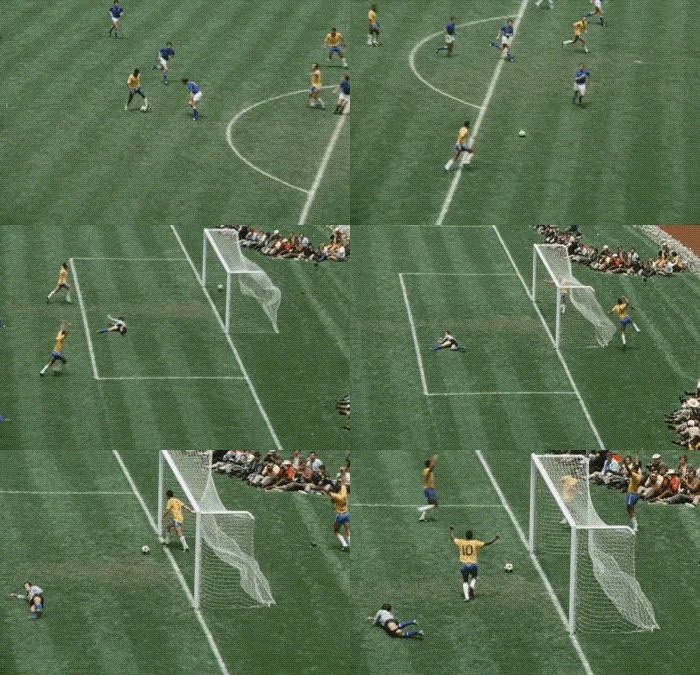
It’s hard to believe from the footage above that the goal-scorer is in fact a player who starts in a deep defensive fullback position. Carlos Alberto Torres – The one and only. The star player of 1970 World Cup. He was one in the long line-up of stereotypical Brazilian wingbacks. Powerful, lethal, fast, unpredictable, exceptionally athletic and tireless. Other notable examples being Cafu and Dani Alves.
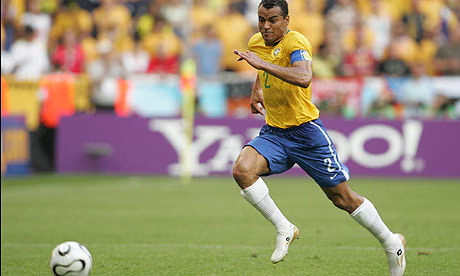
The best Braziliian wingbacks possessed the workrate, pace, stamina, and the technical skill to do overlapping attacking runs, perfectly blending the roles of a fullback, midfielder, winger, and even striker at times. Much like a deep-lying winger, Brazilian wingback is expected to be an accurate crosser of the ball, an essential link-up player between defence and attack. In addition to chance creation, an attacking wingback has to provide an effective threat on goal, to reflect the “winger” portion of his name. And sometimes, as Carlos Alberto proved, he has to act as an extra striker.
If Brazil’s famous 4-2-4 was a natural evolution of Magnificent Magyars’ WW, then in turn Brazilian 4-2-3-1 developed from that same 4-2-4. In many aspects, the more traditionally Brazilian Narrow 4-2-2-2 “Magic Box” formation (the mainstay of Brazilian football for almost 30 years between 1982 and the early 2000s) also evolved into 4-2-3-1 over time and make some waves at the 2009 World Cup. Yet arguably even before early 2000s, a prototypical 4-2-3-1 was famously used by the Brazilian national team at 1970 World Cup. Mario Zagallo, Brazil’s left winger-turned-coach, saw his team as pioneers of the 4-2-3-1 shape, even if it was so attacking that at times it looked like a 4-2-4 in-possession.
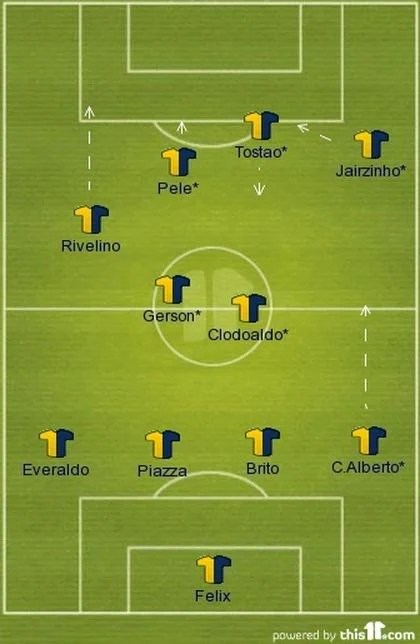
Ideally, once I have the right player, I would definitely use an Advanced Wingback role and let my wingback fly free, Brazilian-style. An Advanced Wingback might be a true “luxury player” role in a sense that it takes a very good team to be able to tactically afford to play a 6th attacker from a deep defensive position. Yet, I believe this would contribute immensely not only to the quality of our Overloads created, but also Third Man Runs, which are crucial to any good Positional Play tactic.
Box-to-Box Midfielder and Third Man Runs
The BBM midfielder is another great “deep runner” and is often my Sixth attacker in the “Six Player Attack”. You will need a total specialist for this role – someone capable of tireless offence-generating runs, while at the same time creating support between the back and the front. Long-shooting capability is also a huge bonus here, as you should be able to rely on your BBM to finish many attacking moves with a late run and long-shot attempt on goal.
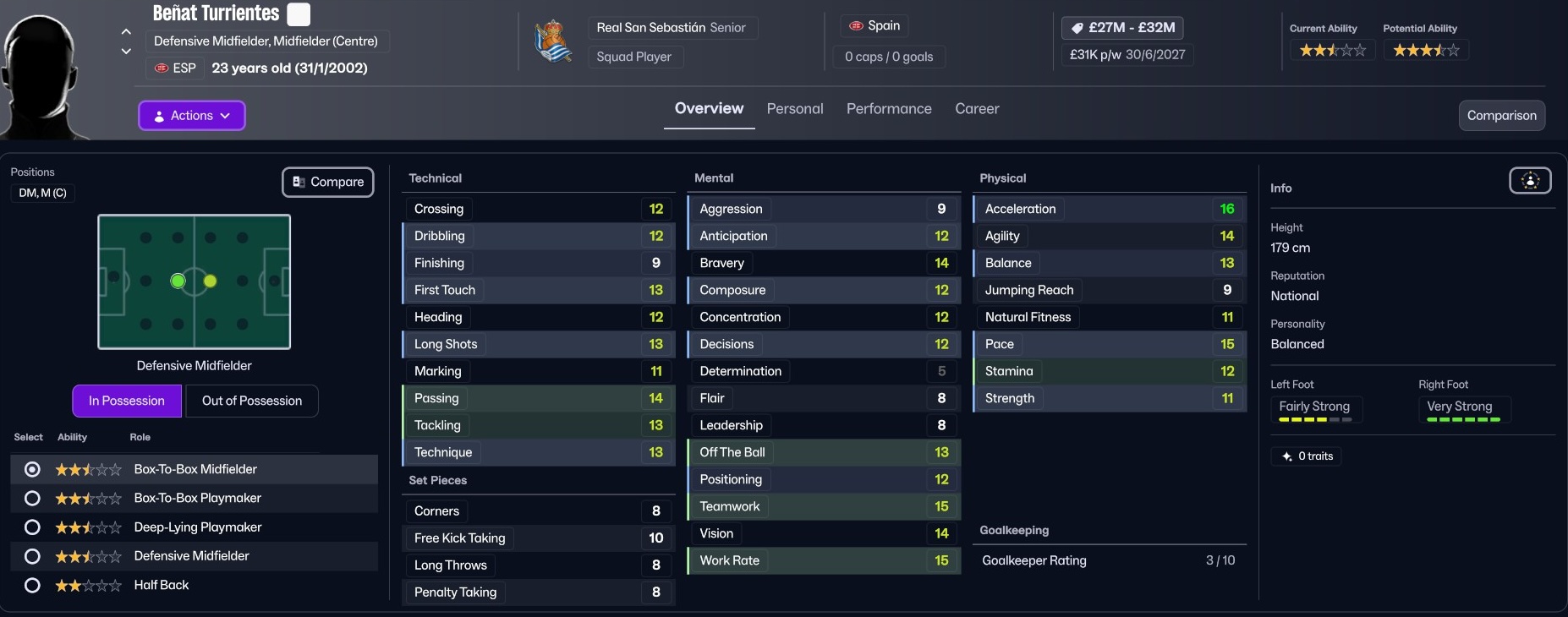
A good BBM needs good Marking, Tackling, First Touch, Passing, Decisions, Off The Ball, Positioning, Workrate, Acceleration, Pace and Stamina. As a good rule of thumb, you should look for a well-rounded “Total Footballer” type of player who can be effective in both halfs, defending, and attacking (hence focus on both Positioning and Off-The-Ball). And if you have a youngster who is already showing early signs of developing into a candidate for your squad’s BBM spot, then take over his training and put him on “BBM Playmaker” individual role training as soon as possible! And find some good mentors. Hopefully you will have a gem on your team in no time.
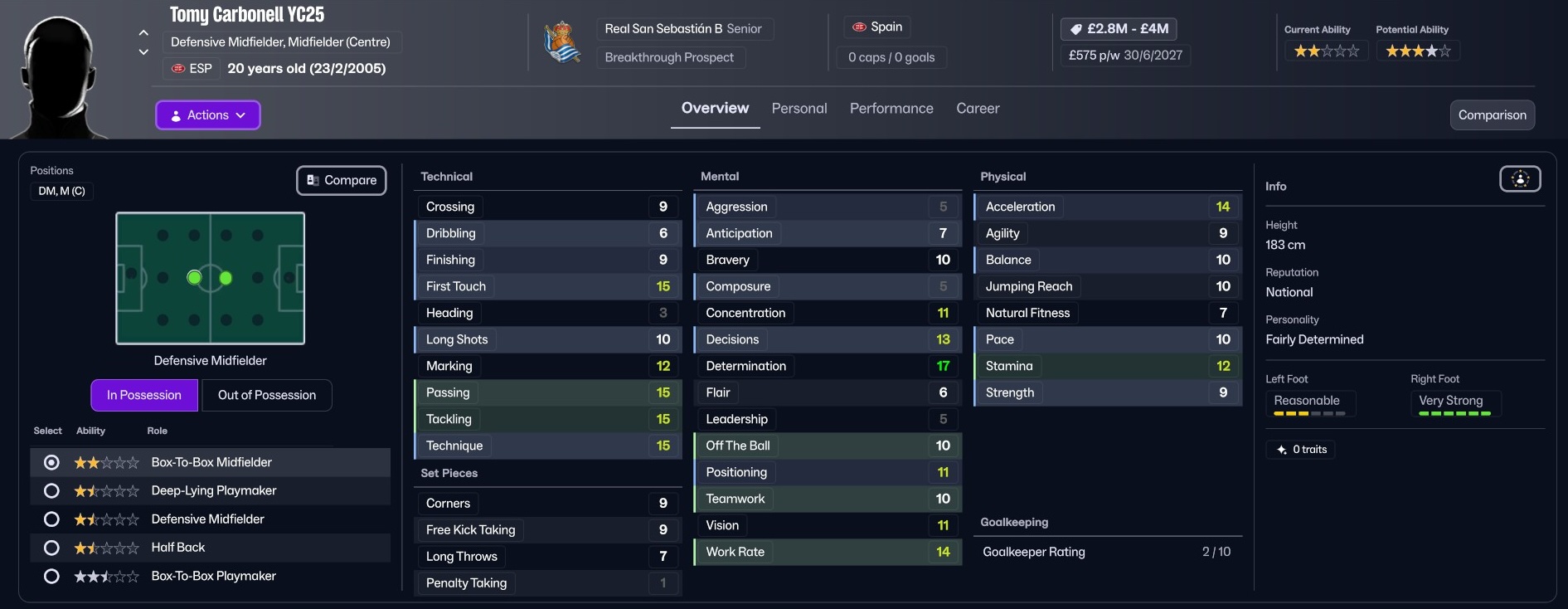
Having a good BBM player is absolutely essential in generating THIRD MAN RUNS in this tactic. You could create them with other roles but I find a role like BBM, which is hard-coded to make late runs on goal, is the best at it. The old Segundo Volante role used be great at it too. In FM26, by moving the Box-to-Box Midfielder into DM strata, we essentially got our new Segundo Volante. It was my favourite role in FM24, and now BBM is becoming my favourite in FM26.
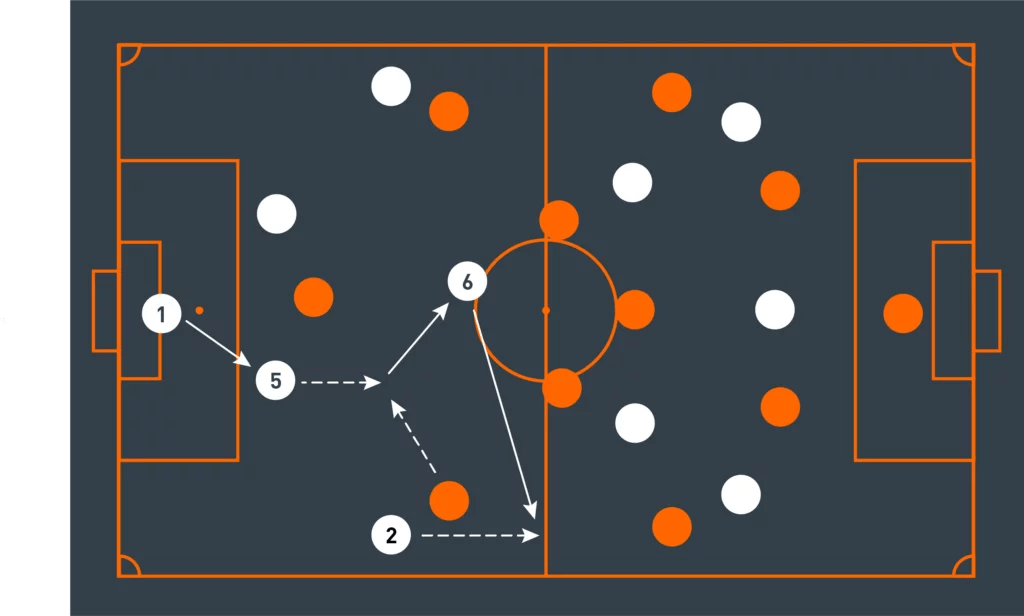
“Third Man Runs” – a coordinated attacking movement involving three players.
Third Man Runs are done to bypass opposition defenders in the most efficient and effective way possible. Definitely in Basque fashion. The first player (my IF or False 9 for instance) draws opposition pressure, the second player receives a pass (my WFD), and the third player (often my BBM, or Wingback) makes a run into the newly created space to receive a pass from the second player, often after the ball is laid back or redirected. This strategy is effective because it moves the opposition defense out of position and exploits the space created after the defenders’ attention was redirected towards the ball.
Finally, back to the topic of Wide Forward. As you might have guessed already, my 4-2-3-1 tactic is made with a lot of specialists in mind. And Wide Forward is another specialist role that brings a lot of tactical variability to the 4-2-3-1. Obviously, I prefer someone whose dominant foot matches the flank you play him on. I definitely don’t want “cut inside” behaviour” from this role since I already have an Inside Forward doing enough of that on the opposite flank. My 4-2-3-1 is not just about role variability but also variability in player behaviour and movement. Important to note, is that when you start at a new club in FM26, you might not have all the players to fill all the specialized roles needed by your tactic. Sometimes, you need to be tactically flexible and think outside the box. I tend to channel my inner Toshack (if you read my previous blog entry then you know exactly why John Toshack is The Boss when it comes to tactical adaptability haha).
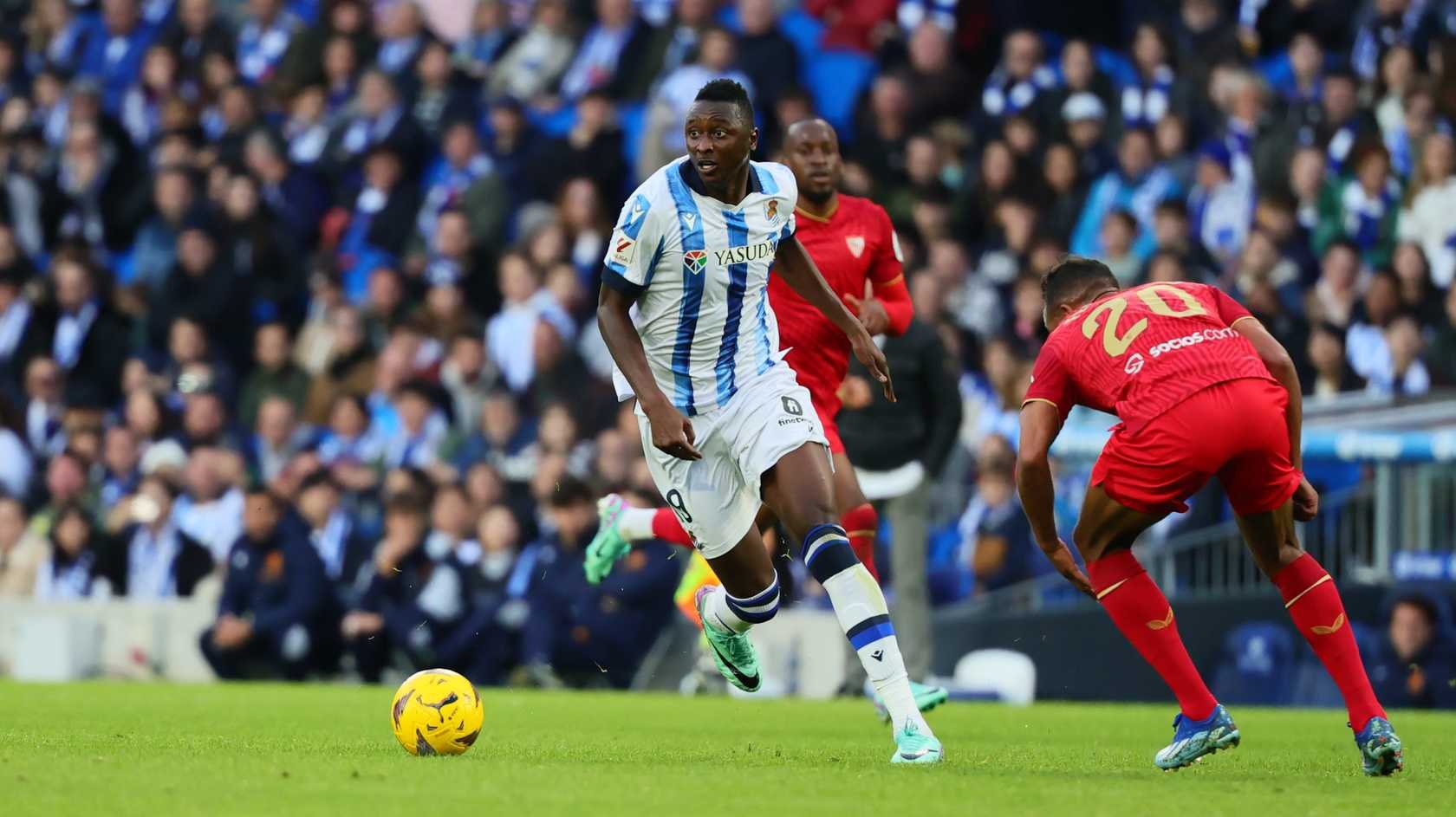
Thus at Real Sociedad, I actually found a better use of one of my backup strikers by retraining him into a Wide Forward. Umar Sadiq is surplus to requirement in my central striker role since he is not technical enough for a False 9 and does not quite fit the DLF mould. Luckily, Umar has great physicals and enough technical ability to to be useful as a WFD. So don’t be afraid to experiment. If the player has all the needed attributes then playing him out of position barely has any noticeable impact on his performance. I found this to be true in FM24, and the same in FM26 so far.
Results so far
COMING SOON!




 The Gaffers Lounge
Leave a comment