
A New Architect for the Future
With our finances stretched thin and a youth system offering little more than enthusiasm, I knew something had to change. The previous Head of Youth Development was competent, no doubt — organised, professional, dependable. But he didn’t fit in with our club philosophy, and I wanted to explore new options.
If we were going to build something lasting here, we needed alignment – not just in tactics, but in mentality.
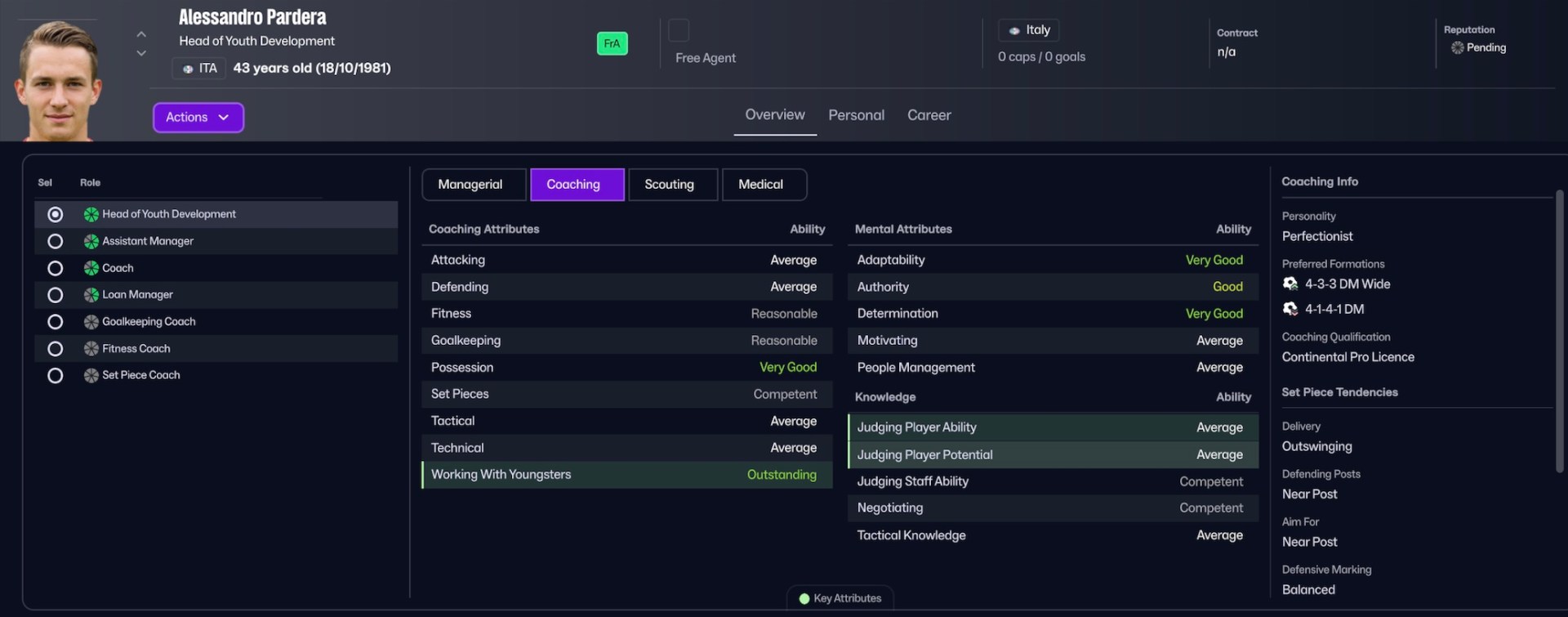
So, Francesco Serrapica was thanked for his service and allowed to leave. In his place comes Alessandro Pardera, a 43-year-old Italian with a perfectionist mentality and a possession-based style that mirrors my own philosophy.
A former youth coach with a reputation for patience and precision, Pardera’s strengths lie in his ability to connect with young players — to understand not just their technique, but their temperament. His eye for potential is sharp, his methods modern, and his personality quietly relentless.
He’s another member of my new backroom staff which will work hard together to develop S.S. Arezzo both on and off the field.
The Rise of Mario Ravasio
Every season throws up a surprise. A player who, for whatever reason, forces their way into the manager’s thoughts. For us, that player was Mario Ravasio.
At 27, he’s not a prospect, nor the kind of name that sells shirts. A solid professional, yes – but until now, one who’d made a career out of graft more than glory. Twelve goals in a season is his best tally in a season, mostly earned across years in Serie C.
But football rewards persistence.
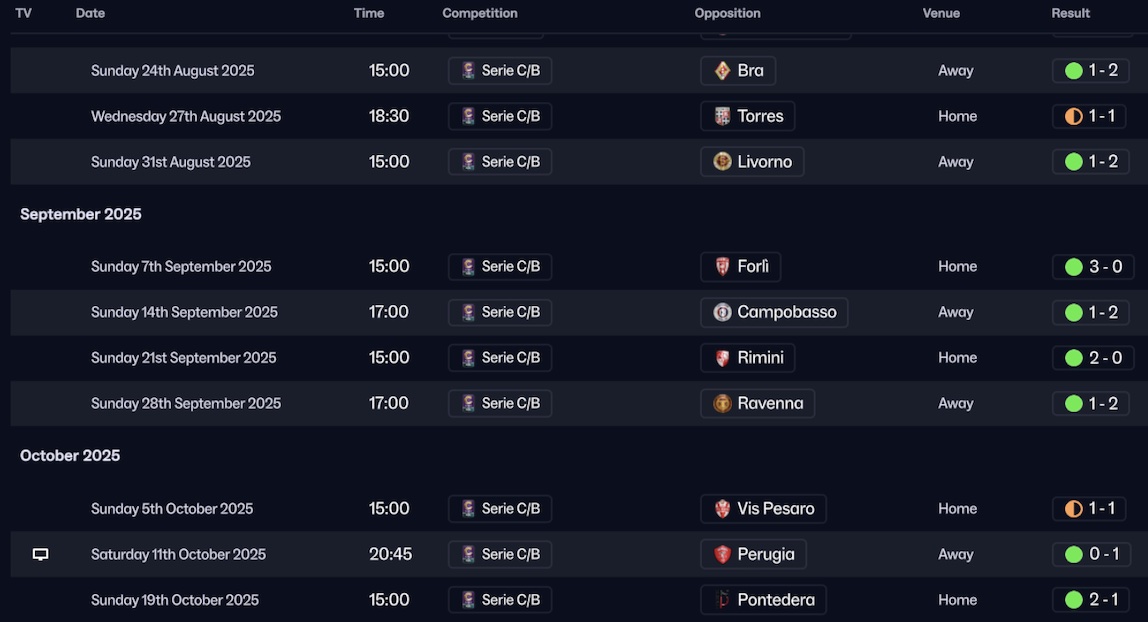
Brought on late in our opening game against Bra, Ravasio turned what looked like a frustrating draw into a dramatic win — first watching Pattarello equalise in the 89th minute before applying the finishing touch himself, deep into stoppage time.
A few days later against Torres, he repeated the trick – coming off the bench to level the game after another sluggish start, not helped by goalkeeper Venturi’s mistake – rushing out to the edge of the six yard box but being beaten to the ball by the on-rushing striker.
His timing, his movement, his knack for arriving at just the right time… it all started to feel less like luck and more like reliability.
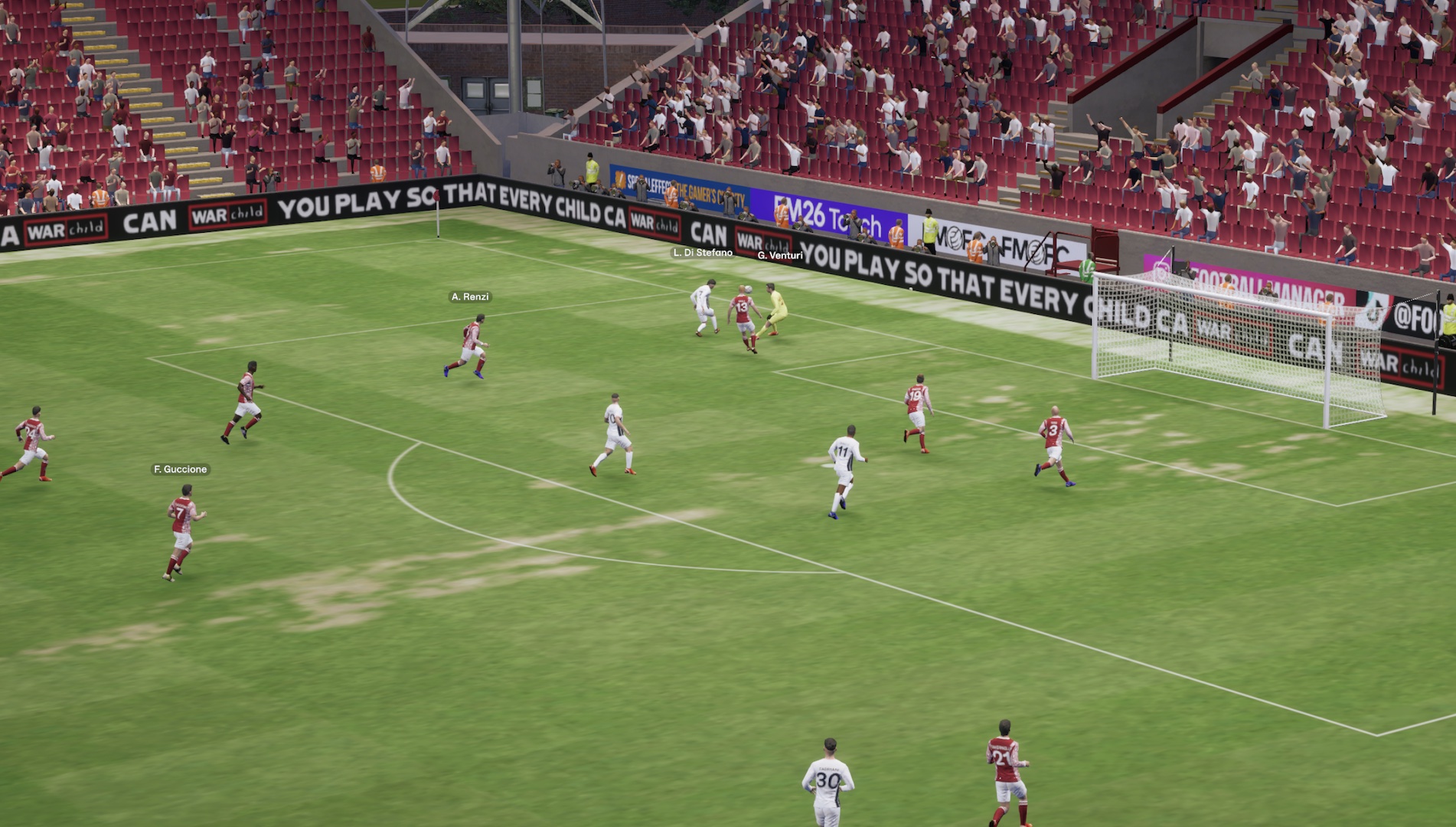
Venturi’s poor decision put us behind against Torres.
Then came Livorno. Our third game in a week. A rivalry match made spikier by their manager’s pre-match comments questioning my credentials. Ravasio was given the start and forty-nine seconds into the game, he scored. Just under twenty minutes from time, he scored again. Livorno pulled one back, and we were left clinging on — but when the whistle blew, we’d done enough.
Four goals in three games from Ravasio. A message sent.
Three games which, in truth, hadn’t been pretty. Possibly because each opponent had played with a back 5. Possibly because they players were still getting used to life under a new manager and a new system.
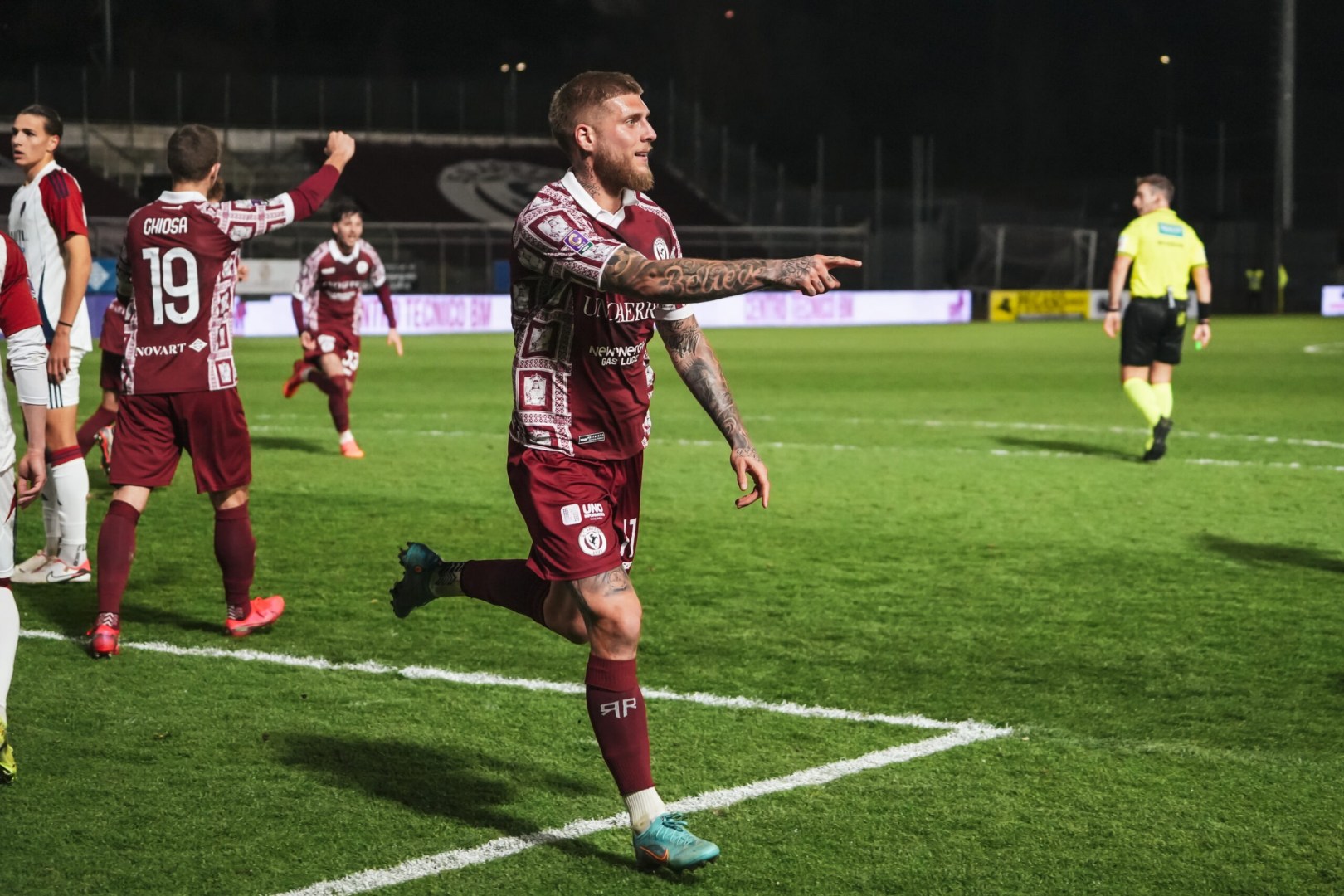
Ravasio: From the bench to the starting line up
Ravasio’s not flashy, and he doesn’t pretend to be. He’s direct, disciplined, and plays with an edge that suits our system perfectly. Maybe this is what every club needs — a player who’s stopped worrying about potential, and started proving his worth.
He failed to score in a 3-0 win over Forli, when substitute Marco Meli impressed with a goal and an assist – winning himself a place in the Team of the Week.
Despite not getting on the scoresheet against Campobasso, he proved his worth with a battling performance which saw his get an assist for Pattatello’s winner.
Unfortunately, he picked up a groin strain in training and would miss the next 3 weeks.
Cianci fights back
That opened the door for Pietro Cianci to reclaim his place — and with no other recognised striker in the squad, he was always going to get his chance.
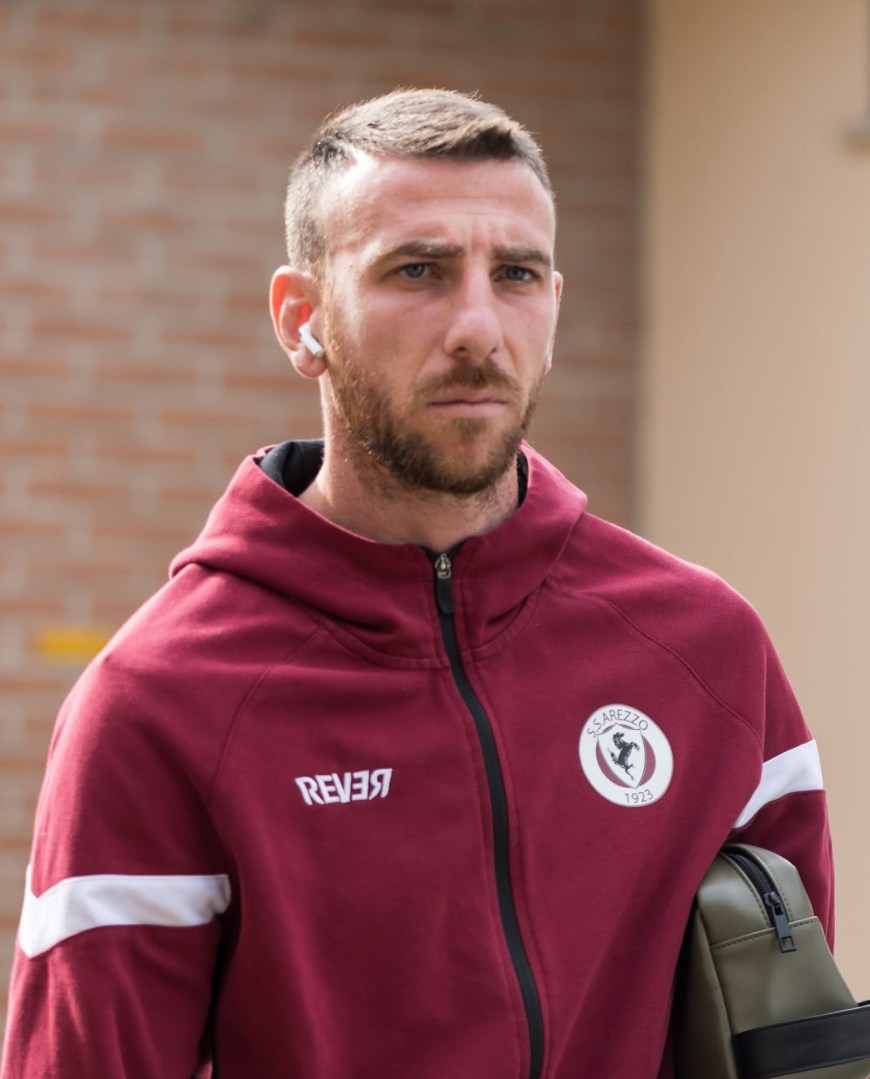
Pietro Cianci – determined to reclaim his spot.
He made the most of it against Rimini, heading home from close range after a piece of sublime footwork from veteran playmaker Guccione, who also laid on a simple finish for Pattarello earlier in the match. A deserved 2–0 win.
Cianci struck again in a 2–1 victory over Ravenna, though the performance itself was laboured — another grind against a compact 5–3–2 where we were fortunate to avoid a heavier loss.
A much-improved display against Vis Pesaro followed. We dominated throughout — 20 shots, 10 on target — yet somehow came away with only a 1–1 draw.
Then came the Etruria Derby against Perugia. We started brightly, forcing their goalkeeper into two acrobatic saves inside the first few minutes, but the home side soon took control. At half-time we’d managed just three shots for 0.04 xG, and something needed to change.
I asked the team to play narrower while adjusting the passing range from shorter to standard — the idea being to draw Perugia inside before switching play wide. It worked. Pattarello found space on the touchline, drew defenders out, and substitute Dezi found plenty of space to receive the ball and thread a perfect through ball for Tavernelli to slot home.
Perugia’s finishing deserted them after that, and we hung on. Another tight win. Another lesson learned.
With Ravasio fit again, he returned to the lineup against sixth-placed Pontedera — a team whose narrow 4–4–2 diamond immediately caused us problems.
Their two strikers and attacking midfielder pinned our back line, while their defensive midfielder and central defenders made it difficult to involve Ravasio at all. After 40 minutes, their pressure paid off — their striker peeling off our centre-backs to meet a deep cross and head past Venturi.
I switched us to play wider and focus attacks down both flanks. Again, the adjustment paid off. Chierico dinked a clever cross for Tavernelli to head home the equaliser.
Midway through the second half, the same pattern unfolded — Chierico finding space on the right and feeding Djamanca, who cut inside and drilled a low shot into the far corner. A 2–1 win that felt earned through adaptability more than dominance.
Life at S.S. Arezzo After Ten Games
Ten games into the Serie C/B campaign, life in Tuscany feels balanced on that fine line between belief and realism. We sit second in the table, level on points with Ascoli, and still unbeaten. Eighteen goals scored, seven conceded — a solid foundation, if not yet the finished article.
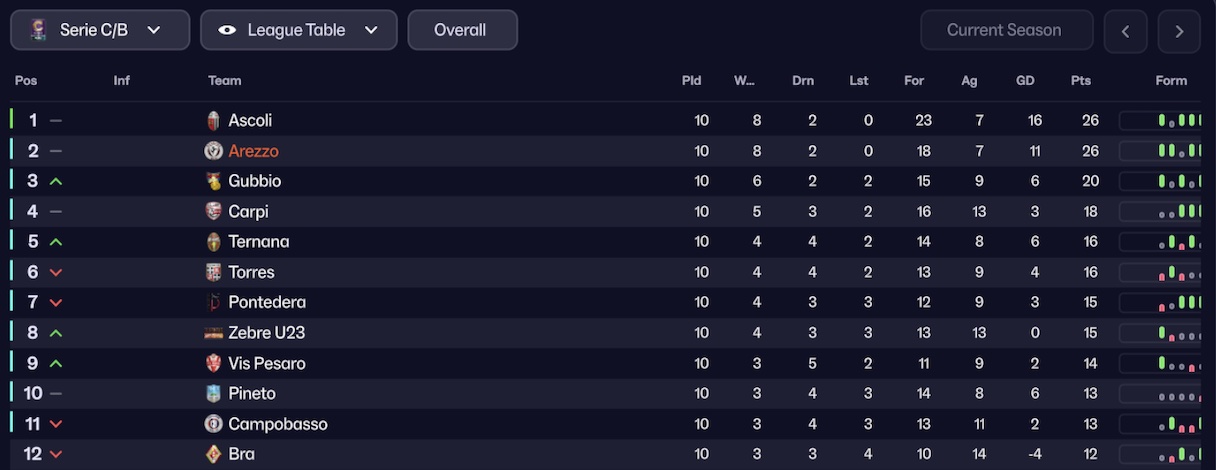
It’s a start built on structure and resilience more than fluidity. The performances haven’t always matched the results, but the intent is clear: control the ball before overloading the opponents defence.
The defence, marshalled with discipline, has become one of the stingiest in the league. In attack, we’ve found variety — different players stepping up at different moments. Pietro Cianci leads the scoring charts with six goals in ten games, proving a reliable presence in Ravasio’s brief absence. Mario Ravasio, meanwhile, remains the story of the early season — four goals in six appearances, each one a reminder of his persistence and timing.
Out wide, Pattarello and Tavernelli have emerged as dual threats, both registering four goals apiece while contributing decisively in key moments. Filippo Guccione, the veteran playmaker, continues to thread everything together — seven assists in ten matches, dictating rhythm and tempo like a conductor who understands the space around him and when to play the perfect pass.
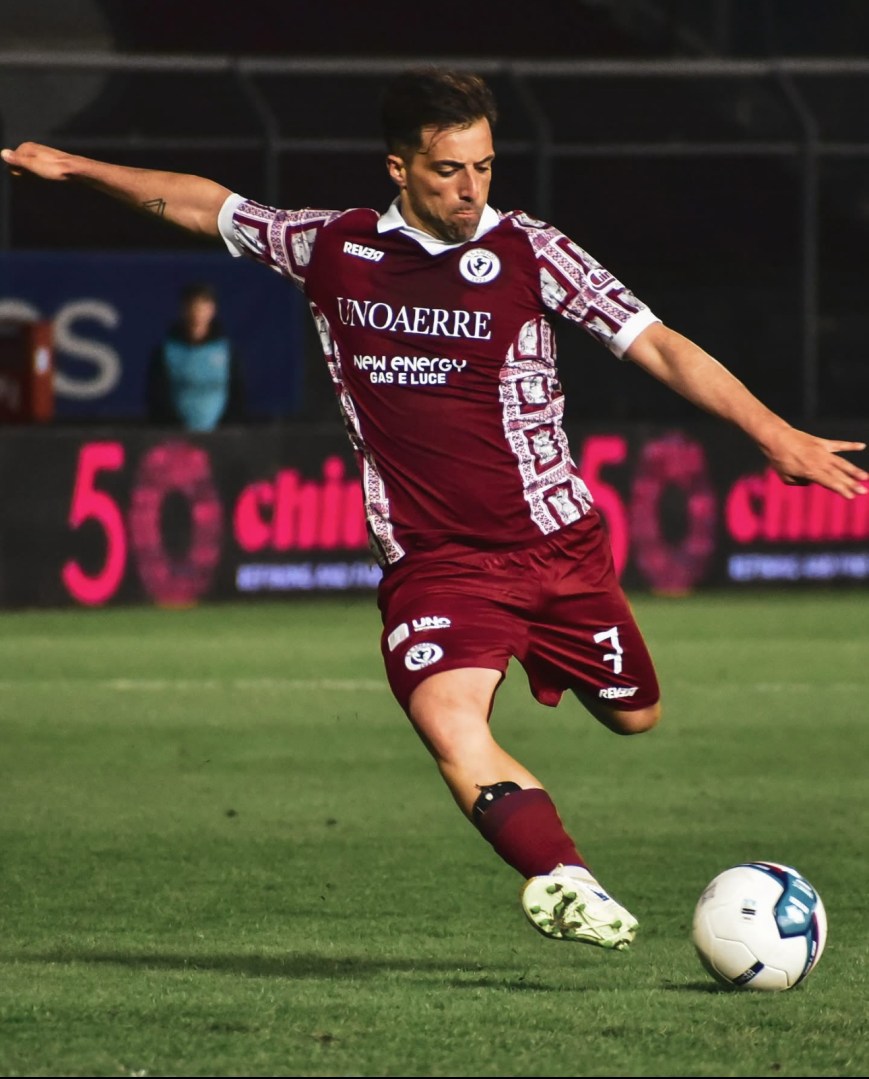
Filippo Guccione: The Creator
It’s a promising start, but also a fragile one. The margins in this league are thin, and while results have gone our way, the performances still feel like work in progress.
We’ve earned the right to be content, but not complacent.
The next challenge is gradually refining our system — to turn resilience into rhythm, and structure into fluency. We’ve struggled against the many 5-3-2’s we’ve faced so I’ll need to pay attention to that.
I also need a back-up formation. I always like to have a 4-2-3-1 option available as the two can frequently switch seamlessly between one another. Now the players are getting used to the 4-3-3 it’s something I’ll be looking to implement.
In the next update, I’ll take a closer look at the 4-3-3 that’s shaping our early-season identity — its strengths, its growing pains, and how Disciplina & Controllo continues to evolve on the pitch.




 The Gaffers Lounge
Leave a comment